



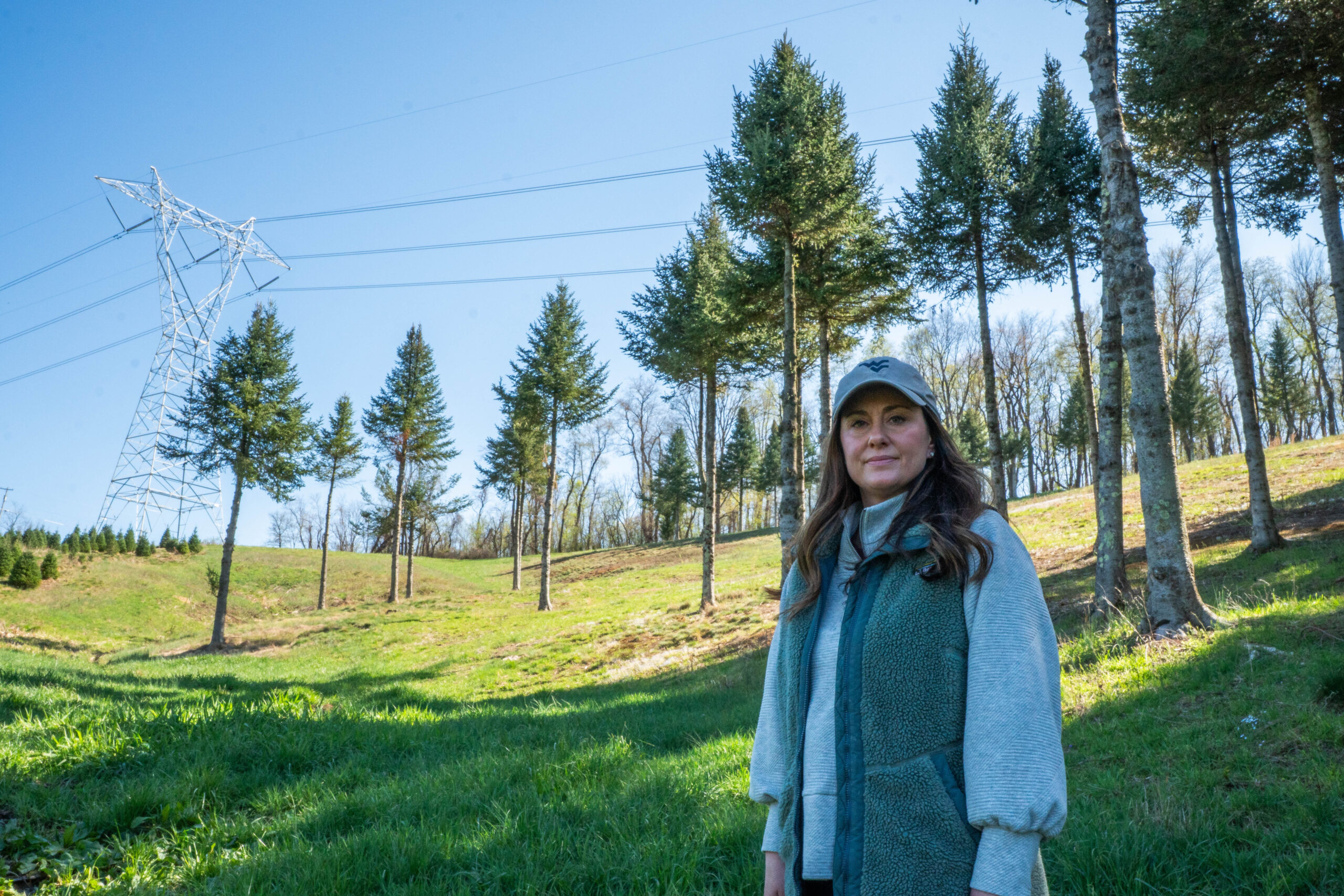
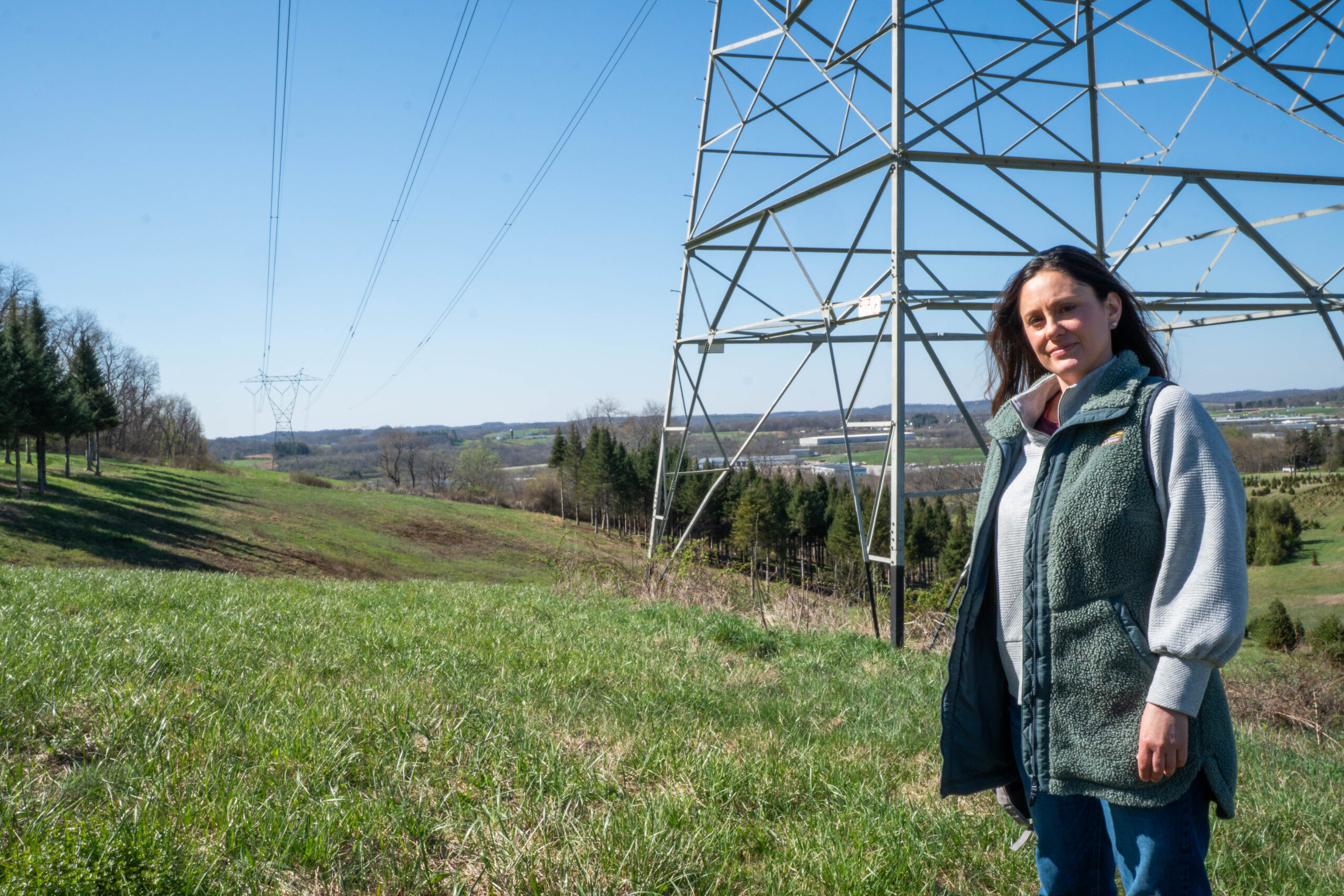
SMITHFIELD, Pa. — Beth Bossio stops an ATV in front of a transmission tower on a plot of land at Quarter Pine Tree Farm in Smithfield, Fayette County, Pennsylvania.
Bossio helps run operations at the Christmas tree farm with her stepdad, Jim Rockis, which includes supplying seeds to tree farmers across the Northeast.
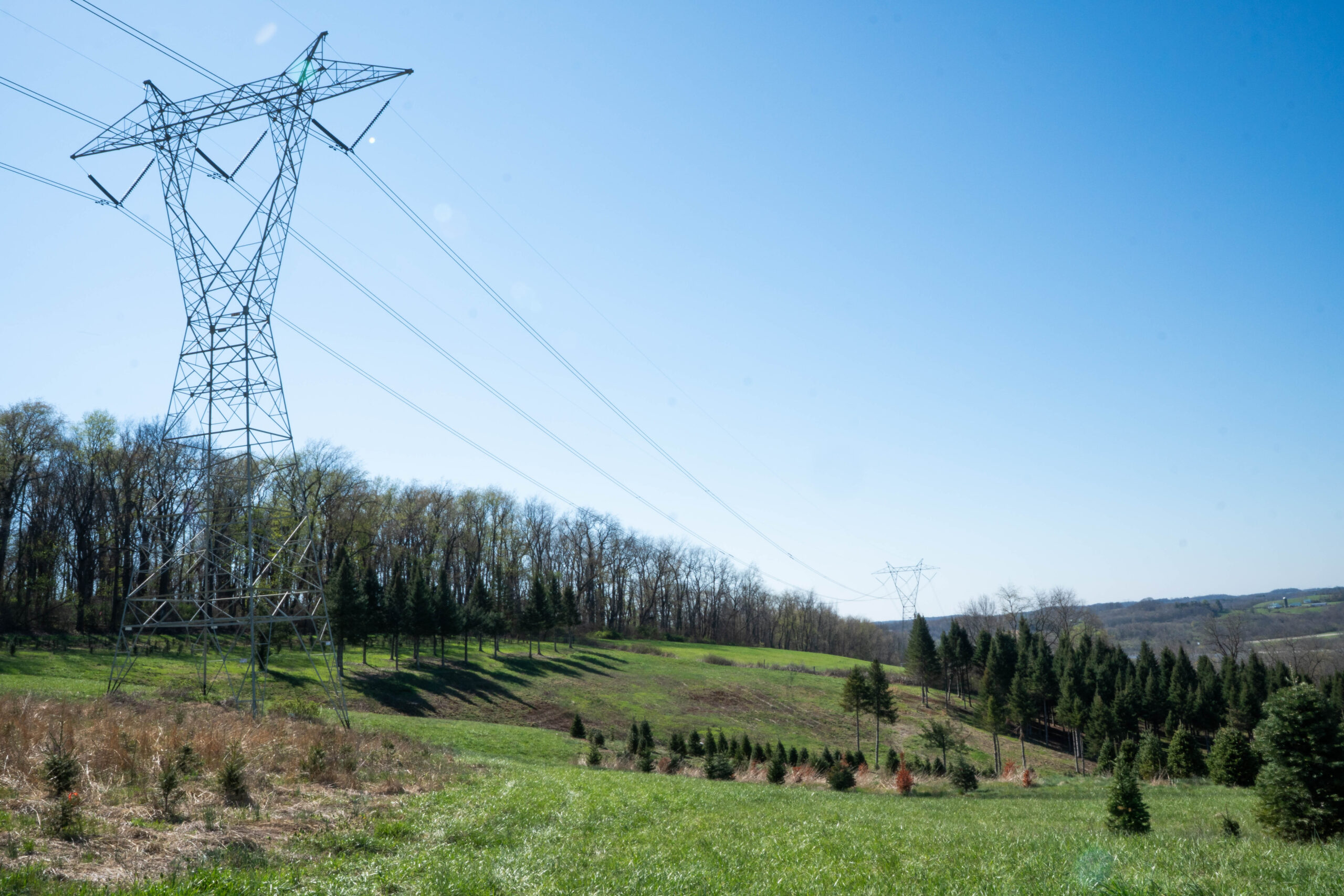
On one side of the tower sits a group of Canaan Fir trees, and on the other side of the transmission tower sits the other half; in the middle is a blank plot of grass where these seed orchard trees used to fill out the whole hillside.
Decades ago, a portion of these trees were cut down to make way for the transmission line; Canaan Fir trees grow a minimum of 30 feet tall and would have interfered with the line.
Now, Bossio is concerned that another proposed transmission line could cut down even more of these trees: “We already know what happens when a power line goes near or over top of the seed orchard. They’ll make you cut them down,” Bossio said.
The Mid-Atlantic Resiliency Link transmission line, known as MARL, is a 107.5-mile electricity transmission line that could cut straight through Quarter Pine Tree Farm, threatening its seed orchard, which the farm relies on for all facets of the business.
NextEra Energy, an electric utility company based in Florida, submitted the project’s certificate application to Pennsylvania’s Public Utility Commission on March 3. The deadline for Pennsylvania landowners and residents, including Quarter Pine Tree Farm, to submit comments and intervene in the case is May 1.
According to NextEra Energy, the line will provide grid reliability across the northeast United States, driven by additional “load growth” from data centers in Virginia. But Pennsylvania and West Virginia landowners alike say it threatens their livelihood and property, a priceless asset.
MARL
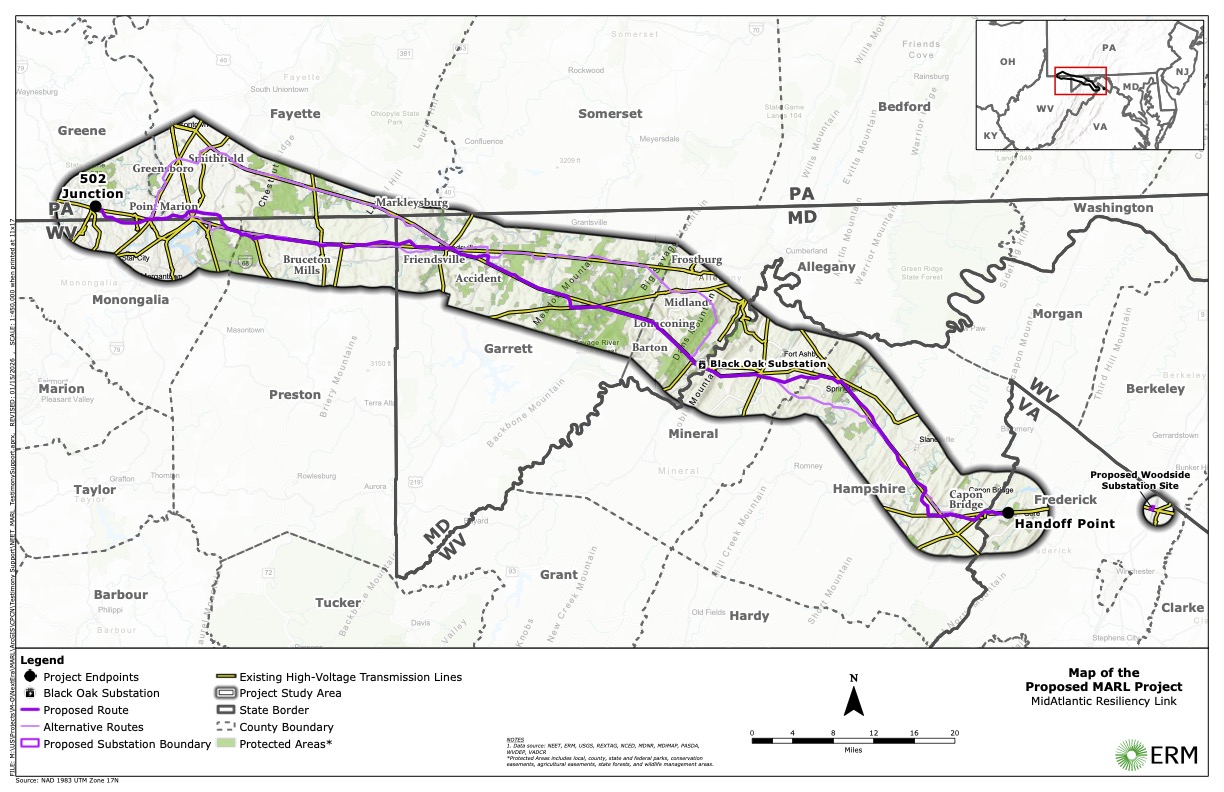
The proposed route for the transmission line starts at a substation in Dunkard Township, Greene County, Pennsylvania, runs through northern West Virginia and Maryland before ending at a substation in Gore, Virginia.
According to Kaitlin McCormick, senior director of development for NextEra Energy Transmission MidAtlantic, “this new line will act as an entire electric highway, delivering power to communities and businesses locally and across the region wherever and whenever it’s needed.”
Discussion of this project first began in 2022 when PJM, the largest electricity grid operator in the United States that serves the Northeast and portions of the Midwest, identified grid reliability concerns in the region, due to “proposed deactivation of generation facilities” and increased electricity demand from data centers in northern Virginia, according to NextEra Energy’s application to the Pennsylvania PUC.
The grid operator estimated that without a solution, the region would experience significant blackouts. NextEra Energy submitted its proposal for the MARL transmission line as a solution to these increased electricity needs.
“The electric grid is under stress,” said McCormick. “We cannot wait for the grid to fail to modernize it.”
She adds that MARL will invest millions of dollars into Pennsylvania and West Virginia and create both indirect and construction jobs in the region.
The project will include a 500-kilovolt transmission line and three substations. In March, NextEra Energy submitted a Certificate of Public Convenience and Necessity to public utility commissions in all four states that MARL will run through, including Pennsylvania’s PUC and the Public Service Commission of West Virginia.
The commissions will conduct an independent review and select the final route. The proposal includes both the main route and alternate routes, a requirement of the agencies, says McCormick.
The main route currently runs through northern West Virginia, including 14.5 miles of Preston County, where landowners, local leaders and farmers alike have expressed a strong opposition to MARL.
Preston County
As a local leader, farmer and life-long resident of Preston County, for Hunter Thomas, the MARL is as much about protecting his constituents as it is protecting his hometown.
That’s why, when he heard about the project last spring, he held conversations with both NextEra Energy’s MARL team to gather information about the project and conversations with the residents to hear their thoughts.
For the most part, the opposition from the public has only grown.
“Property owners should have a say in the matter, and the vast majority of the property owners on the current proposed route are strongly opposed to this project,” said Thomas, president of the Preston County Commissioners.
Among his biggest concerns is the use of eminent domain. If MARL is approved, most landowners would likely be forced through eminent domain to allow the transmission line on their property.
Thomas is also concerned about the farmland in Preston County, as he owns and operates Heritage Milling, the only stone-ground flour mill in the county. He was also raised on his family’s 3,000-acre crop and beef farm in Preston County, and the line would cut through one of their 200-acre crop fields.
He says a transmission line would hinder operations on family farms: “Possibly you can farm under them, but they are obstructions in your field, and in your planning rows. It just makes (a farmer’s) job more difficult,” said Thomas.
“At the end of the day, that’s their property. A lot of these farms are long-standing family farms, and they shouldn’t have PJM, and in this specific case, NextEra Energy telling them that there needs to be a transmission line cutting through the center of their farm.”
Thomas recognizes the transmission line will provide the county with tax revenue, but says MARL will likely decrease property value in the long-term: “People don’t want to purchase property that has a transmission line on it,” he said, encouraging another solution to the “grid reliability” problem.
The Preston County Commissioners passed an ordinance last May officially opposing the project and filed a petition for leave to intervene in the project with the Public Service Commission of West Virginia. The commission’s request was granted on March 18.
Many landowners who live along the proposed route for MARL share similar concerns, including James Prutilpac and Mollee Brown.
The married couple lives in Bruceton Mills, West Virginia, and tend to 40 acres in Preston County, which they plan on calling their forever home.
For the last two years, Prutilpac and Brown have been managing the land for wildlife conservation, ripping out invasive species like multiflora rose and autumn olive and planting native tree species to encourage wildlife like deer, birds, etc.
They also have future plans to build a house and rent out their property as a vacation spot. But now, all these plans have been put on hold, and may never come to fruition if MARL is approved.
“It’s going to take our entire upper wood line, which gets rid of all of the privacy we have being surrounded by woods,” Prutilpac said, who moved from Morgantown to live in the country. The woods separate the couple from a housing development.
“We bought this property with wildlife conservation being a major factor in what we wanted to do with it. We don’t (want) to see all the acreage of the trees taken out,” said Prutilpac.
West Virginia landowners have until June 1 to submit comments and file to intervene with the Public Service of West Virginia.
As West Virginians on the main route continue opposing the project, landowners and farmers on the alternative route in Pennsylvania express similar concerns. One of these alternate routes will run through Fayette County, Pennsylvania, including Bossio’s tree farm.
Quarter Pine Tree Farm
This time of year is busy for Quarter Pine Tree Farm. It may not be December, but Rockis and Bossio, have a lot on their plates. In spring, they hand-deliver transplants to Christmas tree farms across the northeast and conduct genetic work to produce “the best Christmas trees.”
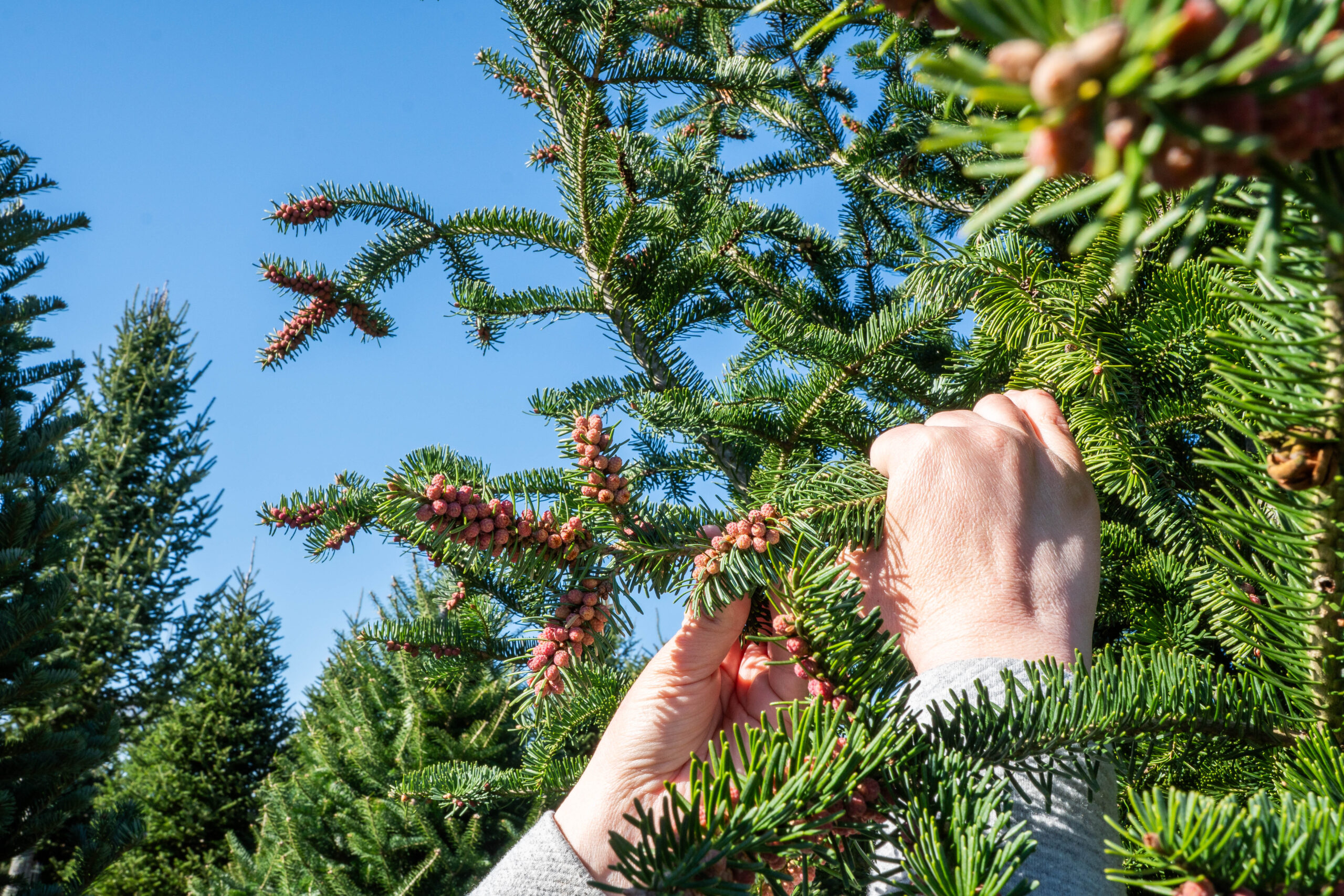
Bossio and Rockis only have a short window of time to conduct this breeding work, which involves sprinkling pollen from male pollen catkins onto female conelets that are fertile for only three days before the season’s window closes.
But this year, focusing on the business is hard when something else lurks within the back of Bossio’s mind: MARL. With the deadline to intervene in the project looming, Bossio and Rockis have been busy looking for an attorney to represent them and filing a petition to intervene as an impacted party in the MARL application hearing with Pennsylvania’s PUC.
Bossio’s farm is on the alternate route for the transmission line, but it can quickly become the main route if the Pennsylvania PUC decides so, and landowners who do not file to intervene before the deadline will not have a say in what happens to their property if the transmission line moves to the alternate route.
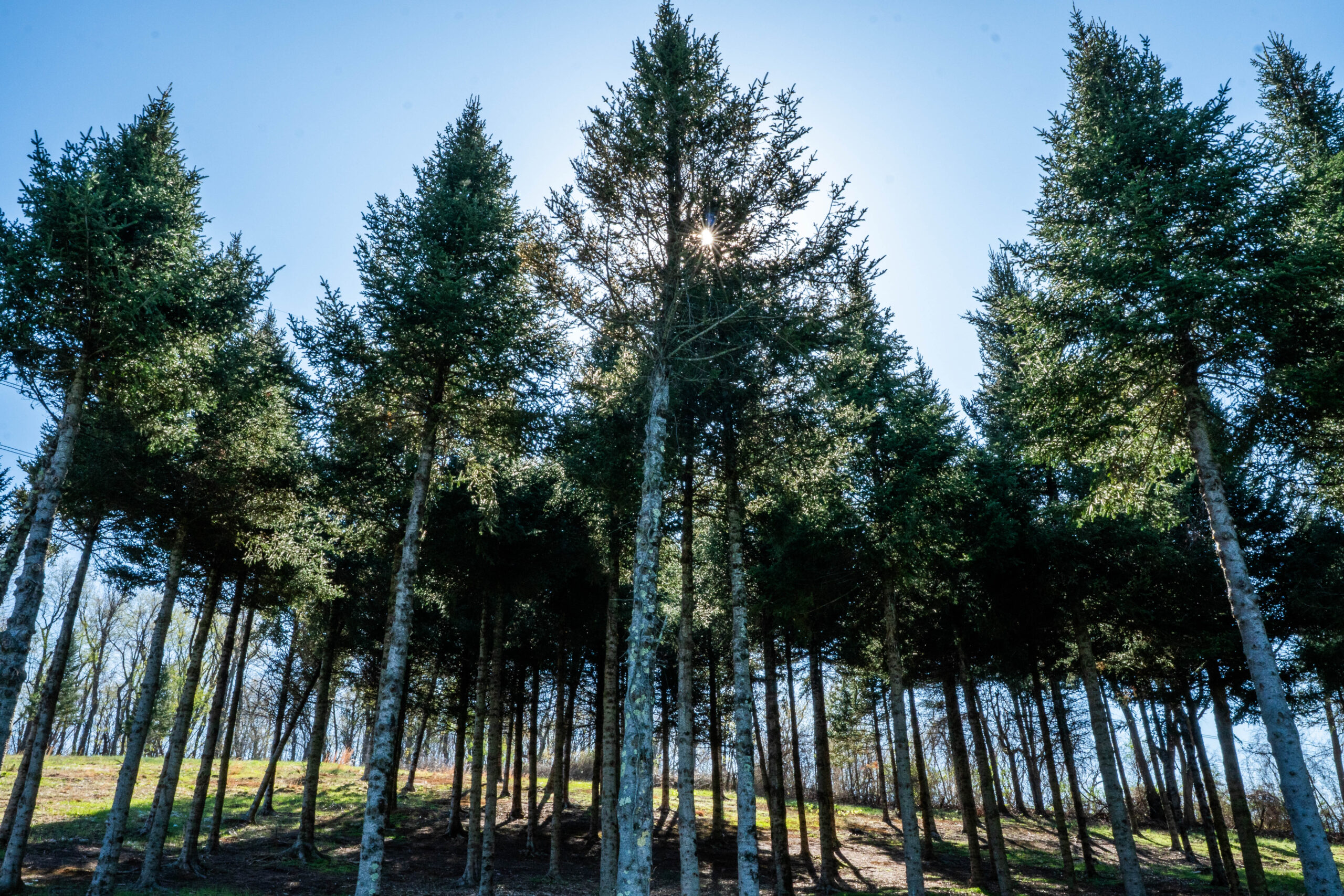
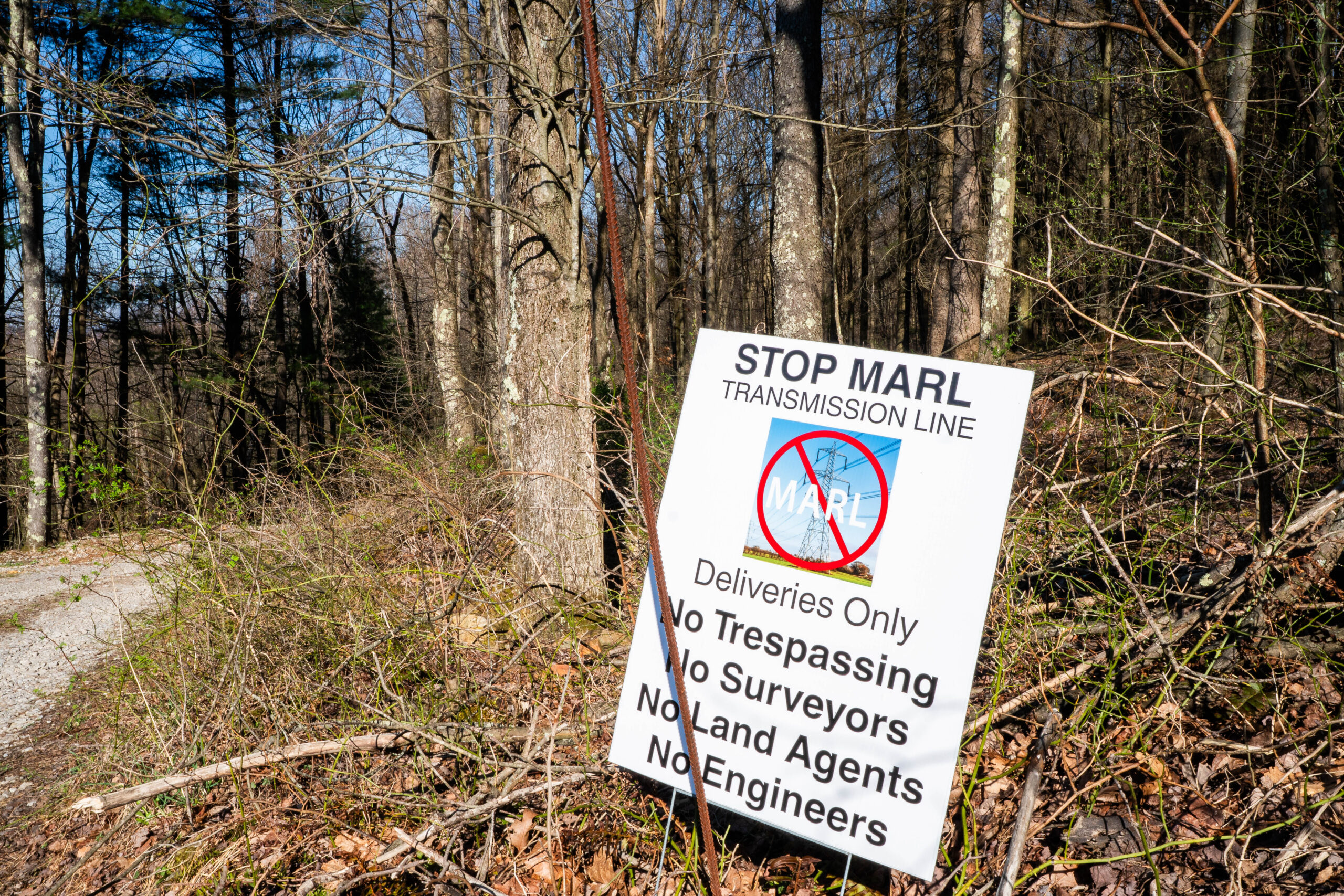
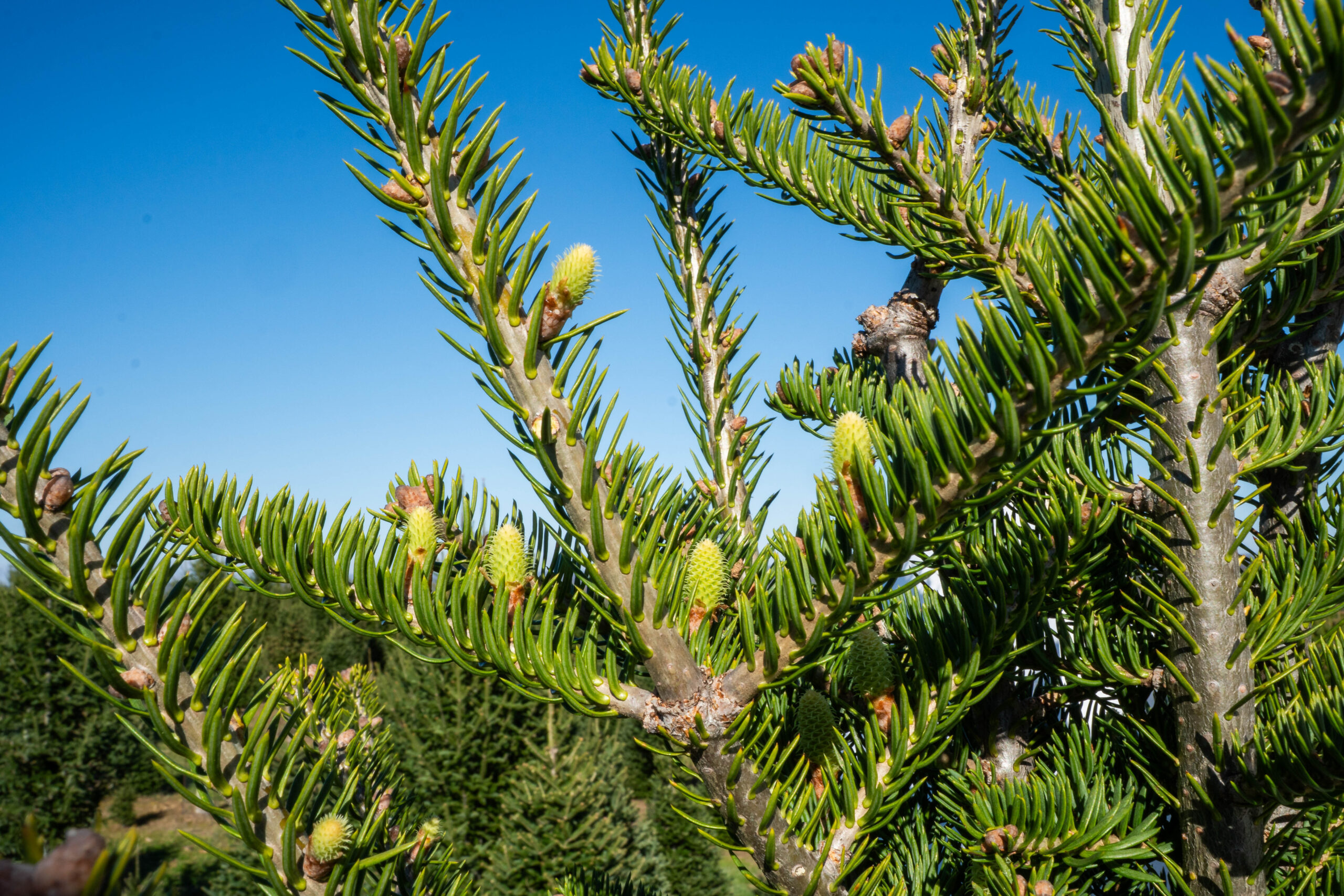
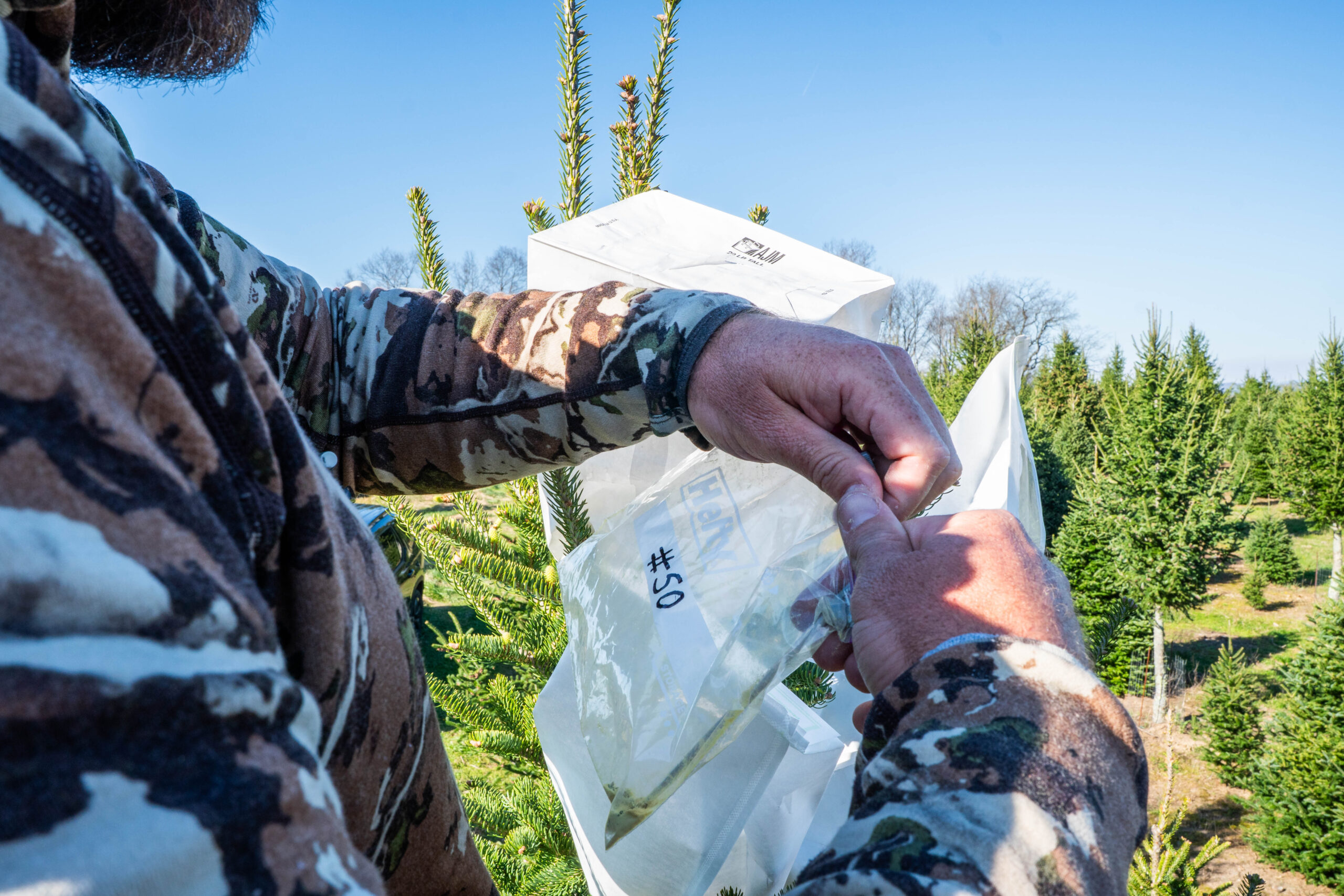
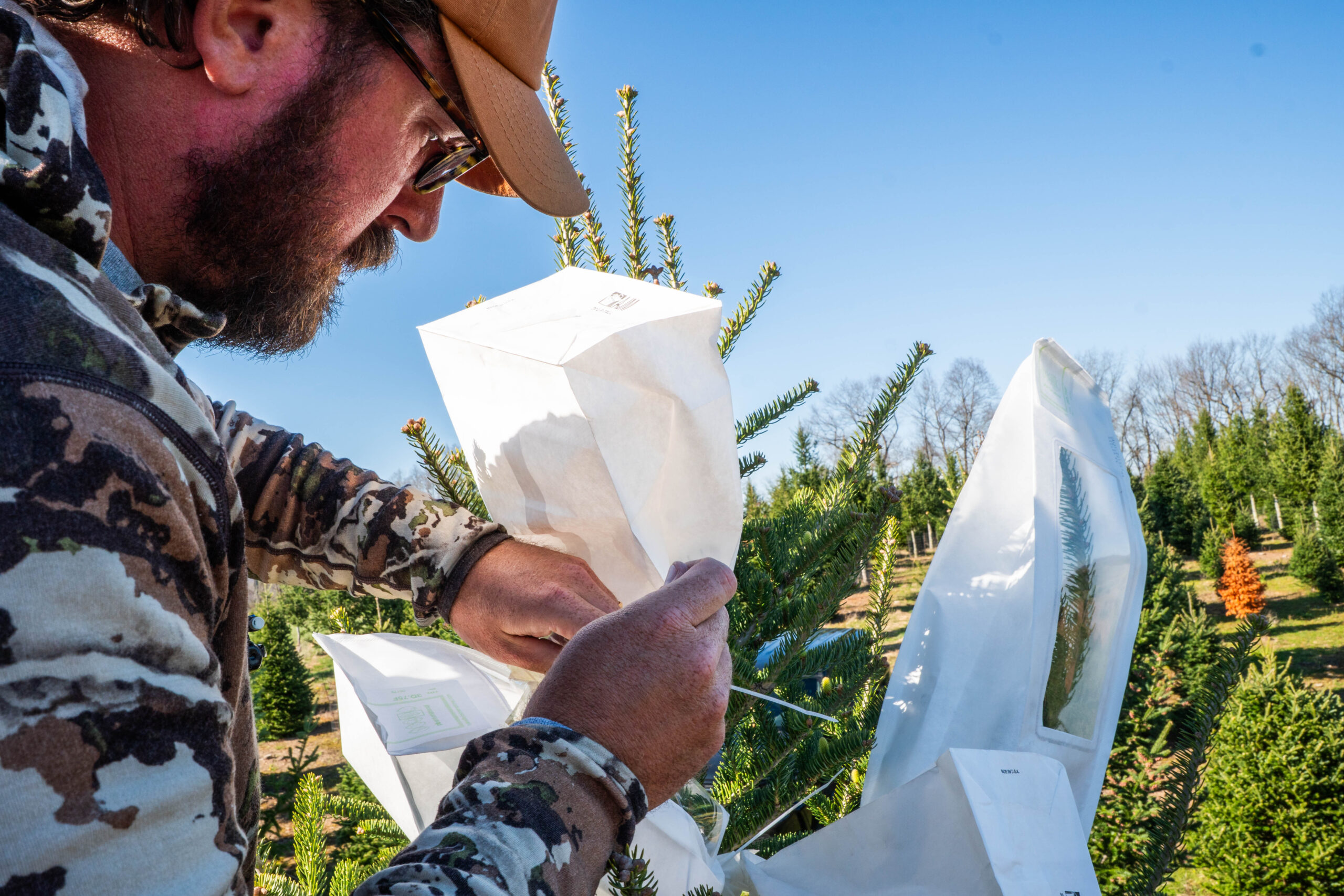
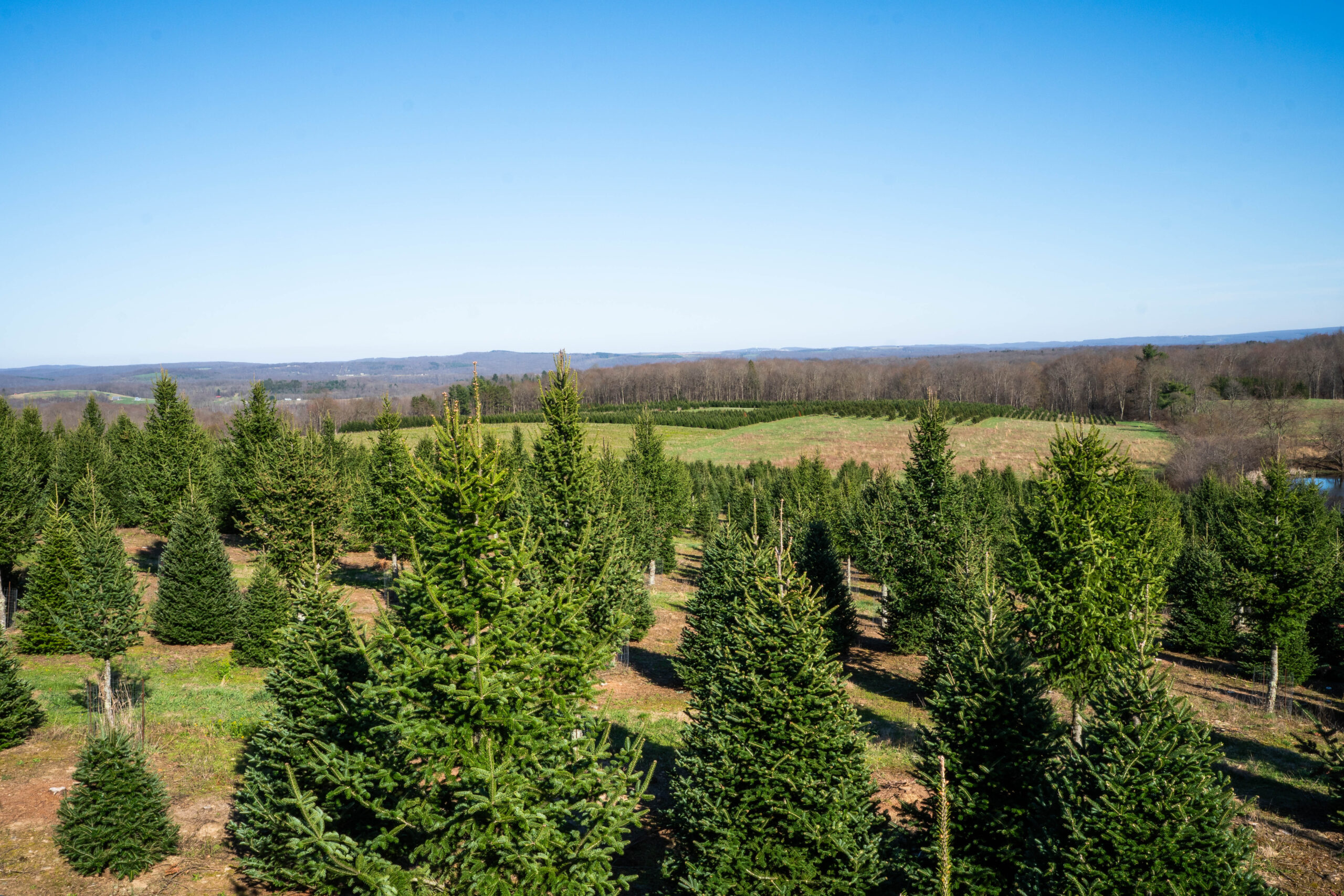
If the line is approved, it could run through the farm’s Canaan Fir seed orchard — which has already sustained damage from a previous transmission line — and would have serious repercussions to the farm’s seed business.
“The more and more we lose from that seed orchard, then the germ count potentially will go down. So the more that they ask us to cut from an orchard, it’s hurting the quality of those cones and the seeds inside,” she said.
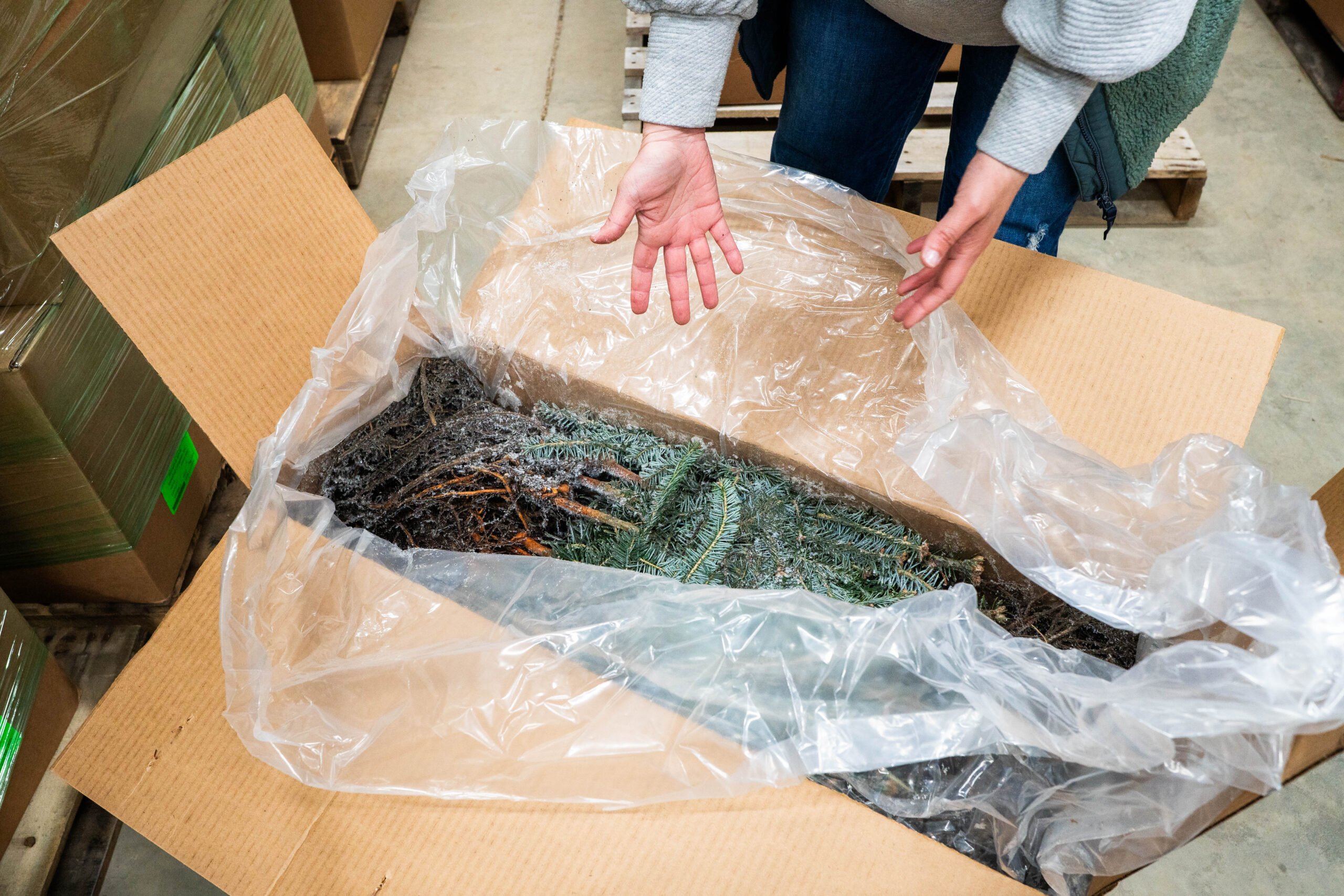
That’s because seed orchards need a cluster of trees to produce (female) cones that store these seeds — which Quarter Pine Tree Farm uses to plant their own Christmas trees in addition to supplying seeds and transplants to Christmas tree farms across the northeast.
According to Rockis, these trees must work together to produce a pollen cloud: the wind carries pollen, produced from male pollen catkins located on the lower branches of a pine tree, to fertilize the female conelets located at the top of another tree.
Pine trees also take about 15 years to sexually mature in order to produce these cones; the Canaan Fir seed orchard was planted 30 years ago, and only in the last few years has the Quarter Pine Tree Farm seen a plentiful crop.
If more Canaan Firs have to be cut for MARL, it would be like taking a step back 30 years, says Bossio. And it wouldn’t just be their farm impacted by MARL; it will create a great ripple effect across the entire Christmas tree farm industry.
“There’s not a lot of people that have Canaan Fir seed, and less trees means less seed going on the market,” she said.
Already, MARL has halted future plans on the farm. Last spring, Bossio began renting out the farm for weddings, but had to stop accepting bookings, unsure of the property’s fate.
“How can I continue to push families to come out to our farm with another tower right dead center in our field that we use,” said Bossio. “My visions and plans of what I wanted to do with this farm have now been put on hold because I’m scared to invest any more money into this if this line is coming.”
(Liz Partsch can be reached at epartsch@farmanddairy.com or 330-337-3419.)




