





SALEM, Ohio — Baldemar Velasquez knows what it’s like to bounce from place to place, picking fruit and vegetables in the hot and humid upper Midwest temperatures.
Growing up, Velasquez, his parents and eight siblings traveled from Rio Grande Valley, Texas to Ohio, Indiana and Michigan to pick sugar beets, tomatoes, cucumbers, strawberries, cherries and other crops throughout spring and summer, working after school and on the weekends.
Velasquez and his parents were born in Texas after his grandparents immigrated to the United States to escape the violence of the Mexican Revolution.
At the age of 6, his family became stranded in Ohio during the winter, not having earned enough money to travel back to Texas. Back then, farmworkers were paid by the number of crates they filled, instead of by the hour.
Local farmers helped them through the cold winters, and when summer came, the family would spend their days picking crops to work off the debt they had accumulated. This cycle happened for four years.
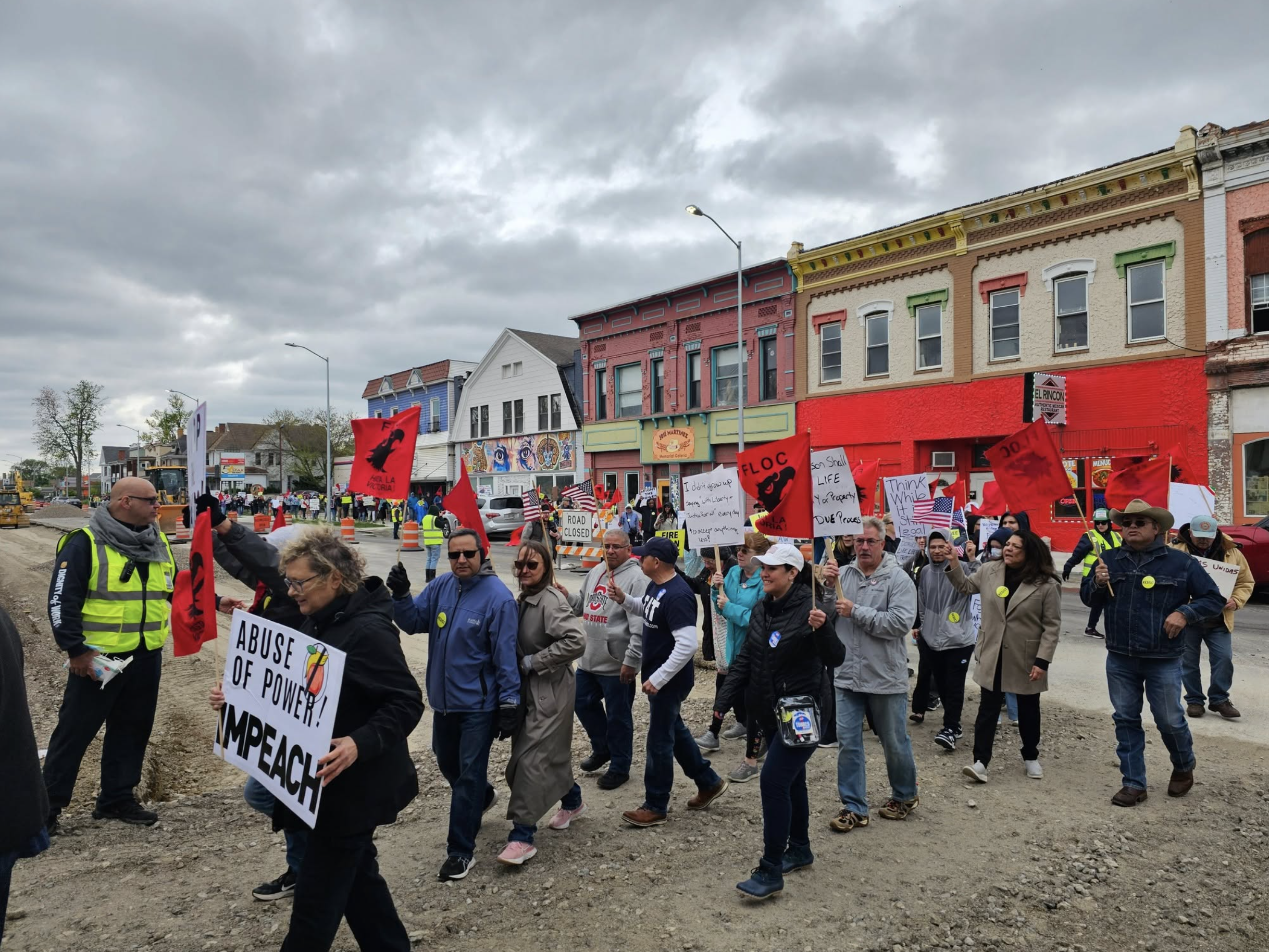
These challenges as a migrant worker led Velasquez to create the Farm Labor Organizing Committee, a labor union based in Toledo, Ohio, in 1967, and later become the first in his family to get a college degree.
FLOC’s advocacy has led to many changes, including better wages for farmworkers, better prices for farmers and changes to the U.S. Department of Agriculture’s H-2A Visa Program for Temporary Workers. But today, there is a new set of challenges.
With U.S. Immigration and Customs Enforcement agency raids sweeping up suspected immigration offenders across the country, there is a lot of fear in the farmworker and agriculture community, Velasquez said. State and national farm organizations have also recently vocalized concerns over the potential impact immigration raids could have on farms.
“Without a stable, dependable workforce, our fields will go unplanted, our crops unharvested and our livestock uncared for,” said Pennsylvania Farm Bureau President Chris Hoffman, in a June 18 statement. “The dedicated men and women who work on our farms alongside our farmers are not just employees; they are the bedrock of our food supply chain. Any disruption to their ability to work threatens the availability and affordability of food for every American family.”
According to these organizations, there could be a solution to obtaining a legal, immigrant workforce: The USDA’s H-2A program, but a massive overhaul is required.
Will they or won’t they?
During the first 100 days of President Donald Trump’s second term, ICE arrested 66,463 illegal immigrants, primarily in major cities like Chicago, Los Angeles, New York and Philadelphia, according to ICE.
Whether ICE would conduct raids on farms has been up in the air since enforcement efforts ramped up in January. Raids were recently reported at farms in California, even after Trump said on June 12 that ICE raids would be paused at farms, restaurants and hotels.
Trump said at a press conference that “farmers are being hurt badly,” and that they have “very good workers,” despite some farmworkers not being citizens.
On June 17, the U.S. Department of Homeland Security reportedly told staff to reverse course and conduct immigration raids on farms. The agency later emphasized this in a post on the social media platform X.
“There will be no safe spaces for industries who harbor violent criminals or purposely try to undermine ICE’s efforts. (Worksite enforcement) operations target illegal employment networks that undermine American workers, destabilize labor markets and expose critical infrastructure to exploitation,” the post said.
Tricia McLaughlin, assistant secretary of public affairs for the Department of Homeland Security, clarified the agency’s primary concern during worksite enforcement raids is locating violent criminals.
Later, on June 20, Trump told reporters he would never do anything to hurt farmers: “We’re looking at doing something where in the case of good, reputable farmers, they can take responsibility for the people they hire. Because we can’t put the farms out of business.”
Why does this matter?
Hispanic immigrants make up more than 60% of farm laborers in the United States, as of 2022, the majority of whom are undocumented, according to various sources.

Crop production, in particular, relies heavily on undocumented immigrants. The USDA reported that in 2022, 42.1% of crop production farm workers were unauthorized, or undocumented, immigrants.
The dairy industry also depends on immigrant labor, according to a survey conducted by Texas A&M University in 2015 for the National Milk Producers Federation. The survey found that “Immigrant labor accounts for 51% of all dairy labor, and dairies that employ immigrant labor produce 79% of the U.S. milk supply.”
In both Ohio and the U.S., agriculture was the largest industry that employed undocumented workers, according to a 2021 Ohio State University report.
Scott Higgins, CEO of the Ohio Dairy Producers Association, said he doesn’t know the percentage of immigrant workers in the state but recognizes some Ohio farms rely on their labor.
“All farms have found themselves in a situation where they need workers, and one thing that our farmers have experienced is that the workforce that has come in from other countries, they have a desire to work with livestock. They’re good at it,” Higgins said.
According to Higgins, immigrant labor is so common in the United States because most domestic workers don’t have an interest in working with livestock, in manure and completing other tasks they may not be comfortable with.
He emphasized that farmers who employ immigrant or migrant workers should “follow the rules” by having their I-9 Employee Eligibility Verification forms and other important documents completed. So far, he and others at the Ohio Dairy Producers Association have heard of farms being audited for their I-9 records.
As farmers rely more heavily on immigrant and migrant labor, Higgins and other farm organizations see an already existing USDA problem as a potential beacon of hope for obtaining legal immigrant labor: the H-2A Visa Program for Temporary Workers.
Reform to H-2A
Sarah Zost, a fourth-generation farmer at Bonnie Brae Fruit Farms in Gardners, Pennsylvania, used to employ primarily domestic, migrant workers to harvest apples and prune trees. The orchard was created by her great-grandfather in 1927 and consists of 750 acres of apples. Finding this workforce, however, has become more difficult to fulfill, she said.
“Over the years, that workforce has just dried up,” Zost said. “There’s fewer and fewer people moving up and down the East Coast to harvest various crops.”
So, in 2018, the farm enrolled in the USDA’s H-2A Visa Program for Temporary Workers. The program allows immigrants to come to the U.S. for seasonal work, where they receive housing and food.
The first year in the program, Zost received 15 H-2A workers, while 75% of her workforce was still made up of domestic workers. Today, Zost’s workforce consists of 75% H-2A workers and 25% domestic; she employs 45 H-2A workers in the fall and 12 H-2A workers in the winter through spring.
The program fills the domestic workforce gap, but has its faults. According to Zost, the application process can be difficult and expensive. Obtaining labor through the program has also become more expensive over the years.
This is because of the Adverse Effect Wage Rate, which establishes the minimum wage that must be paid to H-2A workers. It was created to ensure that employment of foreign, temporary agricultural workers does not impact the wages of domestic workers in a similar position.
The wage employers must pay farmworkers varies from state to state. It is currently $17.96 in Pennsylvania, $19.57 in Ohio and $15.87 in West Virginia.
But because the price is calculated annually, the price farmers have to pay their workers gets more and more expensive, Zost said.
“That is a huge concern for everyone who uses it, because you’re using it not just for legal labor, but for often, any labor that you can get,” Zost said. “Labor has become a bigger and bigger part of our farms’ bills each year, and it is going to become a crushing problem soon. We are already dealing with issues from it.”
The H-2A program is also only available for seasonal workers and farms with seasonal operations, which excludes dairy farmers and other operations that require year-round work.
H-2A workers are typically allowed to work in the U.S. no longer than one year, but can petition for an extension to stay longer, up to three years. Farm organizations and lobbying groups have been pushing for H-2A reform for decades to include year-round labor.
“But when bills get proposed for it, it basically becomes an immigration debate and a border security debate in Congress, instead of only focusing on fixes and improvements to the H-2A program,” Zost said.
Balancing needs
Higgins and Bailey Fisher, federal affairs specialist for the Pennsylvania Farm Bureau, are part of the effort pushing for H-2A reform. The American Farm Bureau Federation also recently released a statement pushing for updates to the H-2A program.
Fisher says the program is outdated and that no agriculture is seasonal anymore, even crops like apples.
“You’re not only out there during harvest season, harvesting your apples. You’re out there year-round, pruning your trees, fertilizing them, making sure they have what they need to have a successful harvest,” Fisher said. “Yes, dairy farmers have a very strict schedule for milking, but it’s not just dairy and mushroom farmers who are year-round. Every farmer is year-round, and that’s something that we’ve been pushing as well.”
Fisher said the farm bureau has had talks with the Trump administration regarding the impact mass deportations of immigrants would have on U.S. agriculture. However, both Fisher and Higgins emphasize their organizations’ support for the administration’s goals of having a secure border.
“We have to balance having a secure border with also making sure we have a reliable workforce, and that can be hard,” Fisher said. “But we have to make sure that that happens, because otherwise we may face more food insecurity and certainly nobody wants that.”
Other considerations
Velasquez adds that if the H-2A program is expanded to year-round work, there needs to be additional considerations for farmworkers and their families.
“You couldn’t see that they’d be separated from their families year-round. So that’s a problem in and of itself. What do you do with the families? You can’t expect a person to be separated from their family year-round,” Velasquez said.
He suggests the family be allowed to immigrate with the worker, but adds that it seems unlikely in today’s climate. Another option could be employing workers in shifts for six months at a time, allowing each farmworker to go back home and spend time with their family, Velasquez says.

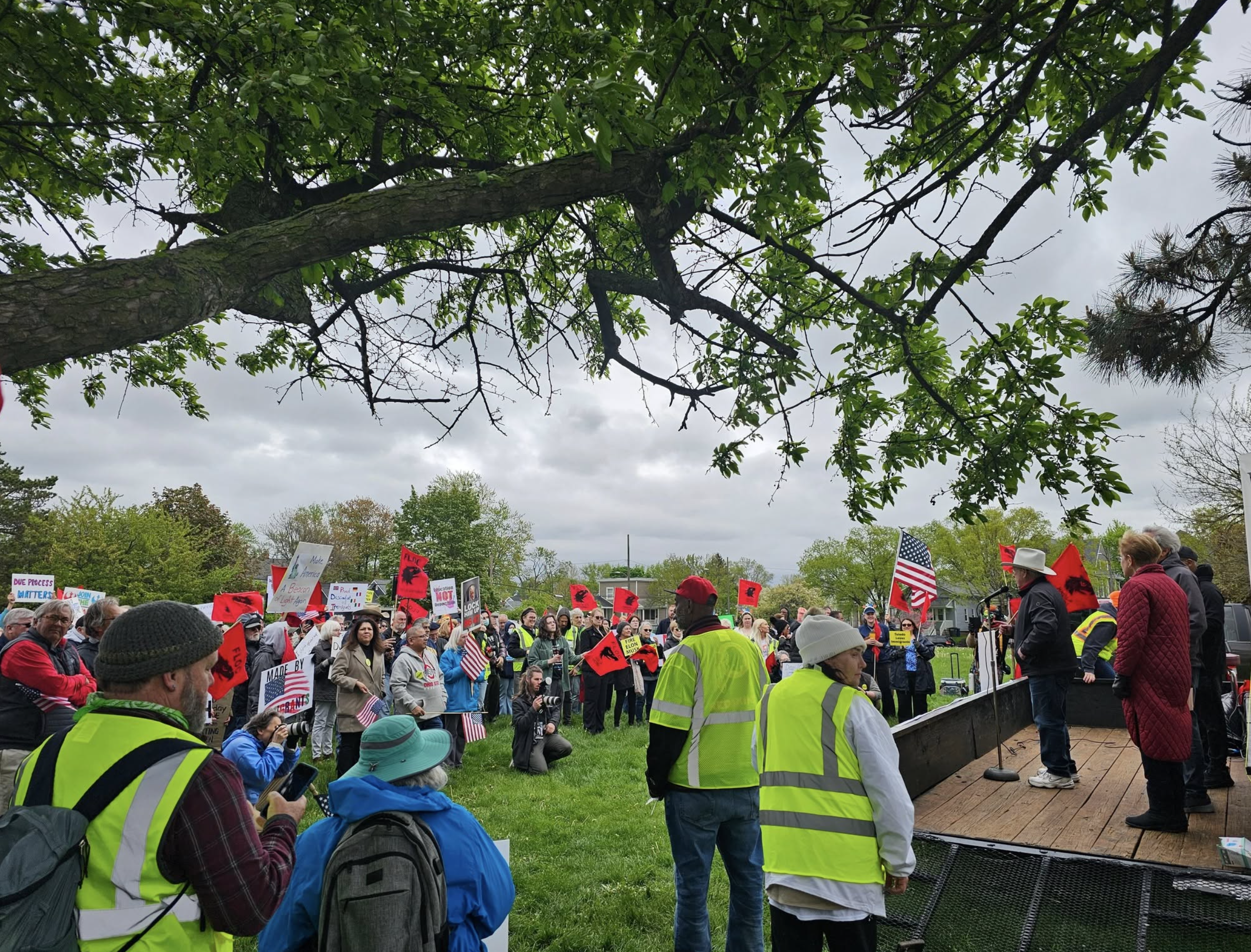
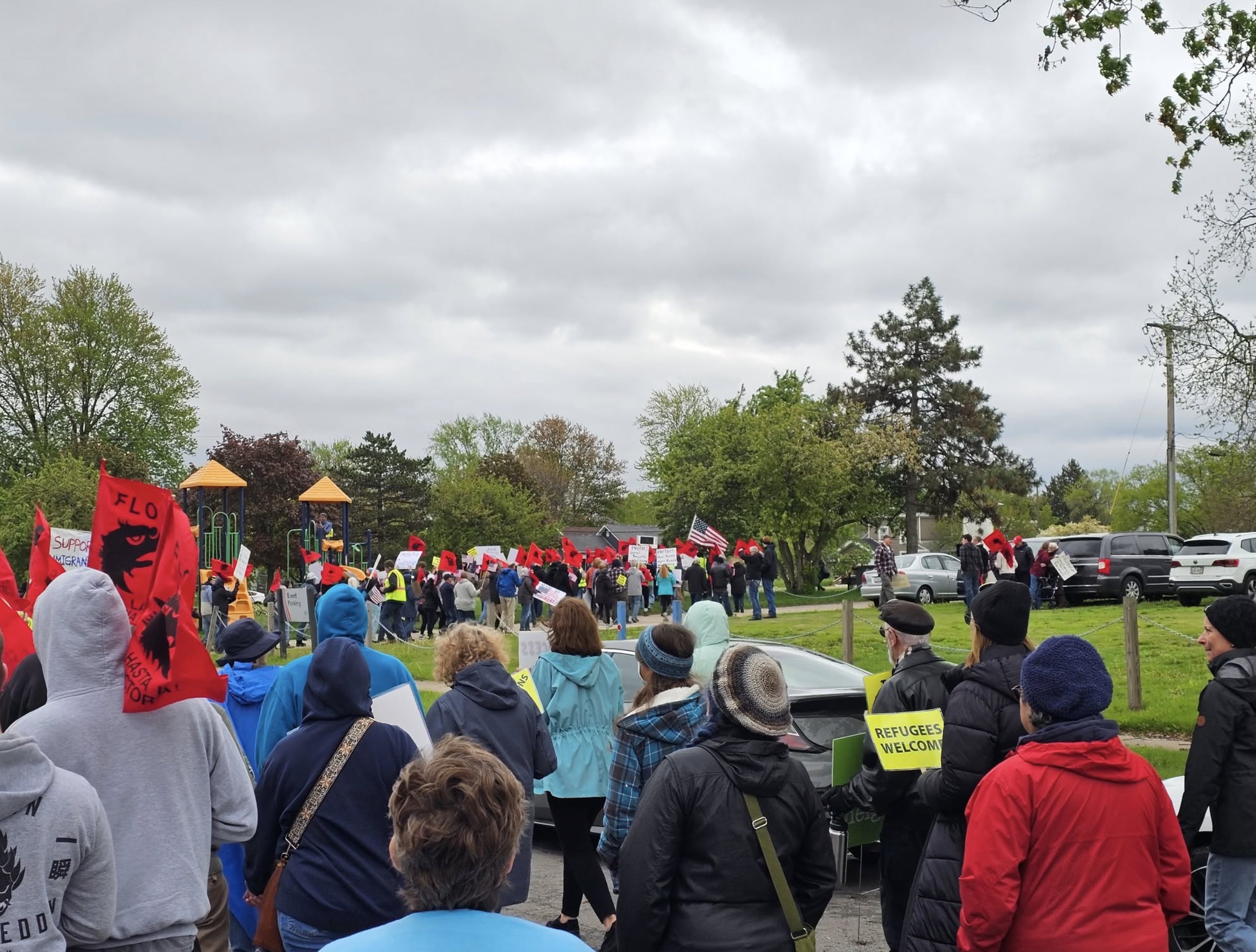
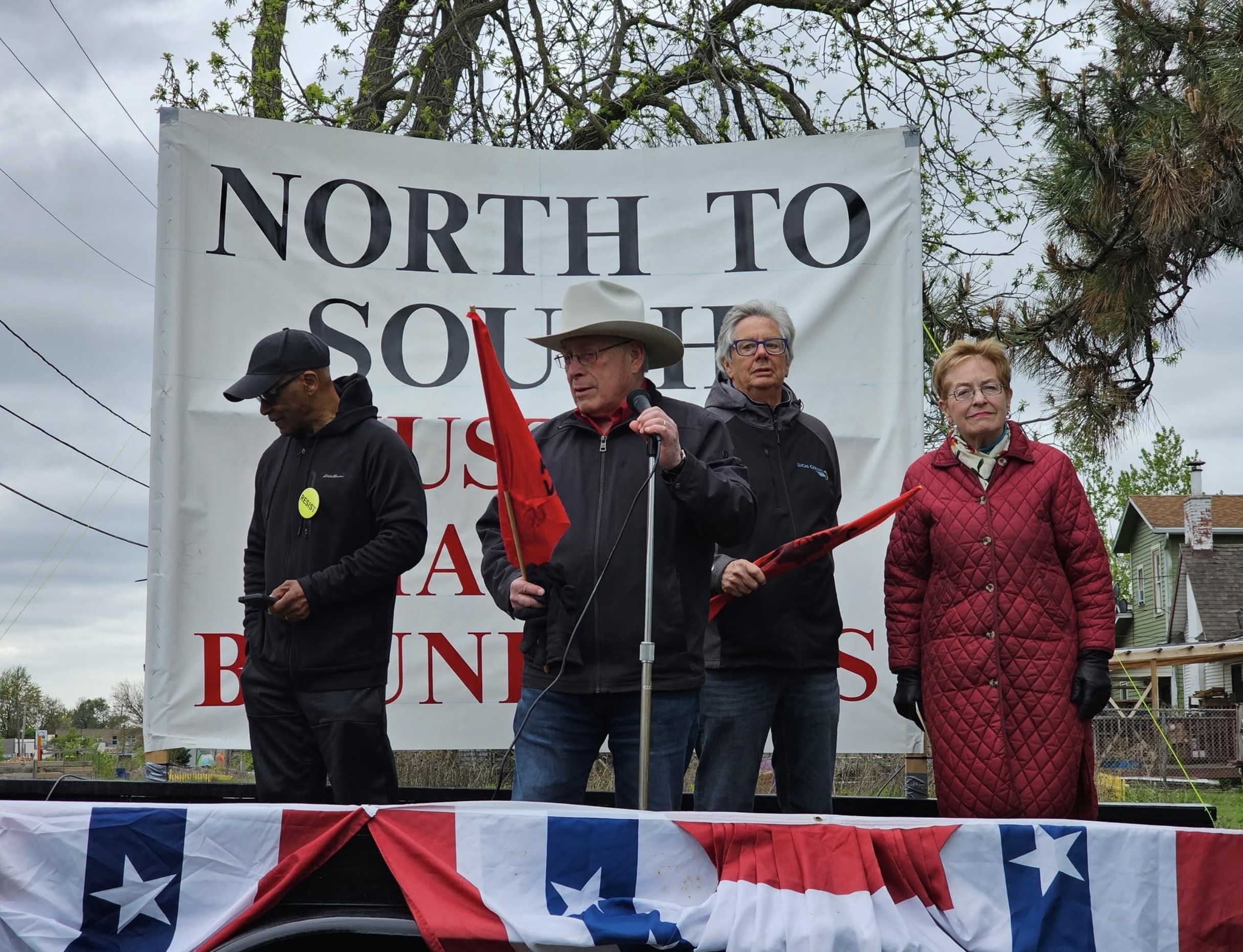
As ICE continues its raids across the country, FLOC recently held a protest calling for immigration reform. Velasquez is encouraging members and other farmworkers to not hide, but to voice their opinions for change.
“Let’s start demanding honest reform that makes sense not only for the immigrants, but for employers as well. Because employers need these workers, particularly in agriculture,” Velasquez said. “You don’t like what’s happening, get up and do something.”
(Liz Partsch can be reached at epartsch@farmanddairy.com or 330-337-3419.)





Thanks for this coverage of a critical issue that will impact everybody. I commend state and national farmer organizations for speaking up loudly and clearly that non-native labor is key to continuing our nation’s food supply–and being persistent in Washington, D.C., as the “Big Beautiful Bill” is debated. We need our migrant neighbors who are here to work and contribute to our communities. I pray for their safety and ability to live without fear.
The writer is an “environmental journalist”, from Pittsburgh, and none of her listed hobbies has anything to do with farming or animals etc. Farm and Dairy seems to be a garbage heap of leftests. Your articles and writers skew so far left that your subscribers are probably getting sick of reading your paper. You seem to forget that your entire subscription area turned more Republican in 2024.
Long article that can be summed up easily – are they here legally or not. If legally, then it is basically a non-issue. If illegally, then they are deported, and can have the opportunity to re-enter via legal means, either citizenship or work visa. As for the financial impact on farms – shame on them for hiring illegal help in the first place. Most likely done to take advantage of these people by very low wages, benefits, or living conditions. How is that fair to the farms doing legitimate business practices? No where else in this world can you waltz in undocumented and expect to remain – or worse.
Unhappy with this article . People are stressed enough and don’t need your far left opinionated view. Shocked it was allowed to be published.