

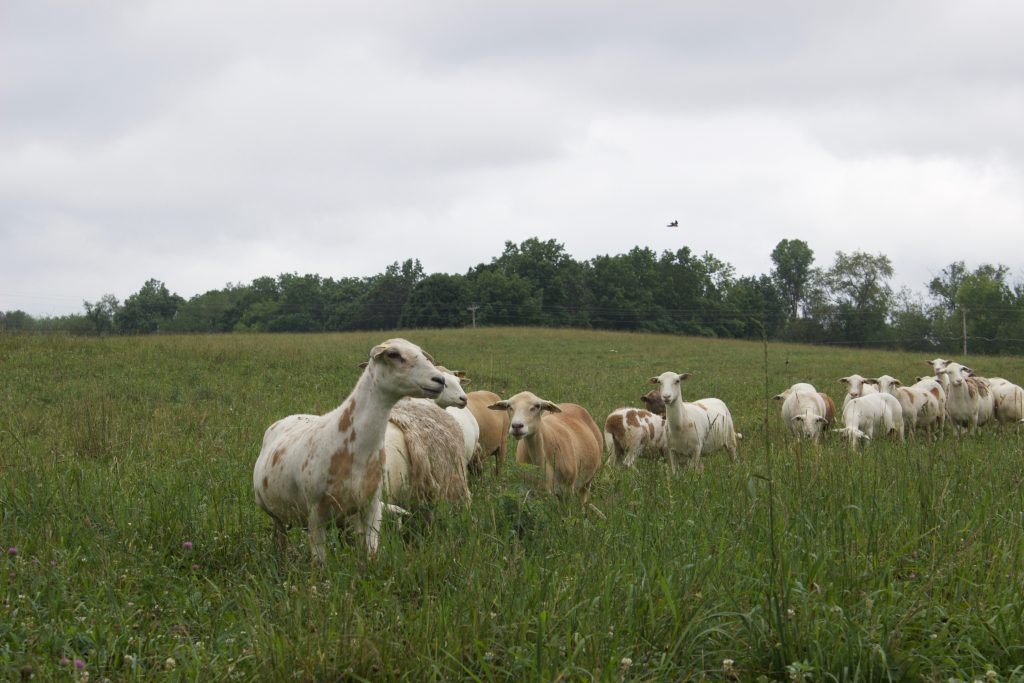
As grazing is in full swing, you may be looking at your lush pastures and thinking that your herd’s bellies are full and fed. But full does not always mean well-fed.
Ohio has been battling drought conditions for the past two years. Many producers had to overgraze pastures because they did not have much other choice. This takes a toll on your grass and takes time to recover.
Overgrazing will degrade pastures by stunting root growth, allowing weed growth, depleting soil health and producing low-quality forages for livestock. It will also then take longer for pastures to come back for grazing again. If you need help knowing when to rotate pastures or using a grazing stick, reach out to your local extension office for help.
Rumen degradation
As ruminants eat, their rumen fills up quickly with roughages and forages. The rumen needs time to degrade these substances. When the rumen is filled, the animal feels full and will not eat anymore.
Where it becomes an issue is when forages have low nutritional quality. Typically, those have higher fiber contents like lignin, neutral detergent fiber and acid detergent fiber, meaning that it is more fibrous and takes more time for the rumen to break it down. Low energy and protein are critical nutrients that are also typically seen as low values.
The issue with this is that livestock will be consuming low levels of nutrition and nutritional requirements, such as energy and protein, will not be fulfilled. We want to avoid livestock filling up on poor forages and add supplementation, improve pasture management strategies and/or evaluate soil health. Forage nutrients start with the soil.
Forage testing
Many people talk about forage quality and testing during the winter, so you can see if any additional supplementation is needed with hay. During and after times of pastures being worn down, it is also a good idea to test your pastures. This will allow you to know the nutrient profile of your forages and you can avoid your herd getting full on non-nutritional forages and help you to make improvements.
If you are interested in forage testing, Ohio producers can contact their local Ohio State University Extension office. The first sample is $15, and additional samples are $20 through the 2026 eBarns Hay Testing Program. Samples must be submitted by July 30. For more information, reach out to your local Extension office or contact Garth Ruff, OSU Extension Beef Cattle Field Specialist, at 740-305-3201.
Behaviors
There are some behaviors that you can observe in your herd. If livestock are not getting enough nutrition, their body condition score will decrease, which is a way for us to evaluate on a scale how underweight or overweight the animal is. They can exhibit grazing longer or searching for better forages. You may start to see a decrease in milk production or reduced gains. You could see your herd separate from the group and graze individually or grazing midday during hot sunny summer days.
These are all abnormal behaviors, and the characteristics could be interpreted as low-quality pasture, especially if most of the herd is showing these signs.
If something is not right, your livestock will often tell you. Changes in grazing patterns, body condition or performance can all point back to forage quality. Taking the time to observe these behaviors and evaluate your pastures can help ensure your animals are not just full but are nutritionally fulfilled.