

SALEM, Ohio — Winter walks in the forest bring sounds of boots crunching through heavy snow and wind whistling through bare trees. But, there is another noise you could hear on rare occasions: the sound of an “exploding” tree.
“It’s very loud, like a gunshot, because it’s a lot of energy that’s being released,” said Alistair Reynolds, information and education manager at the Ohio Department of Natural Resources Division of Forestry.
“(The tree) has been storing this energy inside the wood, (so) the pressure builds up and then boom.”
In the past two weeks, extreme temperatures have swept through the region, and a recent snowstorm blanketed communities with several inches of snow and ice, leading people to bundle up or stay indoors.
But cold isn’t the only concern people should be aware of during these extreme weather events.
Recently, you may have heard of the phenomenon “exploding trees,” when cold temperatures cause trees to expand and split. But why does this occur, and how serious is it?
The anatomy of a tree
Before you can understand why a tree “explodes,” it is important to know how trees cope with cold temperatures.
Trees go through a process called hardening off — cold acclimation — beginning in the fall to prepare for winter, says Reynolds.
Cold acclimation consists of several steps. First, the tree relocates all “freezable” water from living cells (i.e., located between the bark and wood) into the spaces between these cells. This process allows ice crystals to form outside of these living cells if extreme cold temperatures are present.
Trees also mix this water and starch with sap, which acts as a natural anti-freeze, lowering the freezing point inside living cells, allowing trees to withstand cold temperatures.
According to Reynolds, that’s why we see red and yellow leaves in the fall; it’s a signal that the tree has begun this process of cold acclimation. When late winter and spring come around, the trees start to de-acclimate, moving water back into living cells.
“By the time growth begins, they can no longer tolerate cold weather anymore because they’re full of water,” Reynolds said, adding that sugar maples de-acclimate very quickly — the most common maple tree for producing maple syrup.
Alternating temperatures and this quick de-acclimation are vital for the flow of sap in these trees. Freezing temperatures cause sugar maples to draw water into their roots, replenishing sap, and warm (thawing) temperatures push this sap out.
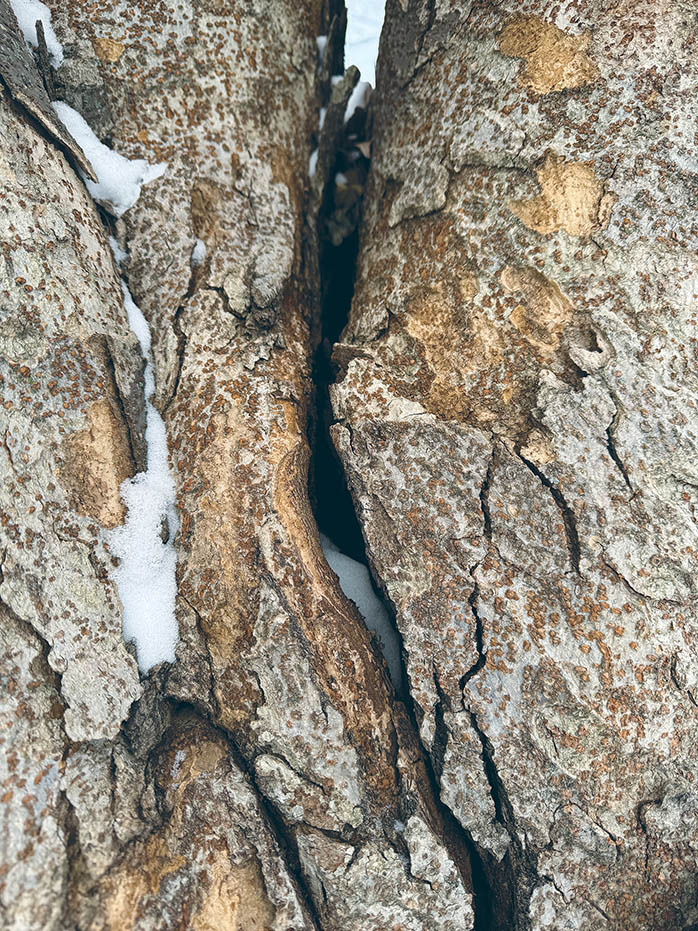
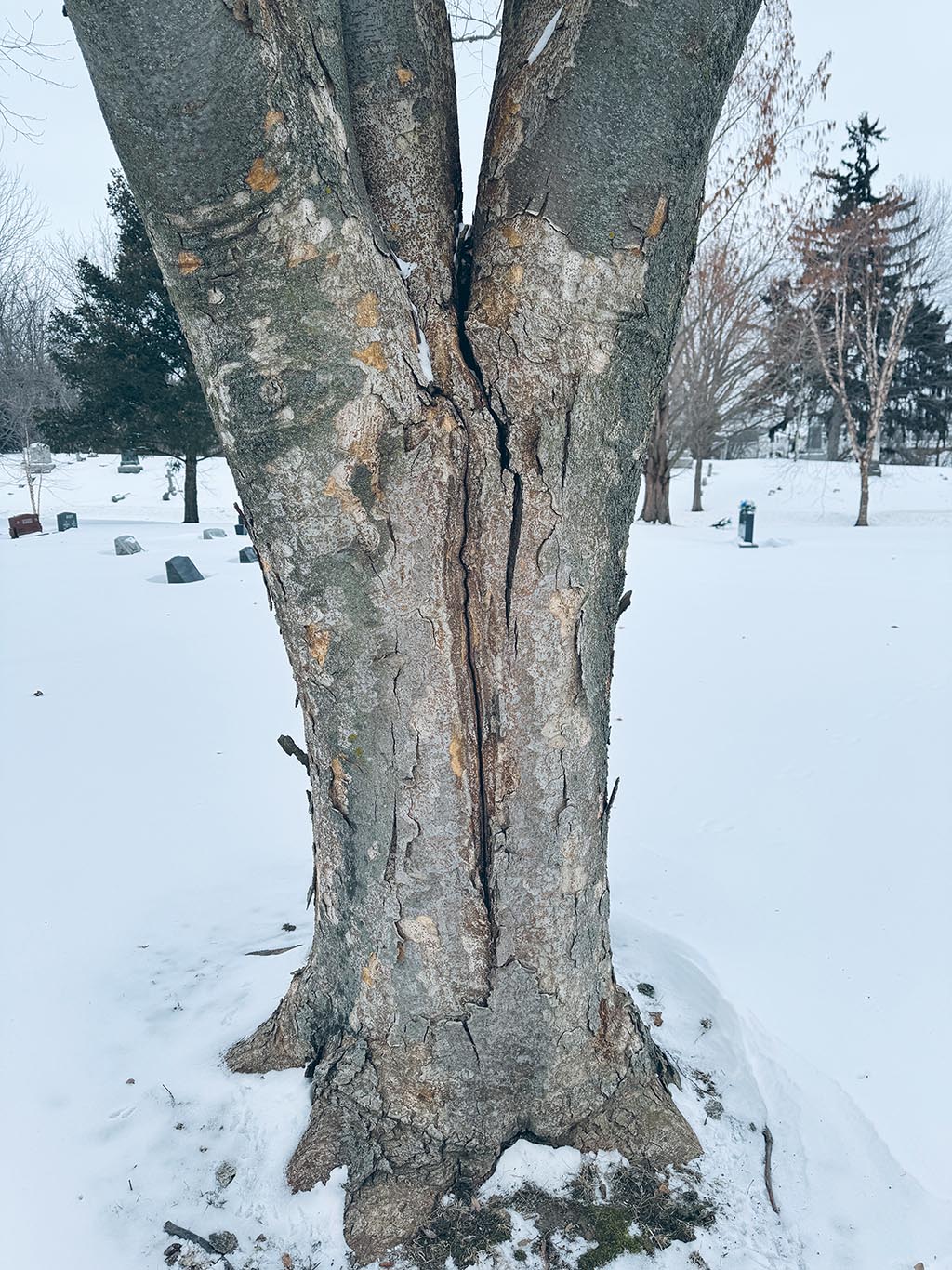
Frost crack
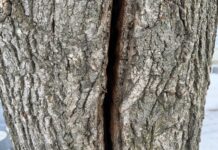
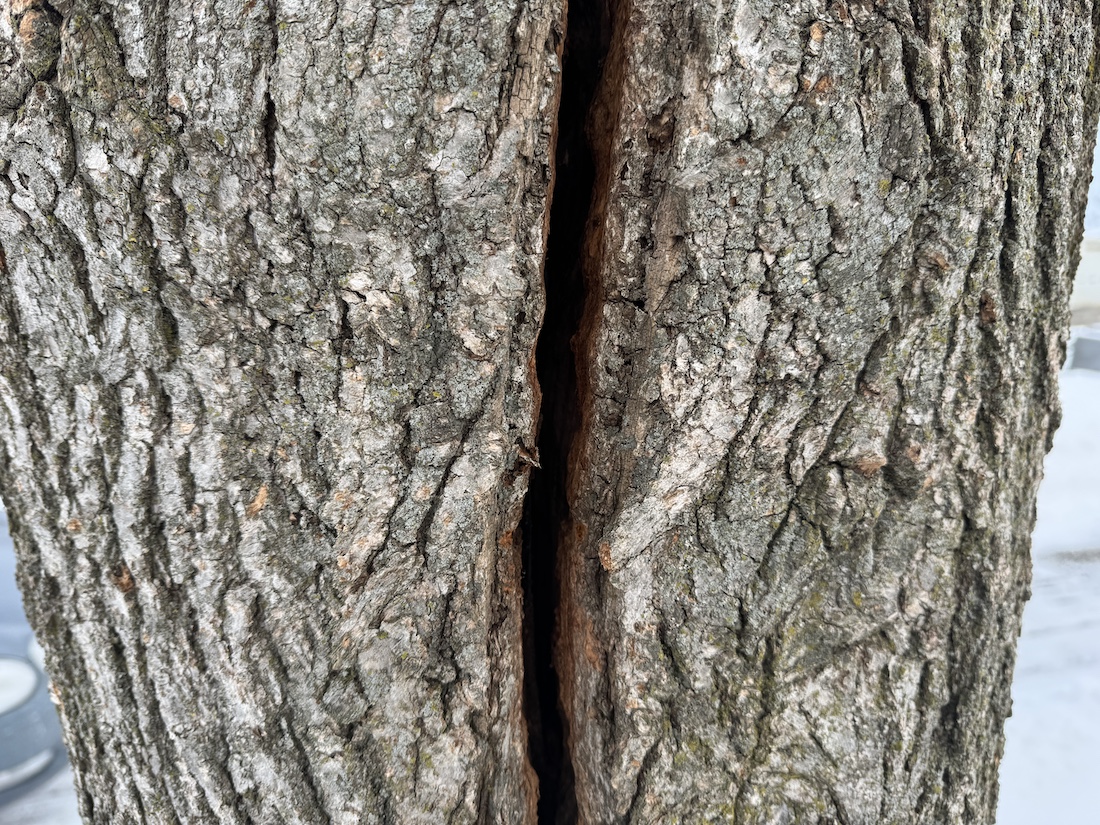
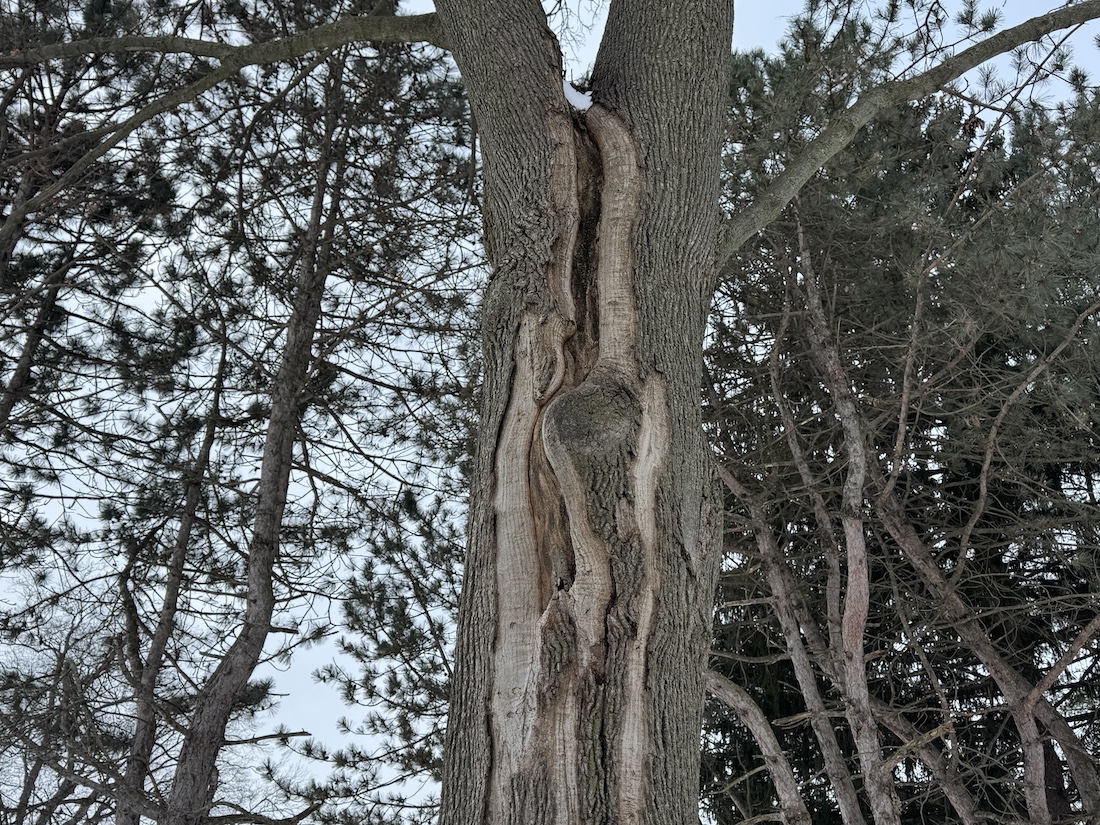
The more common — and accurate — term for an exploding tree is frost crack.
According to Reynolds, this “occurs when we have these unusual fluctuations in temperature.” Warm temperatures cause the tree to start de-acclimating — moving water back into living cells.
But when freezing temperatures strike suddenly, the water in these cells crystallizes into ice, causing the ice to expand. This puts substantial pressure on the wood fibers of the tree, leading the tree to split.
This split often occurs a few inches deep into the sapwood of a tree — a tree’s “pipeline for moving water up to the leaves,” according to the U.S. Department of Agriculture Forest Service. Sapwood is the newer wood on a tree, and is part of its outer layer.
Frost crack is more common on the south or southwest side of a tree, Reynolds said, because that’s where the sun spends the most time warming the bark, causing this “partial” de-acclimation process.
Some trees are likely to frost crack more than others, like younger trees and trees with thin bark like maples, beech and birch.
“In smaller trees, the whole tree can split in half,” Reynolds said, adding that “Depending on the depth of the split and how deep it goes, it can cause structural failure in the tree, or at least a partial failure at the point where the split is.”
If lots of snow or ice is present on the tree, this can exacerbate this “structural failure,” he said. Last week, an ice storm from Snowstorm Fern caused dozens of trees across Nashville, Tennessee, to crack and fall.
Despite extreme conditions like ice, Reynolds notes that it is more common for trees to recover from frost crack than succumb.
While “exploding trees” may sound scary, it isn’t a huge threat to the public, unless someone is walking through the woods when a frost crack is happening or during an ice storm — an already dangerous situation.
(Liz Partsch can be reached at epartsch@farmanddairy.com or 330-337-3419.)