





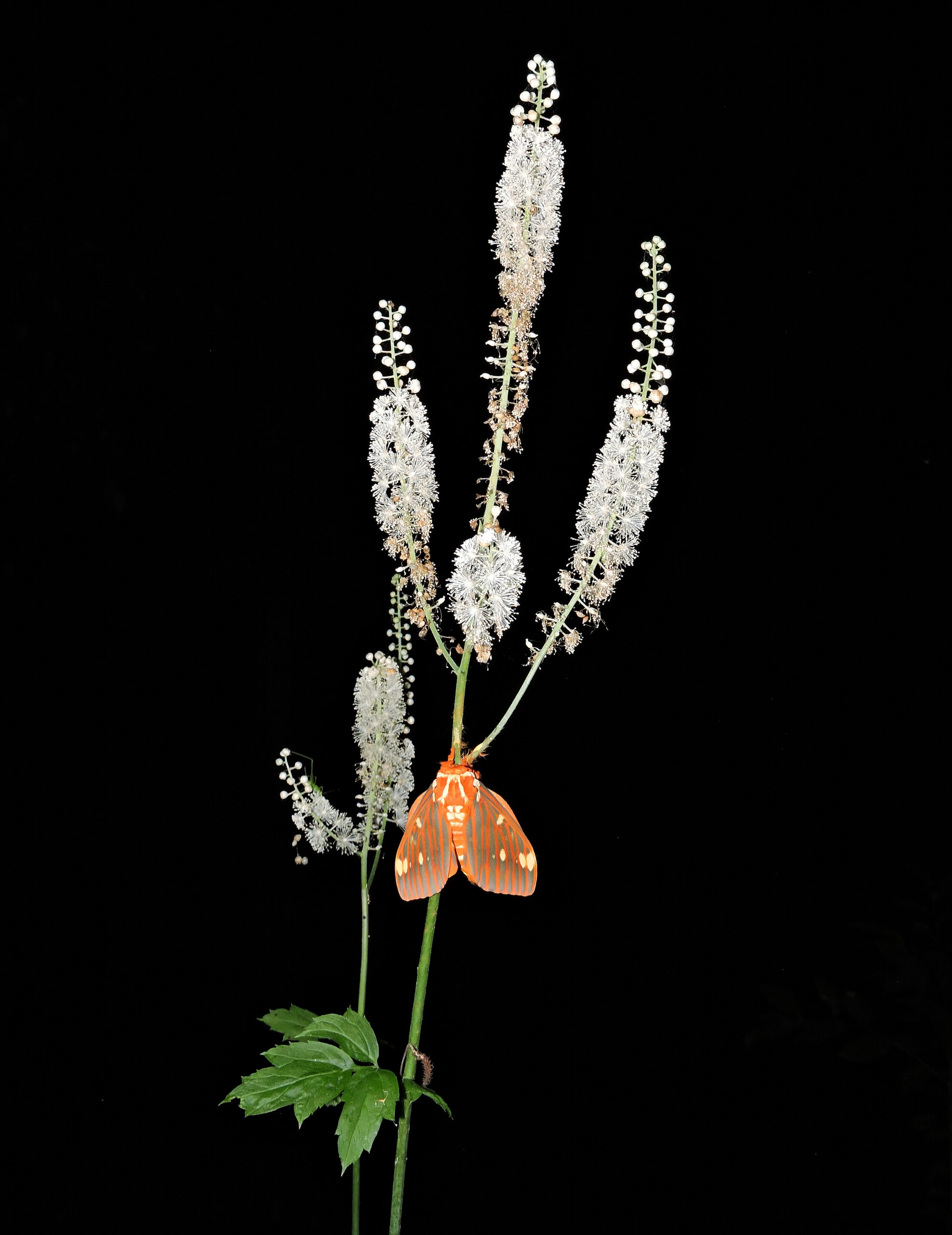
Unlike most people who use calendars to assist them in keeping track of time, I simply look out the window. For instance, I know that July has arrived every year when I see the imposing spires of white flowers beginning to bloom throughout the forest.
Attaining a whopping 7 feet in height, these “candles” are incredibly unique as their branching structures tower above all other herbaceous growth on the forest floor. Furthermore, each individual blossom reminds me of an exploding firework, timed perfectly with the Fourth of July festivities.
While most wildflowers break ground in early spring when the warmth of the sun has leafless access to the forest floor, black cohosh (Cimicifuga racemosa) thrives in the shade of the canopy above.
Also known as black snakeroot, bugbane or fairy candle, this perennial plant begins its growth by sending up large, deeply notched, compound leaves, which mature around 2 feet tall. Soon to follow are one or two strong stems that will hold up the stunning flower spikes known as fairy candles, which can reach lengths of up to 20 inches.
The flower structures begin with small, round, white buds that burst open from the bottom of the raceme first and slowly work their way upward, opening as they go. As they burst forth, the flowers’ petals fall to the ground, leaving behind showy clusters of star-like stamens, giving a glowing appearance. The lovely white flowers have a somewhat fetid smell that attracts flies and beetles in addition to bees and moths, resulting in the name bugbane.
Fairy candles often offer other clues besides which month of the year we are in. For me, they signal the season for North America’s largest moth (by mass), the royal walnut moth, to emerge from its underground pupae and fly into the night in search of a mate.
When I see the fairy candles in bloom, I immediately know it’s time to check my black raspberry patch before the birds make a feast out of the ripening fruit.
If the name “black cohosh” sounds familiar, it’s because you may have seen it on store shelves, being passed off as an herbal remedy. Native Americans regularly used this plant to treat a variety of ailments, including snakebites, as well as female discomfort during menopause and menstruation. Keep in mind, however, that this dietary supplement has not been well-studied and may not be totally safe and effective if used.
When we built our house, I made sure to transplant some black cohosh along our walkway, so that we might enjoy the beautiful spires each July. Yet, there is nothing like taking a stroll through the mature forest of our local park district to see large populations of this beautiful plant in full flower, usually growing along sloping ravines.
Even better, consider a walk by the light of the full moon and revel in the magic brought to you by Mother Nature, as her fairy candles light up the forest.




