IRWIN, Pa. — Local beef belongs in local schools, according to Nichole Hockenberry, executive director of the Pennsylvania Beef Council.
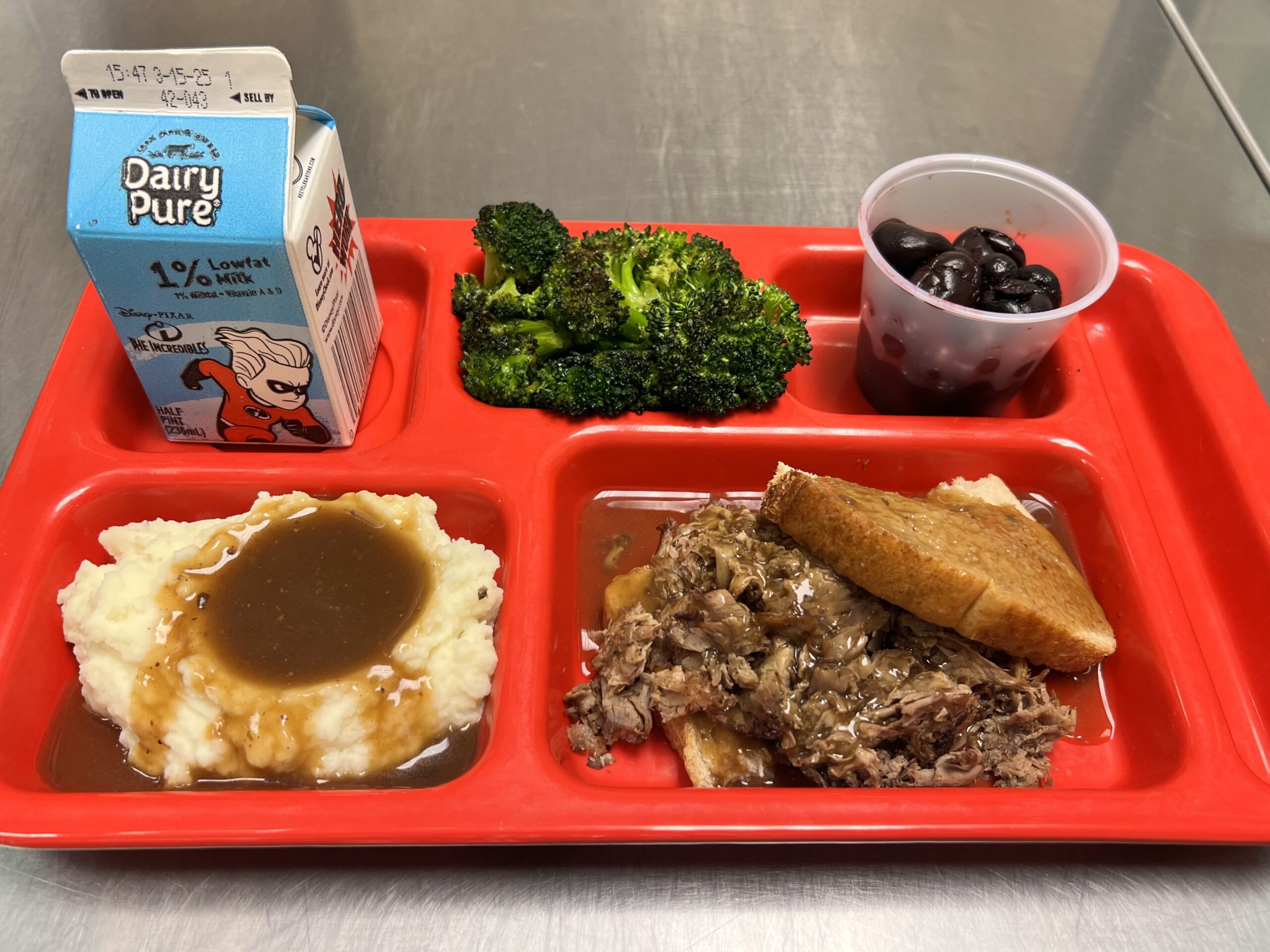
That has been the mission of the non-profit organization’s PA Beef to PA Schools program, launched in 2022, that connects Pennsylvania beef producers with schools to source nutritious, farm-fresh beef.
Last year, the program provided 120 school districts across the state with 133,000 pounds of beef. It’s also been a benefit to farmers, giving them a steady market and fair price for their beef.
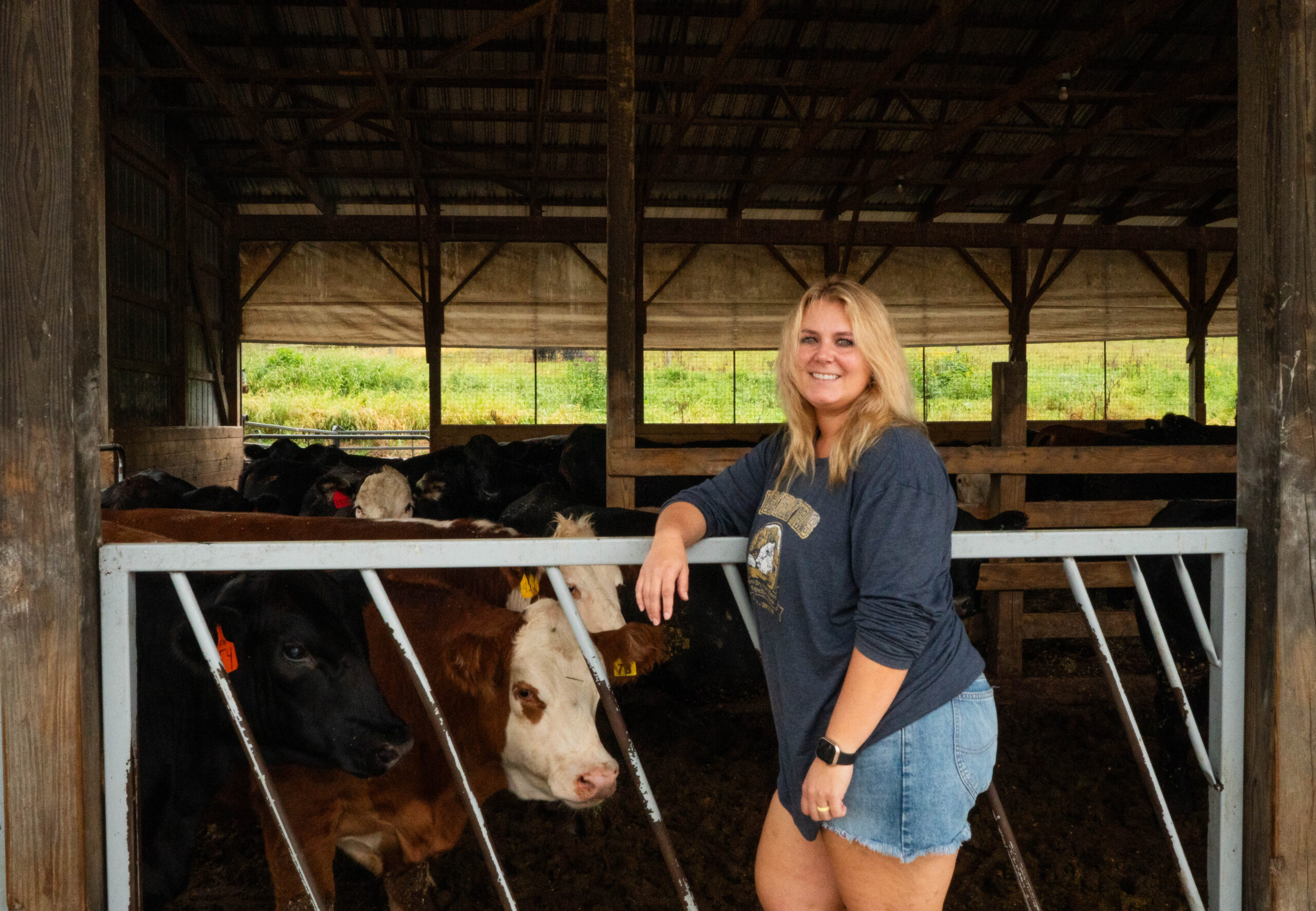
“The economic dollar is staying localized,” according to Jenn Logan, beef farmer at Logan Family Farms in Westmoreland County. “It’s helping support our farm and the companies and processors we pay to produce it, because we take the cattle to USDA-inspected facilities to get cut.”
The program, however, is in jeopardy of losing momentum as the proposed state budget significantly cuts funding. The budget is also three months overdue, leaving the schools and producers involved waiting for what’s next.
“We can’t fully launch the program because I don’t know the fate of the funding,” Hockenberry said. “(But) people really believe in the program, enjoy the program, love the quality beef that they’re receiving and the story they’re able to tell. Ultimately, we’re feeding kids quality foods.”
PA Beef to PA Schools
The idea for the PA Beef to PA Schools program was born in 2019, when Hockenberry and colleagues at the Pennsylvania Beef Council, the state’s beef checkoff program, started asking the question: “How do we connect the local agriculture community to schools?” Hockenberry said.
But, at the time, there were many obstacles in the way, including pricing, packaging, transporting and finding a beef producer that can fulfill a school’s food needs — specifically larger school districts in more urban areas, Hockenberry said.
“It really became evident that there were some barriers of entry for school districts that may have an interest in procuring local beef,” Hockenberry said.
To fix this problem, Hockenberry started looking at states that had a similar program. Using them as a model, the Pennsylvania Beef Council developed a plan for the program in 2021 and, shortly after, received funding through the Pennsylvania Department of Agriculture’s Agricultural Promotion Matching Grant Program.
Through the PA Beef to PA Schools program, producers set the price of beef, and schools pay 50% of this cost, with the remaining 50% paid by state funding or grants.
The program officially launched in 2022, supplying 9,000 students from seven school districts in five counties with 6,410 pounds of beef. Last year, the program supplied beef to 220,000 students in 48 counties across Pennsylvania, covering 70% of the state.
The benefits
Logan Family Farms joined the program in fall 2024, supplying 700 pounds of beef to Hempfield and New Kensington school districts that year. The program has helped support the Logans’ 100-acre beef farm, which has been in Jenn Logan’s husband, Ben Logan’s, family since 1894.
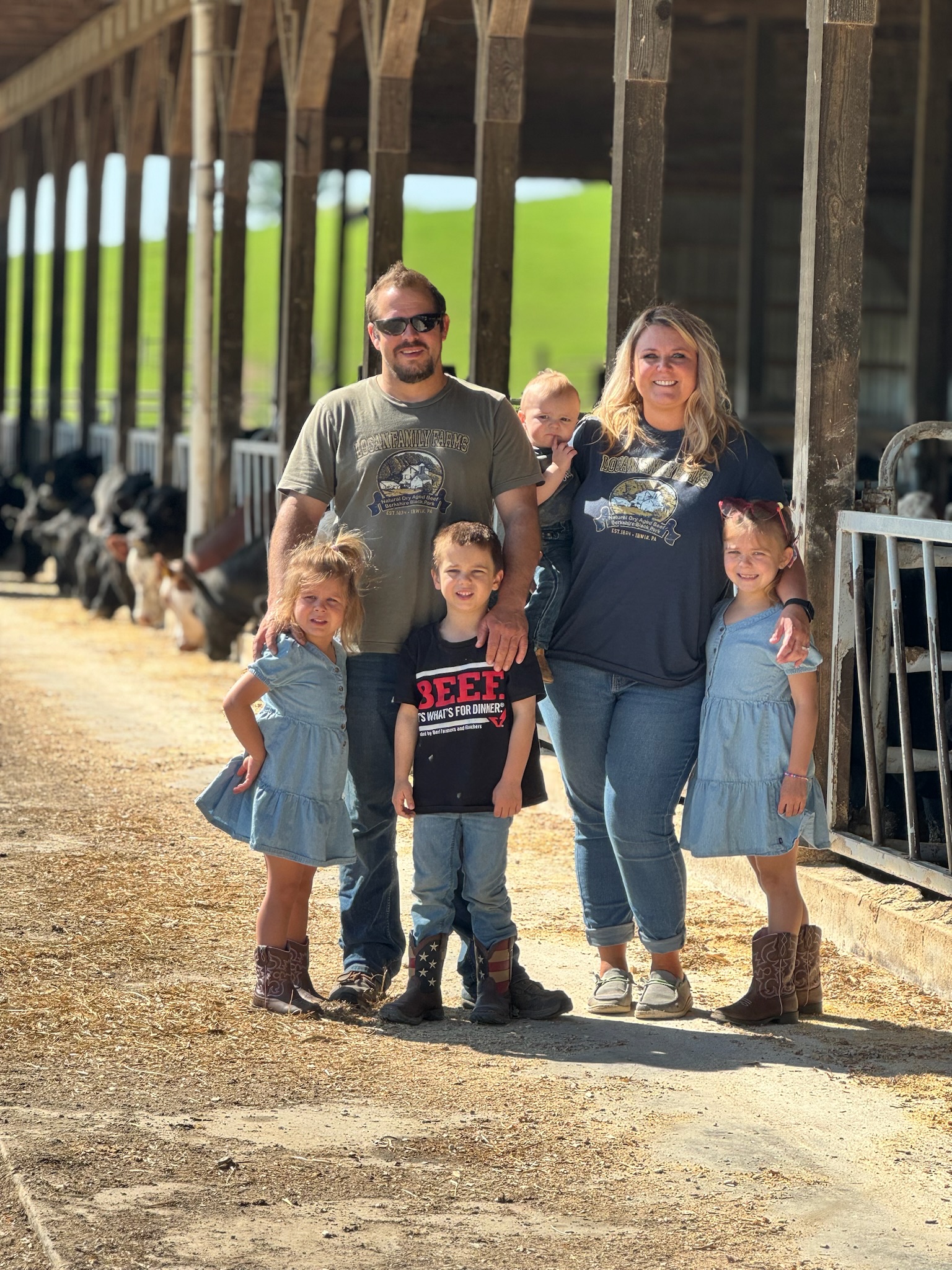
But making money was never the focus, Logan said. “(We wanted to) make it affordable for everyone, where we were able to make a little bit of money, but more so focus on just really being able to work with the community and providing them with a local product,” she said.
The program has also helped educate students on where their food comes from. “It’s a great way for the kids to understand that (beef) just doesn’t arrive on a tractor-trailer and fill the grocery stores. This program really helps educate the kids,” Logan said. “The stories that we heard from the school were just how excited (the kids were) anytime local beef was being served for lunch.”
Bobbi Dunn, of Dunn Road Premium Beef in Crawford County, has continued to stay involved in the program for the same reasons: to support her local community. Dunn, who runs a 900-acre beef farm, started providing beef to Crawford County and Lawrence County schools in the fall of 2023.
According to Dunn, rural areas, in particular, are reaping the benefits of locally sourced beef.
“We do have families that maybe struggle to go to the grocery stores and buy beef and buy good protein sources,” Dunn said. “So, if we could be involved in a way that would maybe help those kids have access to a really healthy, high-protein source of meat through the schools on a semi-regular basis, it is a great way to be involved in the community.”
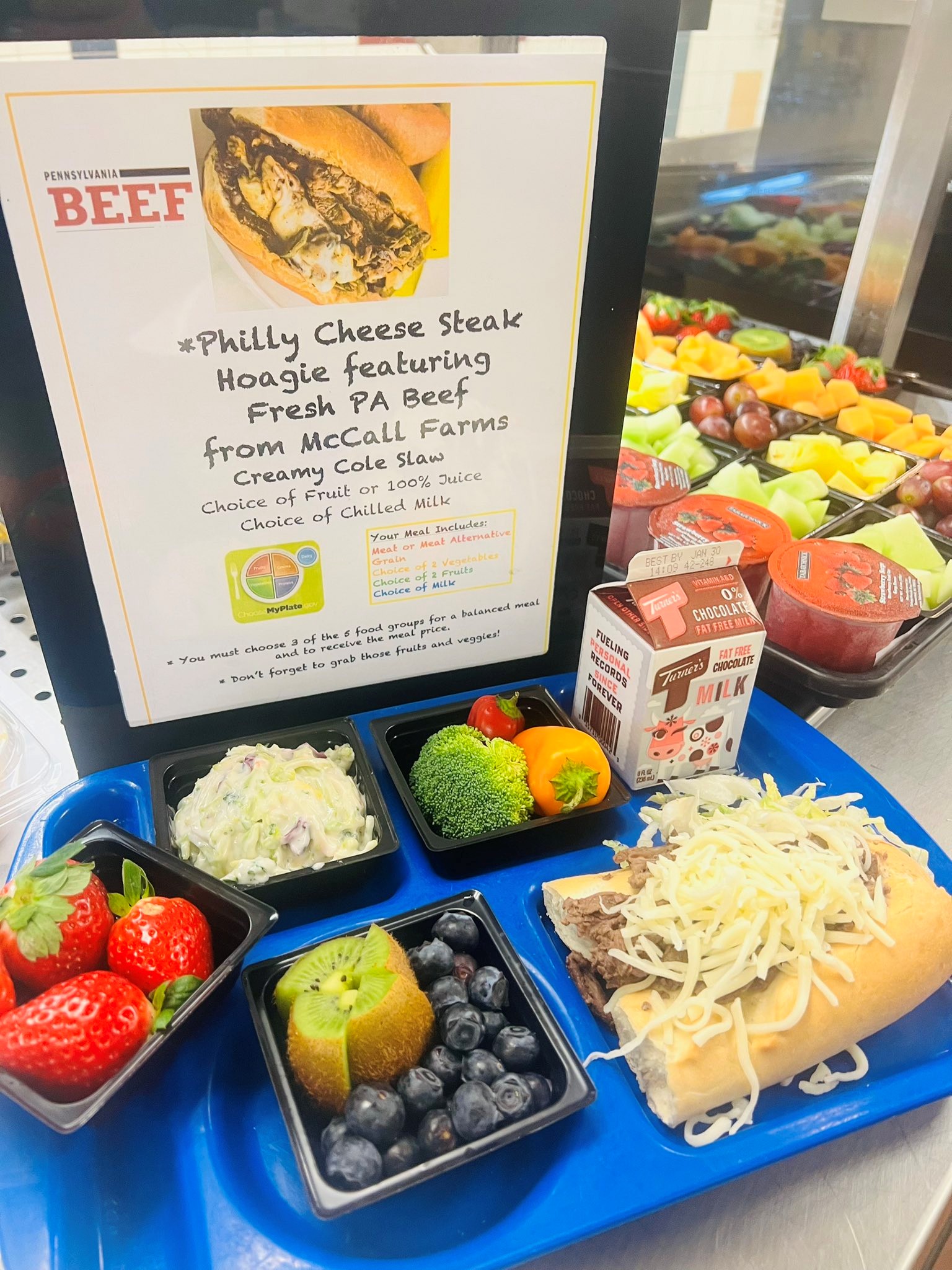
School districts involved in the program, like Uniontown Area School District, are seeing these benefits to students firsthand. Uniontown Area School District started receiving 300 pounds of beef each month from Happy Valley Meat Company in the spring.
The beef is easier for cafeteria workers to work with and is more nutritious than what the school was getting before, said Chuck Brown, food service director of Uniontown Area School District.
“The fresh farm ground beef is a lot less fatty and a lot better for the kids than some of the commercial ground beef that is out there,” Brown said.
Unfortunately, some school districts and farmers may not get to participate in the program anymore with proposed cuts in the 2025-26 Pennsylvania budget.
Budget cuts
Last year, the state budget included an additional $800,000 for the Agriculture Excellence Beef Line item, which helped expand and fund the program after it did not receive funds from the Agricultural Promotion Matching Grant Program.
The Pennsylvania Beef Council received $300,000 of this funding and, in one year, was able to grow the PA Beef to PA Schools program from serving 32 school districts to 120.
But the proposed 2025-26 budget does not include this funding. And with no funding yet from the state budget this year, Hockenberry says some school districts and farmers may not be able to participate.
“The funding level will determine how many schools were able to do that cost share with, so ultimately, that’s what’s at stake right now,” Hockenberry said. “What does the funding look like, and how many schools can we help? Because there is still a large number of those school districts that simply could not afford beef at normal retail.”
Already, the program is at a standstill. Only a handful of school districts have continued to source local beef for the fall school year, with the hope that funding will come before next semester.
Meanwhile, Uniontown Area School District has had to go back to buying commercial ground beef — a lower quality beef compared to U.S. Department of Agriculture or local beef.
“We can’t even get USDA ground beef,” Brown said, because there’s not enough inventory for him to get beef delivered to his schools.
Hockenberry says “the program will happen one way, shape or form,” noting that she has applied for other grants, but “they do not tally up to the same amount of funding” as last year.
Although the future of the program is uncertain, many farmers and school districts remain committed to staying involved. Both Dunn and Logan, who are waiting for their school districts to receive funding to rejoin the PA Beef to PA Schools program, plan on participating again once funding is available.
Brown is also making future plans. He hopes to work with Hockenberry to supply beef from farms closer to Uniontown and is spreading the word to other school districts.
“I’ve turned a couple of the neighboring school districts onto the program, and they’re going to sign up as well as soon as the budget is passed,” said Brown.
(Liz Partsch can be reached at epartsch@farmanddairy.com or 330-337-3419.)