







The luna moth: Mother Nature’s masterpiece
The luna moth's soft, dreamy appearance features a snow-white body, pale green wings and startling eyespots and unique tails that keep it safe.

The mulberry tree
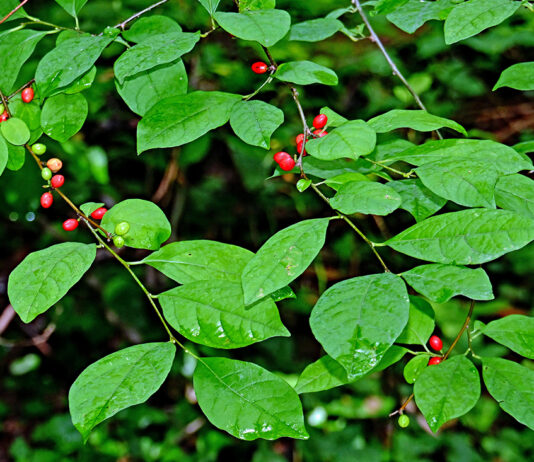
Tami Gingrich was recently surprised by the amount of fruit hanging from a white mulberry tree, and even more surprised to find out it's invasive in Ohio.
House sparrows: Cold-blooded killers
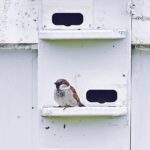
Tami Gingrich explains the devastation house sparrows cause and highlights strategies to protect bluebirds and other native cavity-nesting birds.

Eastern phoebe: The harbinger
Tami Gingrich is looking forward to the arrival of the eastern phoebe, a harbinger of spring with a distinct repetitive, two-note “fee-bee” song.

The walkingstick: Master of camouflage
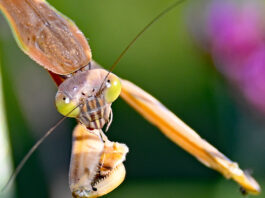
Tami Gingrich shares her experience rearing walkingsticks and the observations she made about their unique characteristics along the way.

The American kestrel: A falcon in peril
Tami Gingrich discusses the value of Ohio's smallest bird of prey, the American Kestrel, and her efforts to boost its numbers.
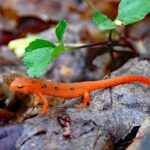
The Eastern newt: An amphibian with a disordered life cycle
Most amphibians start in the water and move to land—but the Eastern newt likes to do things a little differently. After spending its teenage years as a brilliant orange Red Eft wandering the forest floor, it undergoes a total transformation to head back into the water for good. Dive into the fascinating, "bass-ackward" life cycle of this incredible salamander in our latest feature by biologist Tami Gingrich.

Oak apple galls
Have you ever noticed brown paper-like balls suddenly appearing on the forest floor or attached to leaves of oak trees? They might be oak apple galls.

The organ pipe mud dauber wasp
Tami Gingrich offers a window into the unique reproduction habits and lifecycle of organ pipe mud dauber wasps.

They fly in June, crawl in September
Tami Gingrich details the unique lifecycles of moths, highlighting the largest and most beautiful species in North America.



