

While writing the book “A Crusade for Conservation,” which outlines the 150-year history of the Ohio Division of Wildlife, I had the opportunity to collect stories from past and present employees.
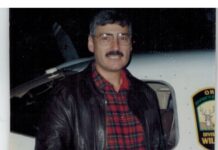
One of those accounts was by Jerry Scott, who once served as an investigator on Lake Erie. He would go on to lead the wildlife officer training team and manage the Division’s TIP Program (Turn In a Poacher). This is his story about a rather interesting day — and one he will never forget.
Jerry’s story
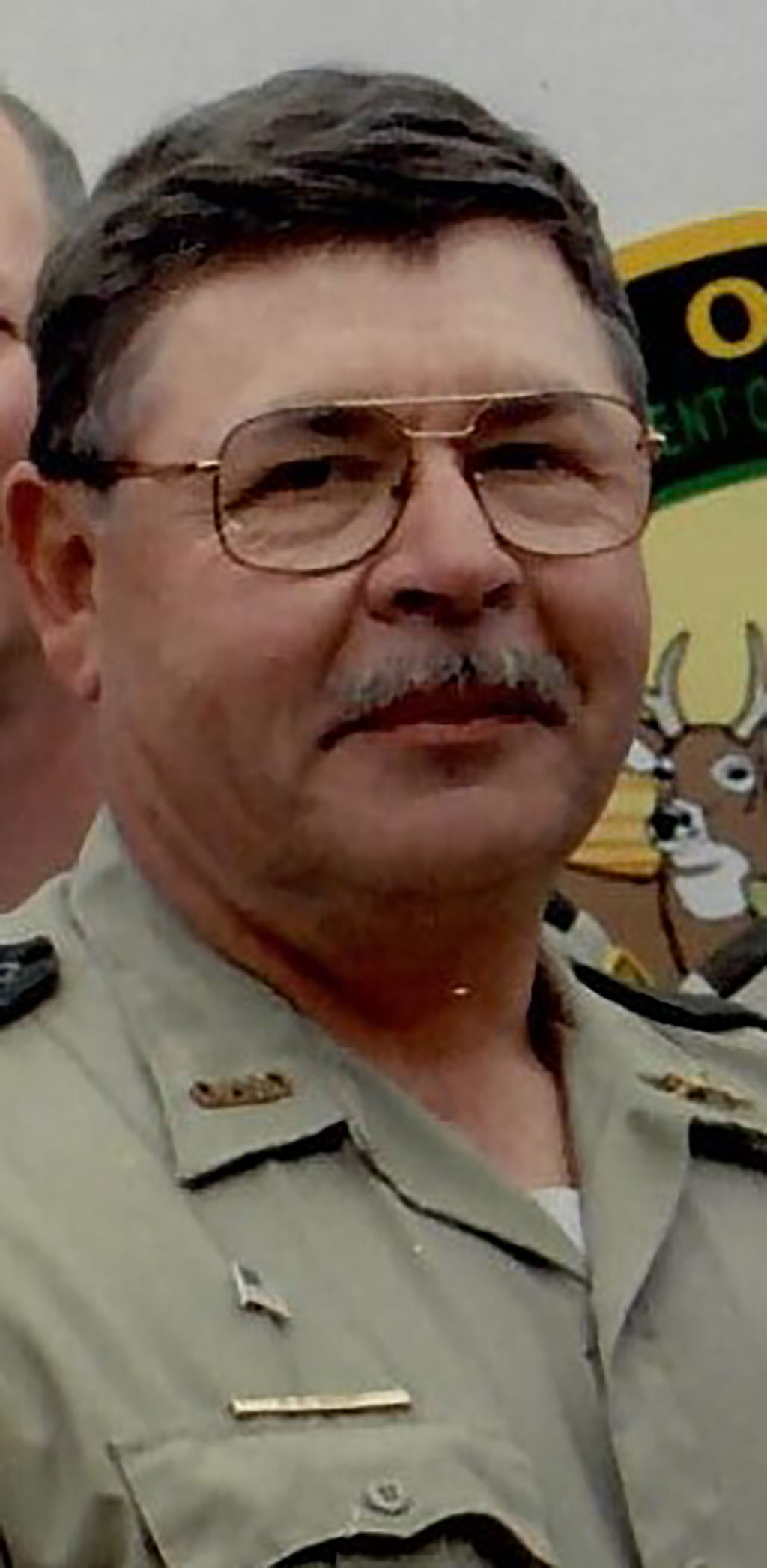
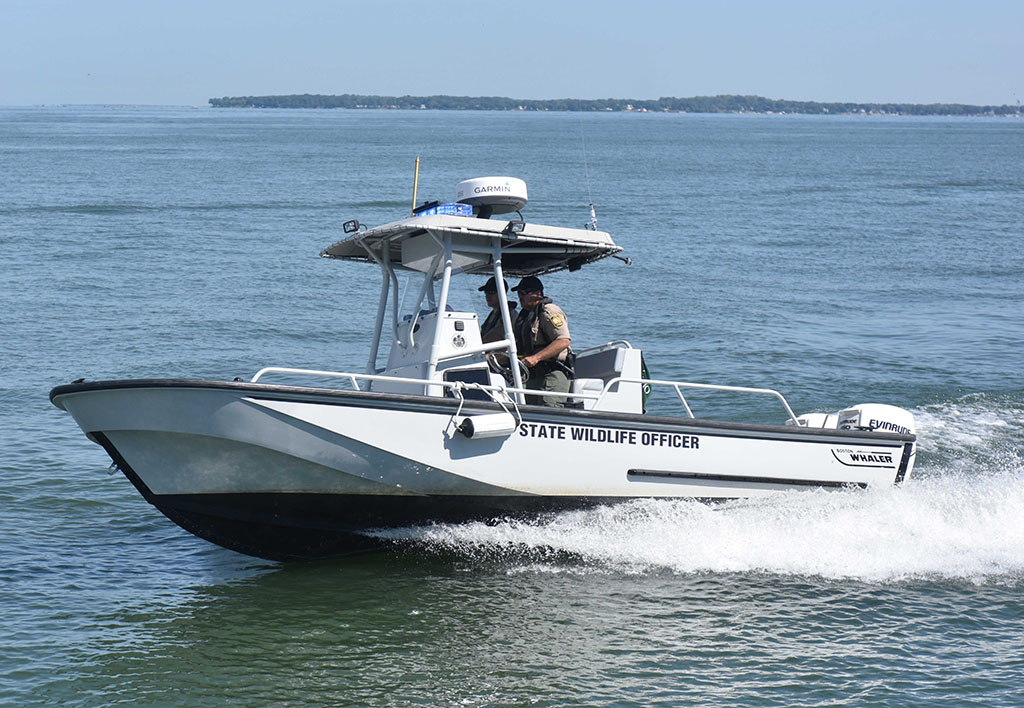
Jerry Scott: I did not have the opportunity to celebrate my anniversary, go trick or treating with my girls or spend the evening in a church board meeting on Oct. 30, 1977. Instead, I rode 2 1/2 hours quietly back to the Ohio Division of Wildlife dock in Sandusky, Ohio, on the south shore of Lake Erie. The day started just after 7 a.m. as wildlife investigator Paul Wynn and I boarded the division’s 28-foot Bertram boat to patrol the border between Canada and Ohio.
We were looking for commercial intrusion into Ohio waters from Canadian gill netters. The lake was flat and covered with heavy fog. It was known that Canadians used the cover of fog to sneak into Ohio waters as they could not be easily detected. Ohio waters were more productive due to the inability of Canadian resource officers to obtain compliance to their regulations through their provincial courts.
Just prior to 9 a.m., boat operator Wynn and I were approaching South Bass Island from the southeast when I noticed a target ship on the radar. Speed was reduced due to the concentration of fog, and so we could stop within a safe distance should an emergency require it. I placed the ship to be just over 2 miles into Ohio waters. We approached the target and discovered it was a Canadian commercial fishing vessel in the process of pulling fish-loaded nets onboard.
We had managed to get within a half mile before being seen. This was indicated by a large puff of black smoke from the exhaust as the captain quickly powered up the 68-foot vessel. We surmised that this was in an attempt to escape capture, the crew likely cutting gill nets loose for a run to the border. Officer Wynn piloted the Bertram so that our approach would be from the right side of the vessel, which we identified as the “Cliffside.”
The ship being overtaken should give way to the vessel approaching from the right per the “rules of the road” on water. Officer Wynn was able to slow the Bertram and reverse our progress to avoid a collision, missing the Cliffside with no less than six-inches to spare. Piloting the Bertram up and over the Cliffside’s 6-foot wake, officer Wynn took the Bertram within jumping distance, allowing me to leap from one moving vessel to another.
Before I jumped from the Bertram onto the Cliffside, I gave instruction to officer Wynn to verify our position via the radar (these were days long before GPS was available). On the outside of the Cliffside was a scupper rail around the vessel and the roof, affording a 1-inch drip rail to hang onto. Missing this would result in falling into the Lake and then being sucked into the 5-foot propeller and certain death. I made the jump successfully and immediately made my way to the wheelhouse.
I ordered the captain to “shut it down.” After he failed to do so after a second order, I grabbed the throttles in attempt to kill the engines. The captain was in the wheel house and was about 18-inches higher than the deck where I was standing. He reached down and grabbed me in a headlock. I made my way into the wheelhouse with the captain on my back. I had tucked my chin down and to the right so he could not access my windpipe. I pinned my handgun to my side in an attempt to secure it.
I grabbed my new, five-week-old, portable radio with my free hand and called out to officer Wynn that I was having trouble on the boat. He said, “REPEAT”… and I replied excitedly that I was in a fight!
Wynn again responded, “REPEAT.” I yelled “HELP” and threw the radio onto a bench seat in the cabin.
During this time, a crew member was reaching into the wheelhouse in an attempt to retrieve the radio. I now had one foot on the crew member’s chest, one foot on the floor and the 6-foot-4 captain on my back. At that time, officers were issued chemical mace — pepper sprays didn’t yet exist.
Free of the radio, I used that same hand to grab the mace. I sprayed the crew member, aiming for his chest but shot most of the stuff right into his mouth and down his throat. He quickly disappeared. I turned the mace onto the captain’s head. It’s a good thing he quit choking me! That junk was in my eyes so bad I could hardly see.
After letting me go, the captain ordered me out of the wheel house. I felt we were in Canada by this time and that he was taking a state wildlife officer against his will. I backed into a corner so no one could get behind me. They probably didn’t realize I was also a commissioned U.S. Fish and Wildlife officer. They had managed to resist both federal and state authorities at one time — and it also seemed like a kidnapping in progress!
Was I scared? YEP! I picked out a weld on the floor of the vessel and had made up my mind that should anyone step on my side of the weld, I would need to shoot to defend my own life. I didn’t know that the crew member I had maced was hanging over the stern retching his insides out. It was so violent that he was coughing up blood. Apparently, no one else wanted any of that stuff.
Cliffside’s Captain, Bill Kennedy, eventually made port in Kingsville, Canada. We were met dockside by the Ontario Providential Police, the Kingsville Police Chief, Canadian Wildlife Officers and CMP officers (Royal Canadian Mounted Patrol).
Prior to reaching port, I saw the most beautiful sight. Ohio wildlife officers Evans and Taylor were approaching from the stern in their own patrol boat. How they found me, I don’t know. I got off the boat without any more of a fight, and thankfully nobody was permanently injured.
Needless to say, this messed up my plans for the evening. We started back to Ohio a little after 5 p.m. Wildlife Lake Erie Supervisor Roy Biggs finally called my wife, advising her that I had been detained in Canada and I would be home in a few hours. My older daughter turned on the TV for the 5 o’clock news and the lead story was that of wildlife officer Gerald Scott being kidnapped on Lake Erie and taken to Canada.
When I arrived home, my wife Mary met me at the back door. I stepped inside, she gave me a kiss, turned the kitchen chair around and said, “Sit down. This one I want to hear about!”
The outcome
So, that’s Jerry’s story. Interestingly, no charges were brought against the captain or his crew by the provincial court systems. Of course, if those individuals or their boat, the “Cliffside,” were to ever return to Ohio, they’re collective luck would have run out. Unfortunately, it seems as though Lady Justice may have been on a coffee break on that day in 1977.
Wildlife law enforcement can hold a variety of risks. Watercraft enforcement, aircraft projects and the more routine road patrol all require officers to maintain a high-level of awareness — I guess we can add kidnapping to those hazards. While Jerry’s friends (including me) often joke with him about his “unscheduled vacation” and his “Canadian holiday,” we all know how dire those circumstances may have become.
Thankfully, his training and perseverance saved that day so that he could tell the story — a cautionary tale for those officers that have come after him. Technologies and times may change, but gumption is found in our attitude and shapes our life’s outcome.
“A person filled with gumption doesn’t sit about stewing about things. He’s at the front of the train of his own awareness, watching to see what’s up the track and meeting it when it comes. That’s gumption.”
— Robert M. Pirsig