


The butchering season, coming at the exact moment when autumn was giving way to winter, was propitious in its timing. With the days getting dark ever earlier across the Ohio country, some source of lighting beyond the flames of the cooking fireplace was needed in the increasing dimness of the barnhouse where the family was spending more and more of its time.
Fuel for lighting
During the process of butchering, the oiliest, slimiest fat taken from the animal was carefully set aside and preserved for lighting purposes. Lighting? With fat? Really? Darn right. One of the main sources of lighting in the early years of settlement was fat lamps and lard lamps.
Most of the fat lamps used in the early homes were products of the potter and tinsmith. The pottery examples closely emulated their forerunners, made in early Pennsylvania. Most of the Pennsylvania lamps were crafted of redware pottery, a material that was about as scarce as hen’s teeth in the soils west of the Appalachian and Allegheny mountains. Thus, the potters in this region used stoneware clay, which was fired at a temperature almost twice as high as redware.
Pottery fat lamps combined four structural elements, these being a font, a stem, a saucer and a handle. The bowl-shaped font held the scraps of oily fat, into which was inserted a cotton wick — sometimes two, depending on the maker — which was supported by a spout. The cotton wicking, as the name implies, wicked the oil from the fat, producing a sputtering flame and oily black smoke. Perhaps it wasn’t the best light in the world, but it was light that could be carried from one place to another in the house by use of the handle. In using the fat lamp, the grease sputtering from the spout and flaming wick ran down the stem and collected in the saucer.
Routson lamps

Probably the best documented maker of grease lamps in the Ohio country was a pottery operated by Samuel Routson in Doylestown, Wayne County, Ohio. Routson was one of the first people to set up a pottery operation west of the Alleghenies, and one of his first products was grease lamps — then sorely needed by the settlers flooding into the region. Routson’s Doylestown pottery operated from 1830s until the early 1840s and provided settlers with a wide array of utilitarian stoneware vessels needed for food storage.
Another pottery in Wayne County to which a number of grease lamps have been attributed was the Curtis Houghton Pottery in Dalton. Houghton’s grease lamps typically had a single spout, while Routson’s lamps had two.
Other fat lamp styles
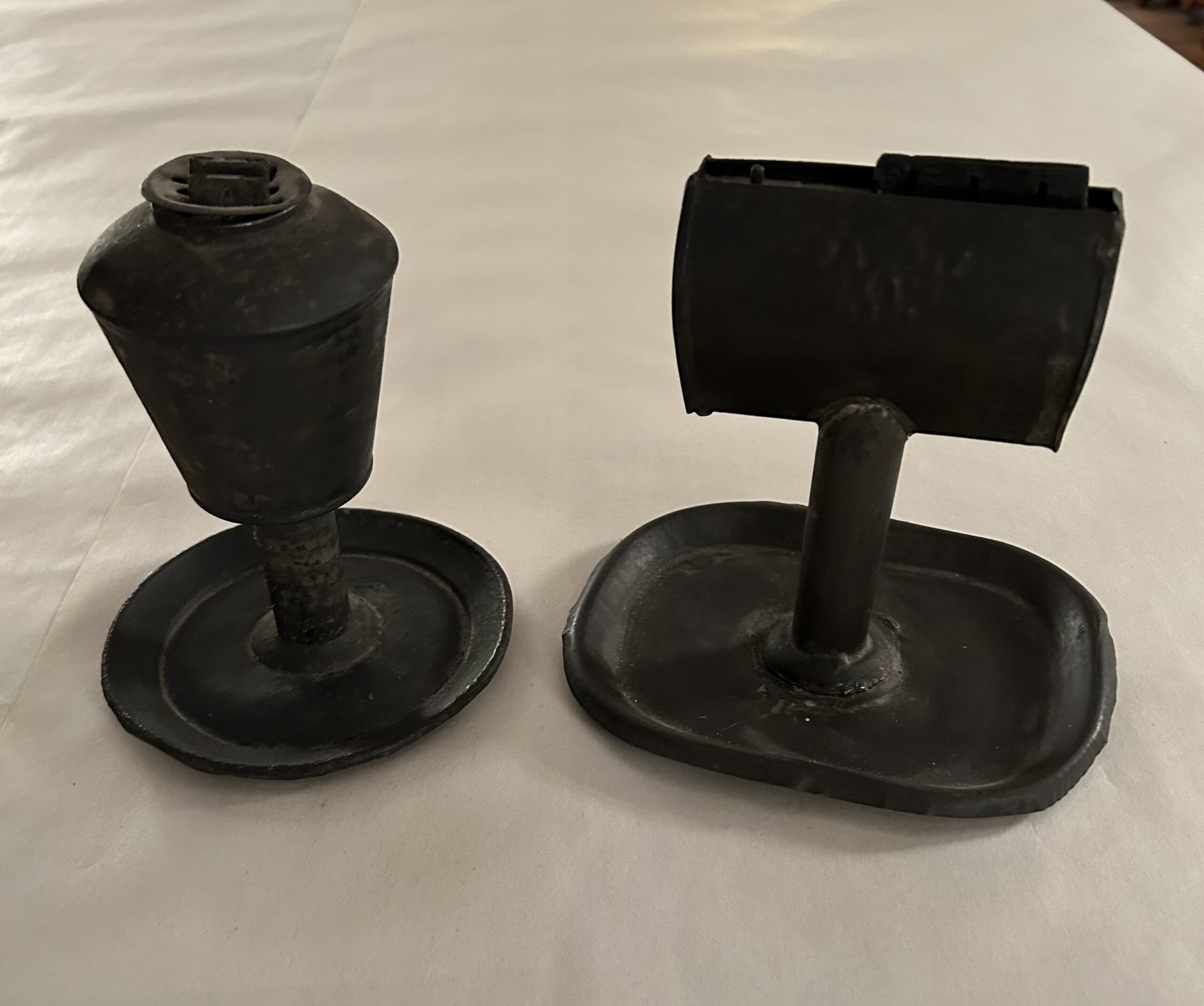
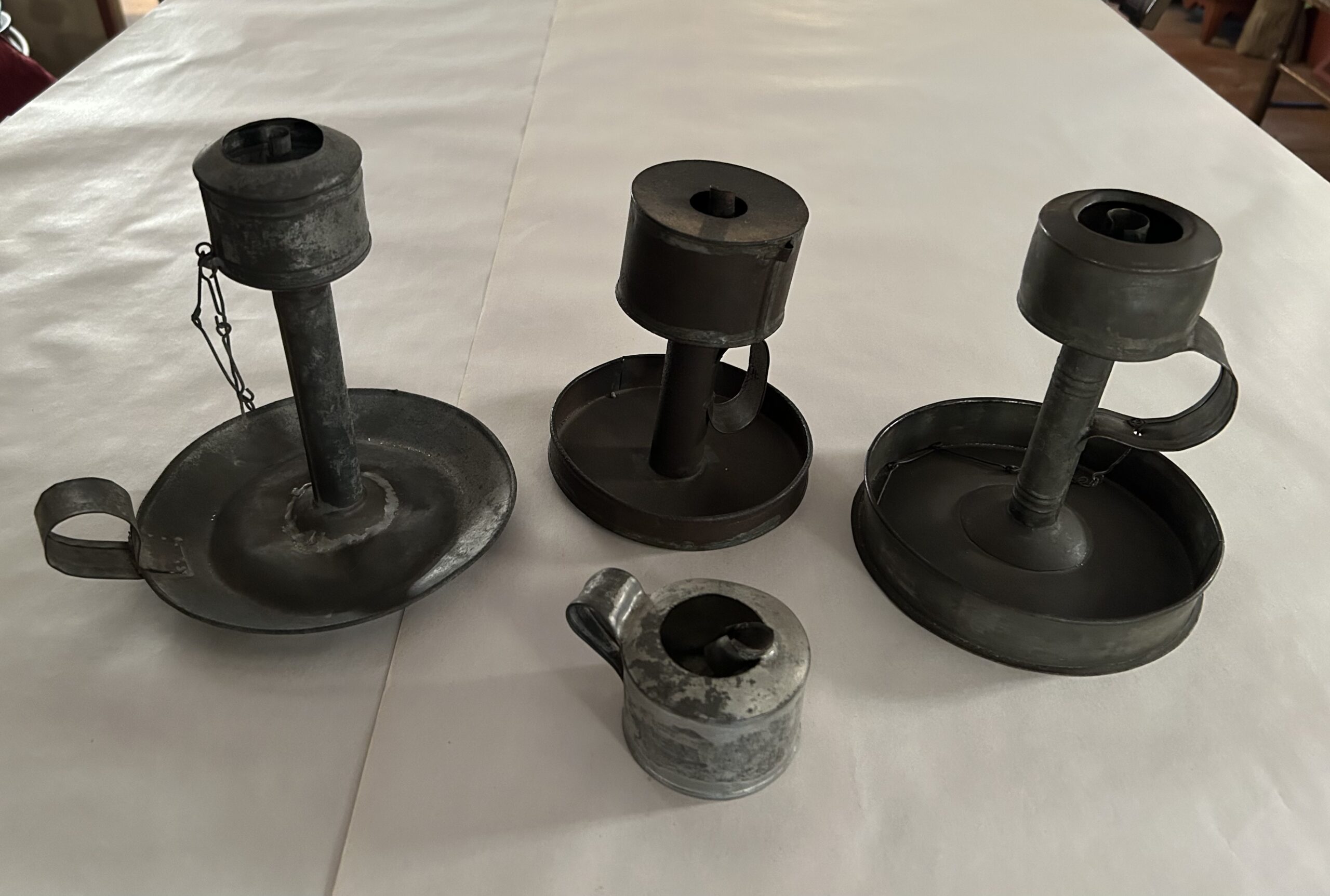
Fat lamps were also made by tinsmiths and blacksmiths. Those crafted by tinsmiths closely resembled the pottery fat lamps, though there was consideration for the limitations of the material involved. The fonts on these lamps were typically cylindrical with a central wick support. Like their ceramic counterparts, they also incorporated a handle, stem and saucer. Unlike the pottery examples, however, tinsmith-made lamps were more likely to contain decorative elements. They were also much lighter in weight and less likely to be broken, thus having a much higher survival rate than pottery examples.
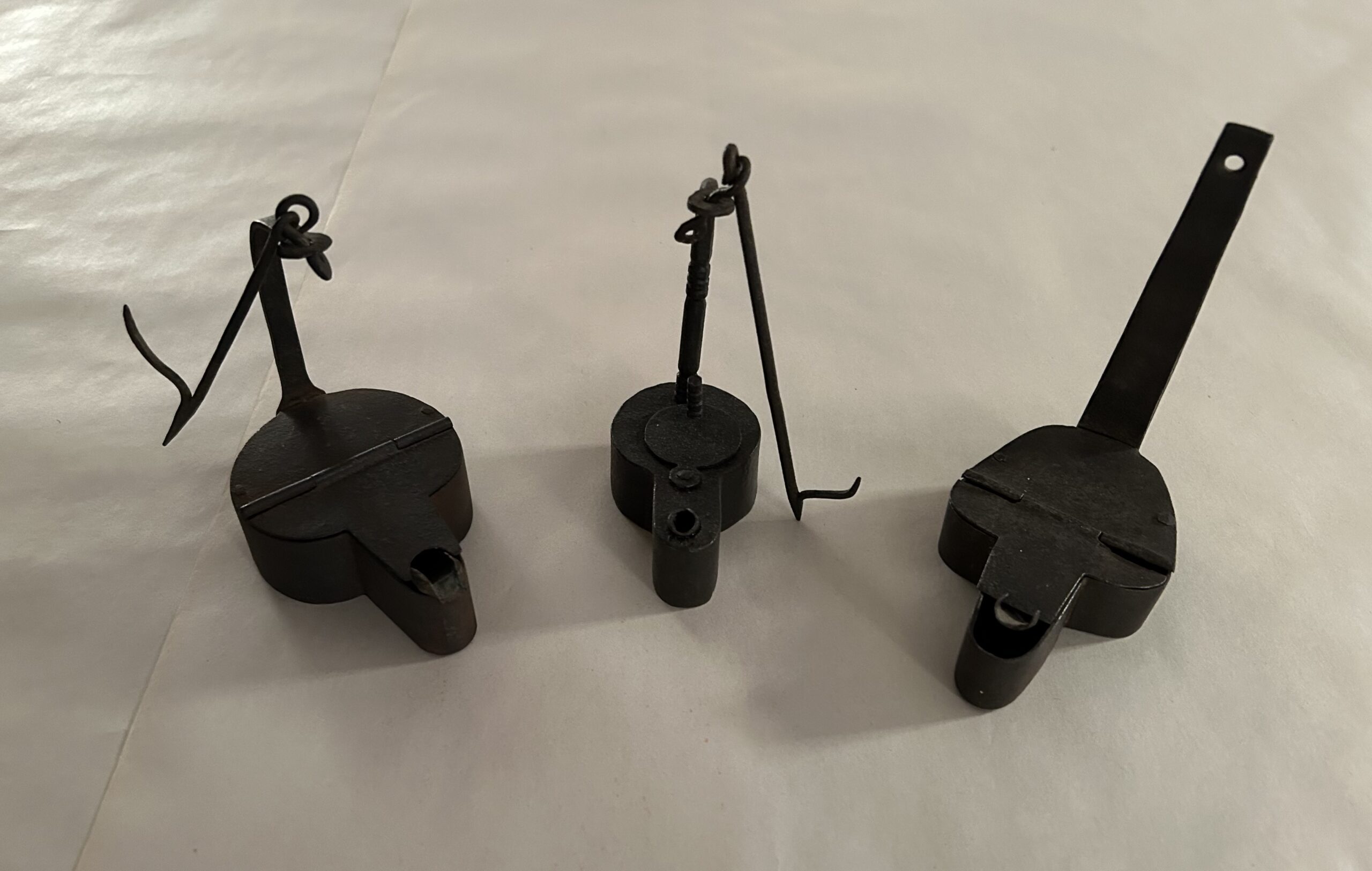
Yet another style of fat-burning lamp was the betty lamp. This device, said to have been of German, Austrian or Hungarian origin, was made of iron by a blacksmith and, unlike the pottery and tin examples, had an internal wick holder and a hinged cover.
How the betty lamp derived its name is a matter of conjecture. Some believe it came from the German word “besser,” meaning better, because the betty lamp design was an improvement over previous devices. Others think the word derives from the ancient English word “bettyings,” referring to the offal and entrails of animals left after butchering. Either way, the betty lamp gained immense popularity in 19th-century America as it quickly replaced other such messy lighting devices like rush holders and the open crusie lamp in homes. In addition, the handle of the betty lamp typically incorporated a hinged hook with a sharp point that could be driven into a beam wherever light was needed or hung from a mantel shelf or a chair back if light was needed to read by. Also incorporated was a thin iron pick which was used to advance the wick as it burned down.
Also used in the Ohio country were “gallows lamps,” a style of fat lamp in which the fat was placed in a cylindrical brass font that was suspended between two upright supports. This enabled the lamp to burn steadily even if placed on a tilted surface. Gallows lamps never enjoyed the popularity that betty lamps received.
Lard lamp
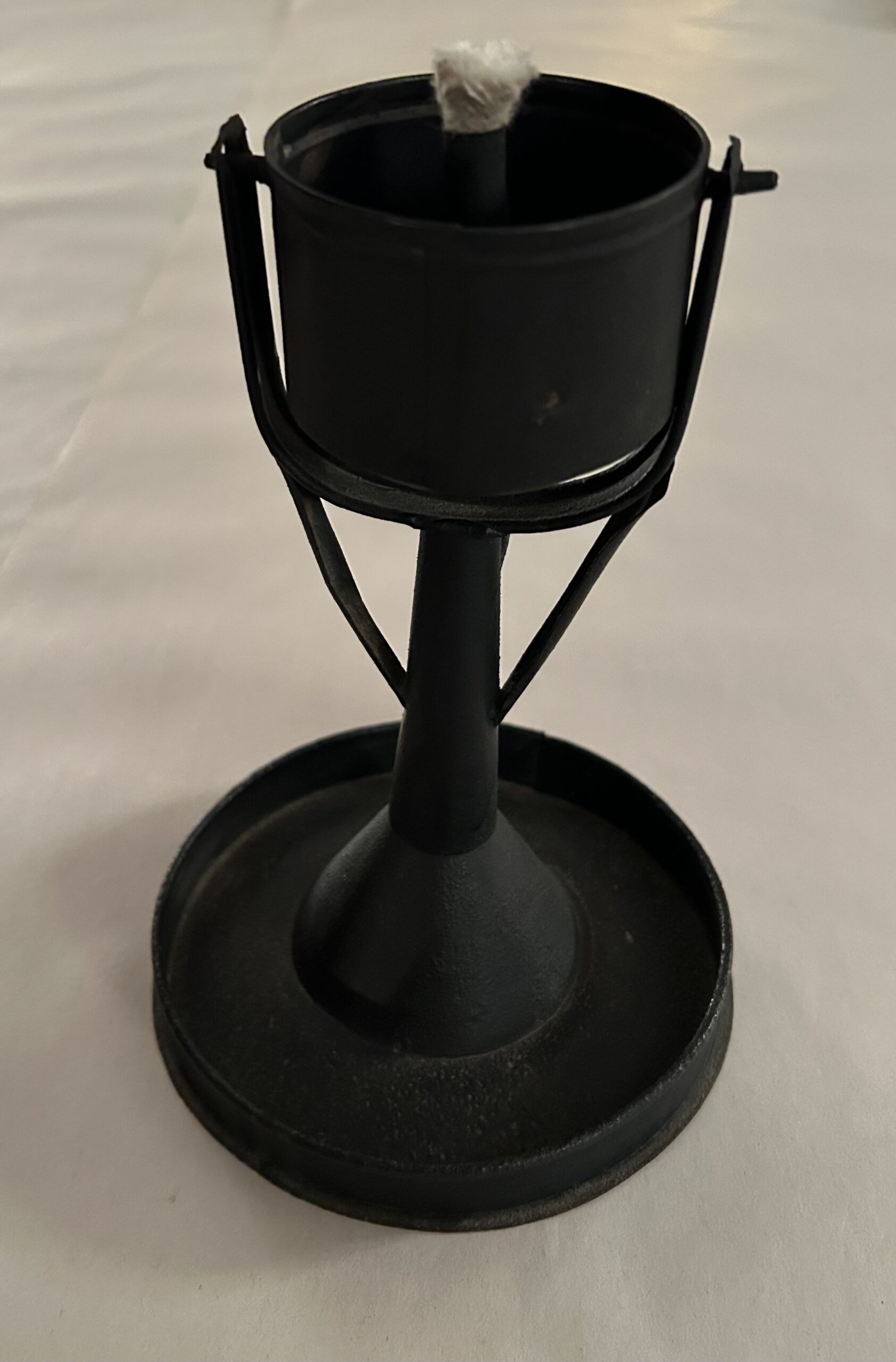
Still another type of lighting device that derived its fuel from the butchering process was the lard lamp. Typically crafted of tin and having a much larger cotton wick than the grease lamps, the lard lamp had a substantial enclosed container to hold lard, which served as its fuel. Like the open font lamps, it incorporated a saucer in which to catch the excess drippings from the wick. And like the other grease-fueled devices, it burned with a sputtering flame and oily black smoke.
While all of these various devices did provide some meager source of light for the pioneer family, there simply had to be a better way. Wait. Did someone say candles?