

With the hot days of summer fast approaching, many producers across the state are still recovering from the previous year’s drought, which led to depleted hay and water supplies as well as livestock and crop losses. Through this, producers learned how to better prepare for natural disasters.
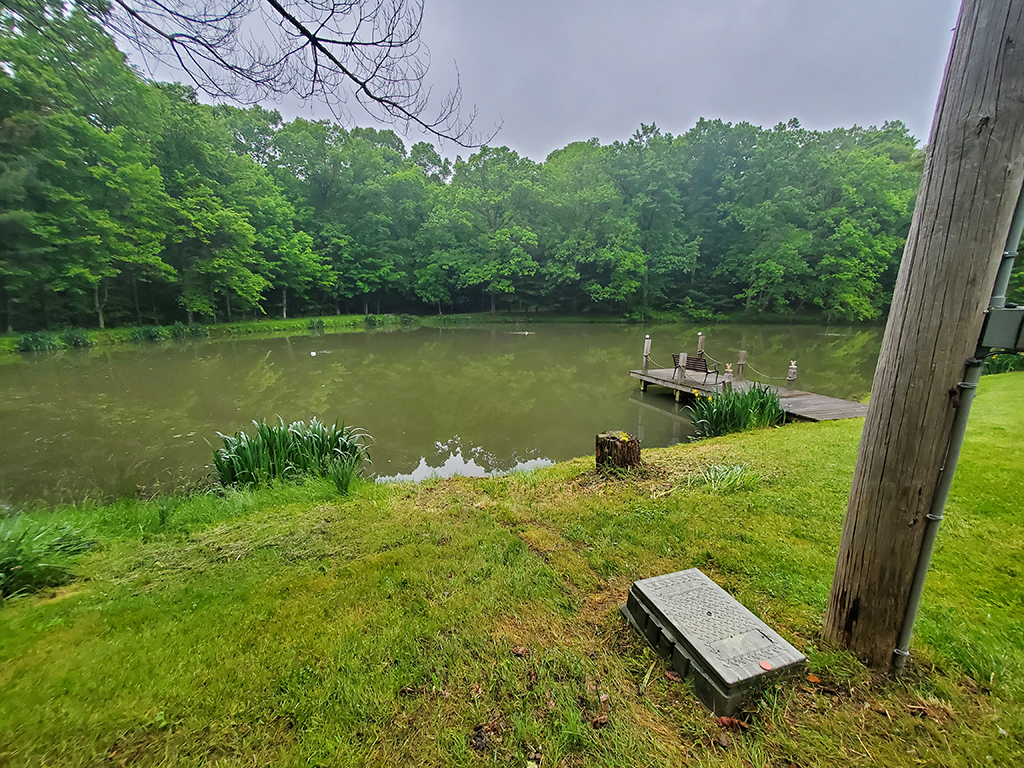
Here in Columbiana County, we were not nearly as heavily impacted by the drought as other parts of the state, but we still saw signs of its presence. One of these signs was an influx of calls regarding fish kills in farm ponds.
Turnover
Fish kills can happen for many reasons in farm ponds, all of which can be easily explained. Many pond owners tend to jump to the conclusion that the most likely cause of a fish kill is the introduction of chemicals into the pond from one means or another. Though this does not occur very often, it is still a possibility.
The most common explanation for fish kills is the of a lack of dissolved oxygen present in the water. Turnover is a phenomenon that happens in spring and fall when a pond’s water layers mix, causing a temporary decrease in dissolved oxygen.
The way this works in the spring is as temperatures warm, the water near the bottom begins to rise and mix with the surface water. In the fall, as the water on the surface cools, it becomes denser, sinking and mixing with the less dense water in the lower water columns.
This mixing of the oxygen rich upper water and oxygen poor lower water then leads to a temporary oxygen depletion and in turn the possibility of a fish kill. This does not always guarantee a fish kill will occur each year, but it does at least put some stress on the fish.
I imagine many of you are thinking “This isn’t what killed those fish during the time of the drought, especially if turnover only occurs during the early spring and late fall.”
For those who thought this, you would be correct!
Oxygen depletion
However, the cause of these fish kills was the same, being that of the depletion of dissolved oxygen. In one case, the pond experiencing the fish kill was a pond with little to no aquatic vegetation present and no additional water entering the pond, which resulted in water levels that had dropped close to a foot.
With no oxygen being added to the pond in the form of a freshwater inlet or oxygen release from aquatic plant life, the fish had begun to use up most of their dissolved oxygen leading to a fish kill.
This does not occur all at one time and may take several days to kill many of the fish in a pond due to different species’ oxygen level tolerances. A tell-tale sign for this is when you see fish gasping at the surface trying to collect what dissolved oxygen remains. On this visit, we were past this point, and all of the fish were already diseased.
A second way in which fish kills can occur is through the loss of oxygen from decaying plant life. Another fish kill we investigated involved a shallow water pond that was completely covered to the surface in aquatic vegetation, forming a mat. This mat of vegetation prevented aquatic vegetation below the surface from receiving sunlight, which in turn killed the vegetation present there. As it began to decay, dissolved oxygen was used by the bacteria that were breaking down the dead vegetation which left little oxygen for the fish. When this occurred, a fish kill followed.
This can occur in the late fall with normal aquatic vegetation die-off due to the decaying process also using oxygen. Usually during this time, we do not see fish kills occurring due to cooling temperatures and fresh oxygen being more readily available for fish to utilize.
Prevention
So, what can a pond owner do to help prevent a fish kill? For starters, the most important thing to do is to manage your aquatic vegetation in the pond. Now, I by no means think that this needs to be completely removed, especially because of all the benefits it provides you with by providing fish cover as well as dissolved oxygen for your pond. It still does need to be prevented from getting out of control.
A fantastic tool to use for this is the stocking of white amours. These fish feed heavily on aquatic vegetation and can be used to keep the vegetation under control across the entire pond if stocked in proper numbers.
If all aquatic vegetation is preferred to be entirely removed, the use of chemical treatment with something such as copper sulfate or aquatic herbicide could be used. This is completely up to the pond owner and their overall objectives for their pond.
An addition that can be made to a pond to help prevent a fish kill is that of the installation of an aeration system. This is a very simple thing to add if done by the pond owner themselves, especially if electricity is already close to the pond.
When adding this system, simply make sure that you have a large enough air pump and enough air stones with weighted tubing to oxygenate the entire acreage of the pond. This is important to help provide the most oxygen possible and in drought situations provide oxygen when there is no additional fresh water entering the pond.
If you are unable to run electricity to the pond, there are other options available, including solar and even wind-powered aeration systems. Both systems provide the same benefit but have far more limitations on their productivity than the system that runs off of electricity.