

After the August droughts over the last couple of years, the excessive rainfall this year has created some new concerns. Parts of the area received over 10 inches of rain in August, with reports of over 17 inches in some areas. The resulting flooding has caused massive damage to bridges, roadways, homes, barns and fields. Until these rains, 2026 has been a relatively good year for harvesting forages, and many people have a sizable part of their needed feed already harvested.
Now the concern is with how much flood damage may have been done to the bales, baleage, or silage. Water levels crested at heights rarely seen and likely saturated stored forages in many places. Bales sitting near ditches or near low areas may have been partially submerged for several hours without being noticed, thanks to the many emergencies that had to be dealt with. Even hay stored under roof, silage, and wet wrapped bales in several locations became saturated from flood waters.
Concerns
The first concern is probably whether the stored forages will mold and are toxins going to grow and cause livestock health issues. Then you may begin considering how mud or manure may have caused contamination, or if chemicals or fuels could have caused contamination. Flooded bales can begin to grow mold throughout the bale. This mold may or may not produce toxins, so the recommendation is not to feed it. Even in the absence of toxins, mold can cause respiratory problems.
Let’s not forget about bales heating. We worry about heating after baling hay that may be a little greener than we wanted, but the same can be true when bales absorb floodwater. The saturation goes deep into the bale, and heating can occur, leading to fire risk. If floodwater enters your hay storage area, don’t leave the bales stacked in the barn due to fire risk.
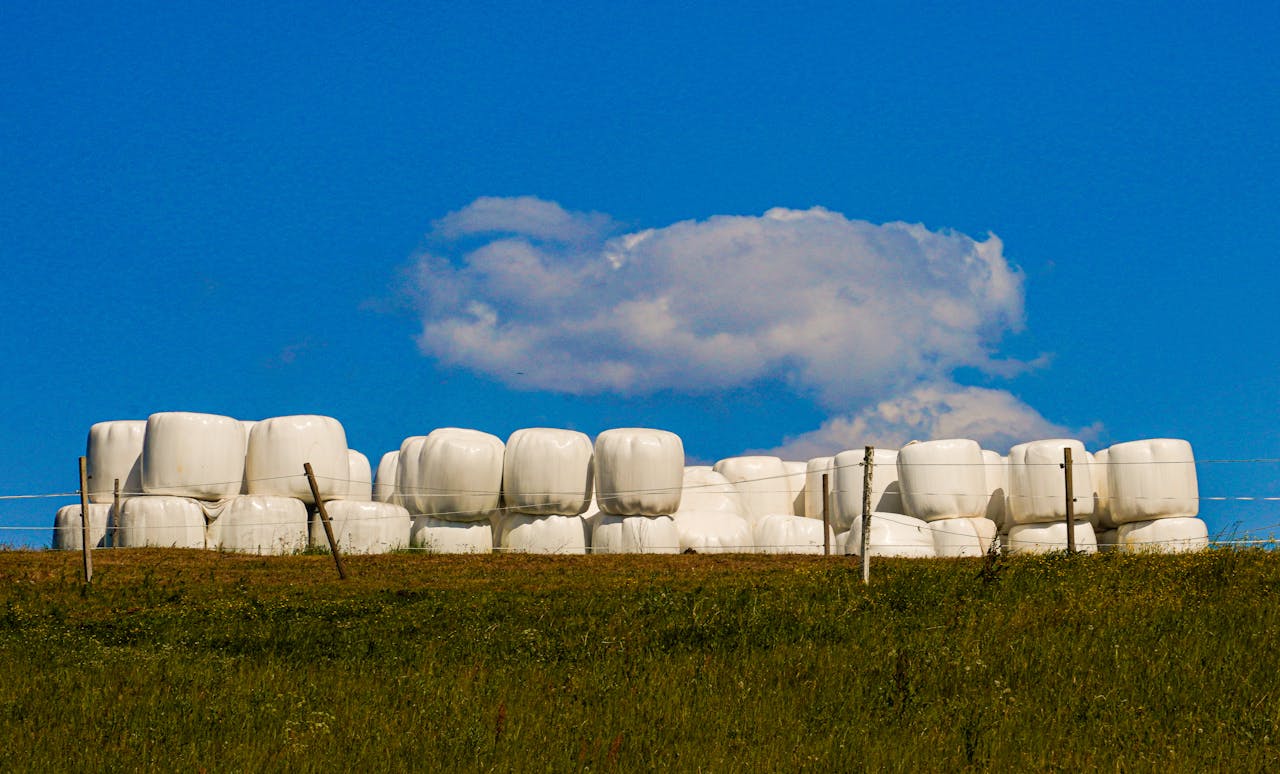
Damage is not just a concern with dry hay. Wrapped forages can absorb water, especially if there is damage to the plastic. This can alter fermentation and cause spoilage. The same is true for a bunker or bag stored silage. If significant amounts of water enter the storage area, there can be concerns for spoilage or heating.
Evaluation and monitoring
Take stock of any damage that may have occurred. Look for the presence of mud, mold, damaged coverings or foul odors. If bales were exposed to standing water, the temperature of the bales can be checked. If temperatures approach 150 degrees F, the risk of fire goes up quickly. Remove bales from structures if they reach this point. Continue to check over time for changes in temperature, mold or rot. Responding now to potentially bad stored forages will allow time to find replacement sources or harvest more of your own to replace the damaged stores.
Testing for toxins is a possibility if there is a concern. The modest expense could be a very good investment to prevent a problem or at least put your mind at ease. Danger to livestock could be from mild to severe depending on the contaminant and level of it. Reduced performance, upset digestive systems, and poor reproductive performance are a few non-lethal but economically important concerns. Monitor animals closely if feeding questionable forages.
Disposal
Contaminated forages do still have value in nutrients that can be recycled onto fields and pastures. Unrolling bales in poor areas of pastures can add nutrients and organic matter. Do not unroll in areas where livestock will have access to the molded forage. Bales can also be composted, but do not place in creek beds or other water areas. Whatever method is used for disposal, don’t forget to remove and dispose of strings, net wrap and plastic.
Conclusion
When flood conditions are experienced, stored forages are not at the top of the list of concerns. Many times, creeks may flood or water may flow through buildings and recede in a couple of days and the damage that is done may not be noticed until it is time to feed the hay. Bales that are saturated, even for a short time, do not dry quickly and often end up with mold. After critical issues are dealt with and it is safe to be outside, check the stored feed resources and continue to monitor if there is possible damage. Document any damage for possible disaster programs, insurance claims, or tax write-offs.