


The signs of fall are everywhere. Halloween displays, mums and pumpkins are out at the stores already and we just got past Labor Day! The temperatures these past two weeks in northeast Ohio have cooled down with lows in the upper 40s and the golden rod is starting to show color. This is the time of the year when the honey bees’ black sheep of the family, the yellow jacket, begin to show up in force.
Yellow jackets
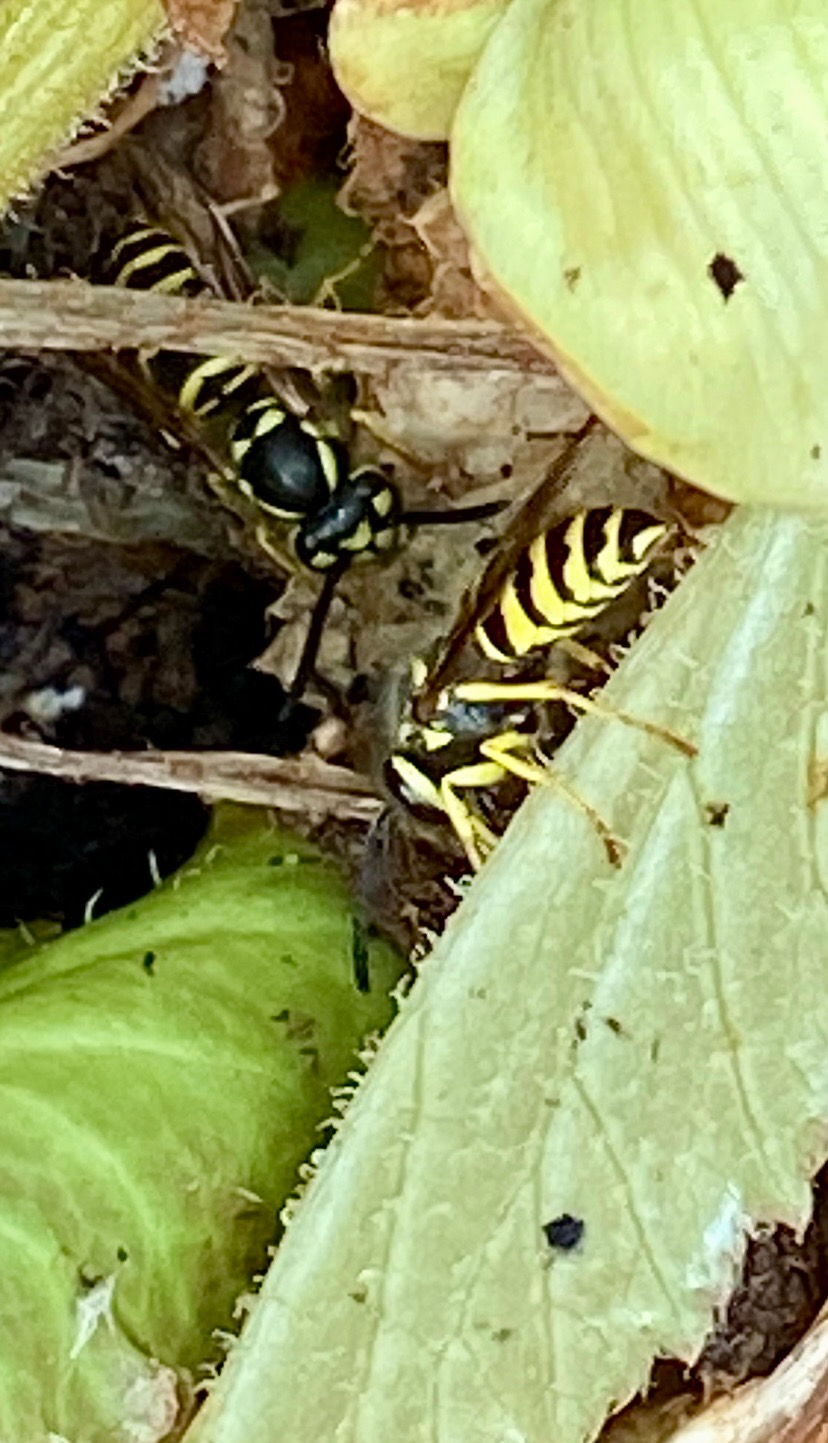
They are not in the same family; they are actually wasps in the family Vespidae. There are over 300 species in the United States. The most common in this area is the Vespa Germanica, which builds a paper type nest underground in old rodent burrows or crevices. Most calls in the fall about nuisance bees are in fact problems and issues with the yellow jacket.
This is the time of the year where honey bees are automatically blamed for the yellow jacket’s bad behavior. At this time of the year in the fall, yellow jackets nest at peak populations. As food sources become scarcer, the yellow jackets scout out more areas to locate sweets or protein foods. Yellow jackets feed protein to their developing larvae, and when the usual diet of spiders or caterpillars become scarce, they will be attracted to dead bugs on your car radiator or the picnic foods you are trying to enjoy outside. They will also eat dead honey bees and try to invade a weak hive, robbing out the honey and overtaking a small hive when the numbers are in their favor. Most hives with entrance reducers on at this time of the year will not have any issues with yellow jackets as they are able to fend off the scouts that are probing for an opportunistic takeover or a free meal.
Trapping
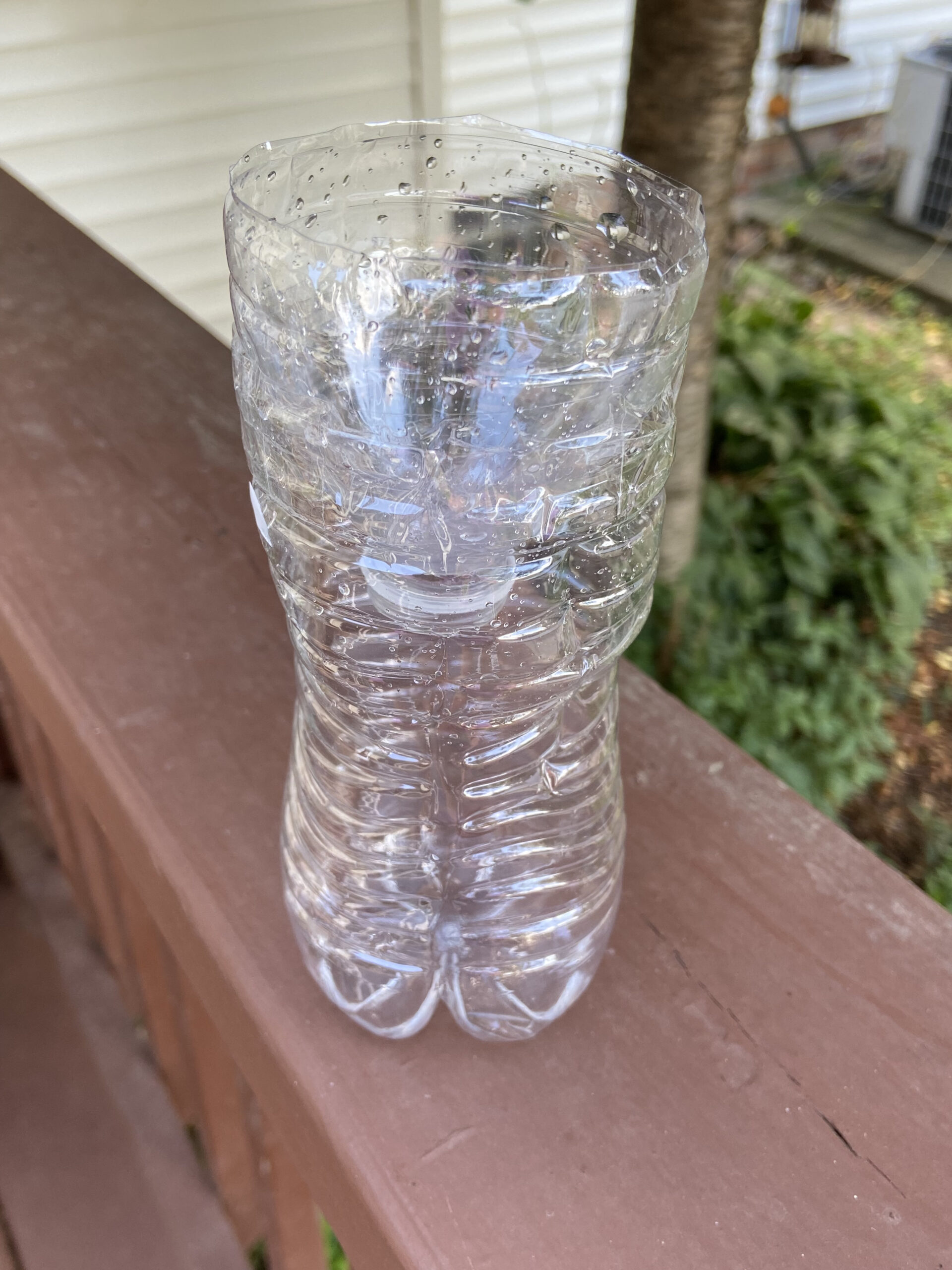
The good news is that the yellow jackets are easy to control. There are many traps and techniques on the market to trap and dispose of the yellow jackets. Trapping them in your bee yard requires using protein bait to trap them. Traps set with sugary baits will also attract your honey bees and that will result in collateral damage. One of the easiest traps to make is to take a plastic water bottle and cut 2-3 inches off of the top and turn the cut off top upside down into the remaining bottle or quart mason jar. You just made a funnel that will allow the yellow jackets into the trap but make it harder for them to fly directly outward.
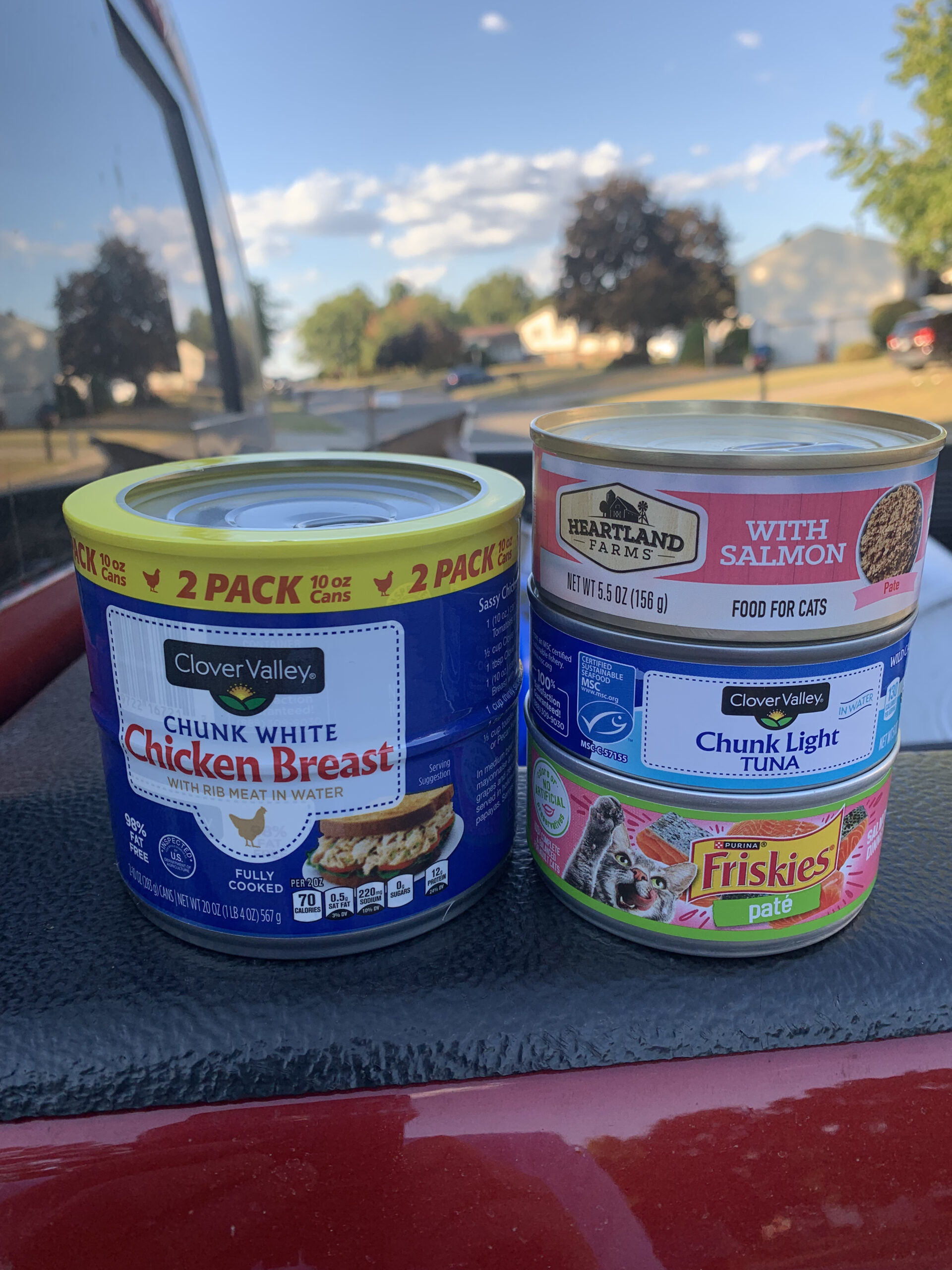
Yellow jackets prefer fresh meat like raw chicken, but I have experimented with different proteins and have found the chopped or shredded chicken in cans to also be highly desirable to them. The cat food I tried had limited success but also attracted and caught a lot of flies. Empty and switch out your traps when the bait gets old and dried or the trap fills up.
I only add enough water to the bait to keep it moist and am not interested in drowning the yellow jackets in this type of trap. Other traps use bait suspended just 1-2 inches over a container filled with water and added a few drops of dishwashing liquid. The yellow jackets will land on the bait and grab a piece of meat then prepare to fly off. The yellow jacket will fly downward and hit the water surface and the dishwashing solution will kill them as the soap acts like a surfactant that will drown them and suffocate them quickly.
Most stinging insects like yellow jackets and bald faced hornets are usually not aggressive away from the nest and most stings are accidental as they fly around you trying to find if you have something for them to eat.
Invasive species. I found my first spotted lantern fly this weekend in Cleveland. I was dropping fuel at a station near Parma where I spied the bug walking along the parking lot. I went over to show it the bottom of my shoe when it half hopped and flew a few feet, apparently aware something was amiss. I went into stealth mode and delivered a well aimed 11.5 to dispatch the foreigner. I have to admit it is one of the more beautiful insects, but I felt a surging pride knowing my efforts were helping Make Ohio Great Again by taking out one of the invaders.