
This is the third part of a four-part series. Read Part 1 and Part 2.
The Ohio Fish Commission, formed in 1873, was about to be replaced. It was 1886, and the legislature had realized the state was in need of a more expansive conservation effort. “The Fish and Game Commission” is now a recognizable grandparent of the current Division of Wildlife. The commissioners, now numbering five, were no longer only looking at fish populations, but their task included making the lands of the state “ more productive.
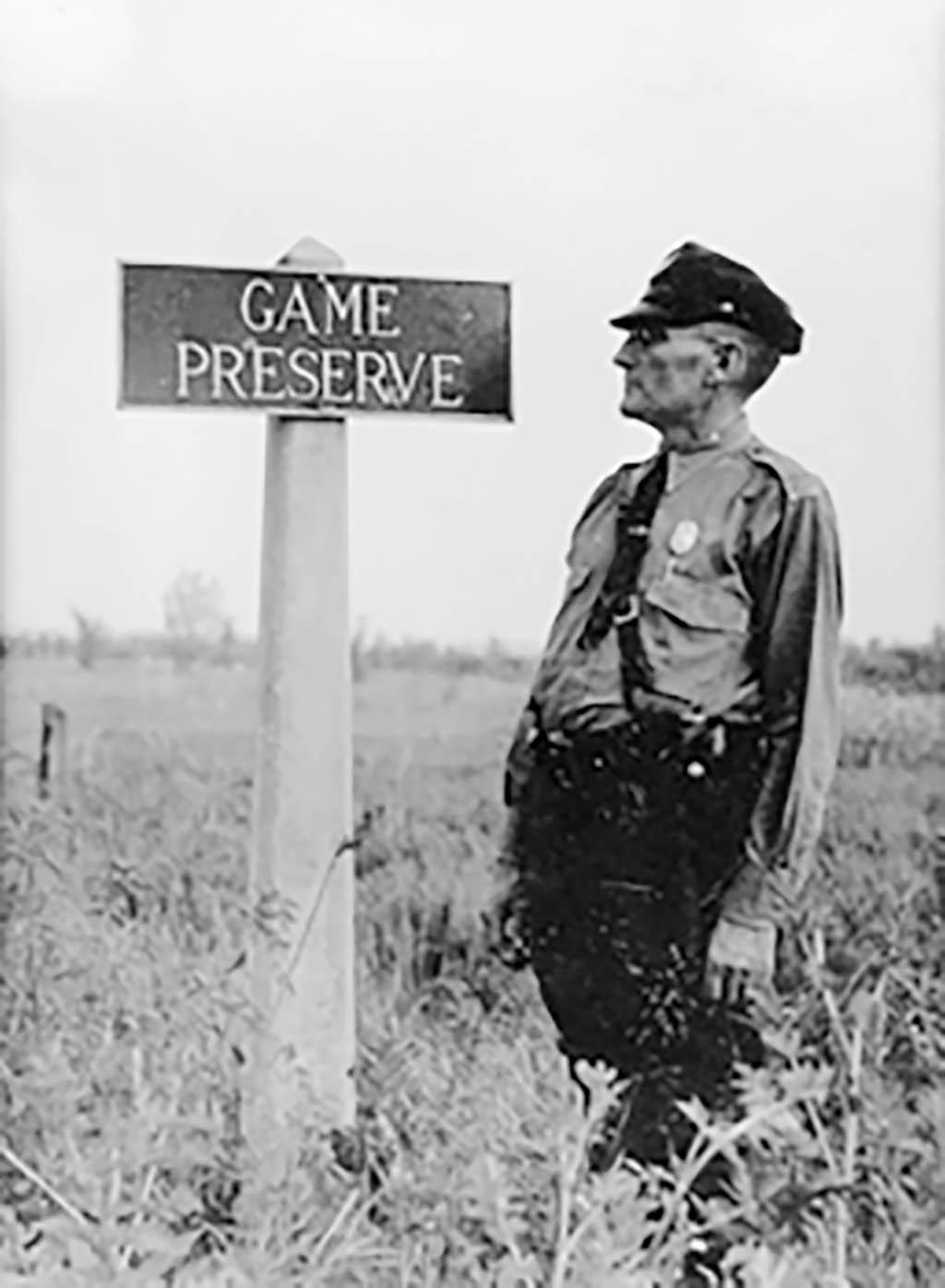
This Fish and Game Commission hired Ohio’s first Fish and Game Wardens — chosen from the political party in each county that polled the most votes in the last gubernatorial election. In 1888, the law dictated that a warden be situated in each county. The job was part-time, with most holding other jobs, and that new job caught the nickname of “Horse and Buggy Wardens.” The new rules also provided for a Chief Warden and was the beginning of specialized lawmen dedicated to protecting Ohio’s wildlife resources.
Stocking
Many of Ohio’s game species were gone or nearly so. Uncontrolled harvests, market hunting, the fur and fashion industries, the continued loss of habitat and intensifying agricultural practices continued to take their toll. With deer now a rarity, harvest restrictions were instituted and were soon applied to other species.
Predator control was another issue. While it would later prove that habitat is a far more important circumstance influencing predation, the understanding of the time placed the blame on the animals. Laws encouraging the killing of hawks, owls and woodchucks were initiated – with some counties even offering bounties.
With the disappearance of so many of Ohio’s wildlife species, many were looking at an Asian import in the state of Oregon as a possible answer. Ring-necked pheasants were first stocked in Oregon in 1882, with their first season held 10 years later. On opening day, 50,000 were killed, and that’s all it took for other states, including Ohio, to jump on that feathered bandwagon. Pheasant stockings in Ohio first occurred in 1896 with mixed success, but releases continued. By the early 20th century, ring-necks were being distributed throughout Ohio. The population would peak in the 1940s at approximately 5 million birds.
The London Fish Hatchery also opened in 1896, making it the oldest hatchery in Ohio. Still in use, the facility maintains 33 ponds containing a total of 8 water acres, one large outdoor raceway of flowing water and nine indoor rearing troughs. The coldwater and spring-fed ponds allow the hatchery to raise muskellunge and two trout species: rainbow and brown.
Federal help
During these early days, it was each state’s job to regulate the wild animals found in their state, and their laws differed greatly. Poachers (please refrain from calling them hunters) would often kill animals, then scramble across state lines where they were safe from arrest — mimicking the stories of Southwestern bank robbers running for the Mexican border. This had become a frustratingly regular occurrence, and there was little the states could do — until the federal government decided to get involved.
John Lacey, an Iowa congressional representative, came to the rescue. He introduced a bill that would become the Lacey Act, which was passed by Congress in 1900. It became the first federal wildlife regulation and is the nation’s oldest wildlife trafficking statute. It prohibits trade in wildlife, fish and plants that were illegally taken, possessed, transported or sold contrary to any state or federal statute. Additionally, the act authorized the Secretary of the Interior to aid in restoring wildlife populations while regulating the introduction of birds and other animals to places where they had never existed. The Lacey Act became a welcome tool to combat poaching, especially to states like Ohio, which had many borders, including international lines. It remains one of the most effective wildlife laws in U.S. history.
This would not be the last involvement in the federal government’s contribution to wildlife enforcement, management or funding for the states. Ohio, like the others, would one day reap many of the benefits of these evolving conservation-driven changes.
New rules
In 1913, Ohio Gov. James Cox abolished the Fish and Game Commission and instituted the Agricultural Commission, and within it, a new organization called the Division of Fish and Game. The new agency did not go without a few folks trying to trip up any progress. Politics began interfering with the new agency, prompting the governor and N.E. Shaw, the state’s Secretary of Agriculture, to attempt to stop it.
“There are no Democratic bass or Republican pheasants, and you don’t ask a man his politics when you ask him to go fishing with you,” Shaw said.
In 1913, a new resident hunting license law was proposed, but a bitter feud erupted among the legislators. The new license was not to be viewed as a tax levied on all Ohioans, but rather as a users’ fee for those choosing to participate. The funds generated would then be utilized for wildlife restoration and other important agency projects. Farmers led the charge against its passage while the growing and influential League of Ohio Sportsmen supported it. Two compromises helped the bill to pass. Bobwhite quail were reclassified as protected songbirds and farmers were declared exempt while hunting on their own land.
Added funding greatly enhanced game and fish management. Pheasant stocking programs grew with birds distributed throughout northern Ohio. The Wellington State Game Farm supplied thousands of pheasant eggs to farmers across the state so that they could hatch and release the birds on local acreage. Within a decade, new fish hatcheries were added to Ohio’s landscape: 1916, Akron, St. Marys and Newton Hatcheries; 1921, Zoar and Defiance Hatcheries; 1926, Bucyrus and Buckeye Lake Hatcheries; 1927, Piqua Hatchery; and in 1928, Coshocton, Dayton, Indian Lake and Xenia Hatcheries. The “Buckeye Fish Car,” emblazoned with “Fish and Game” down each side, delivered fish around the state. Its arrival would bring crowds and reporters to watch as its cargo was unloaded and delivered into local waterways.
During these changes in leadership, direction, finance and task, the newly birthed Division of Fish and Game was learning the value of conservation – and especially, the value of its constituents.
“The best way for us to perhaps influence others is to instead focus on ourselves by doing our best – then others will be influenced from our leadership by example.”
— Lisa Kardos
Read Part 4 here.