
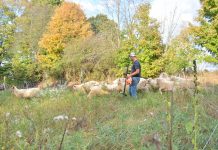
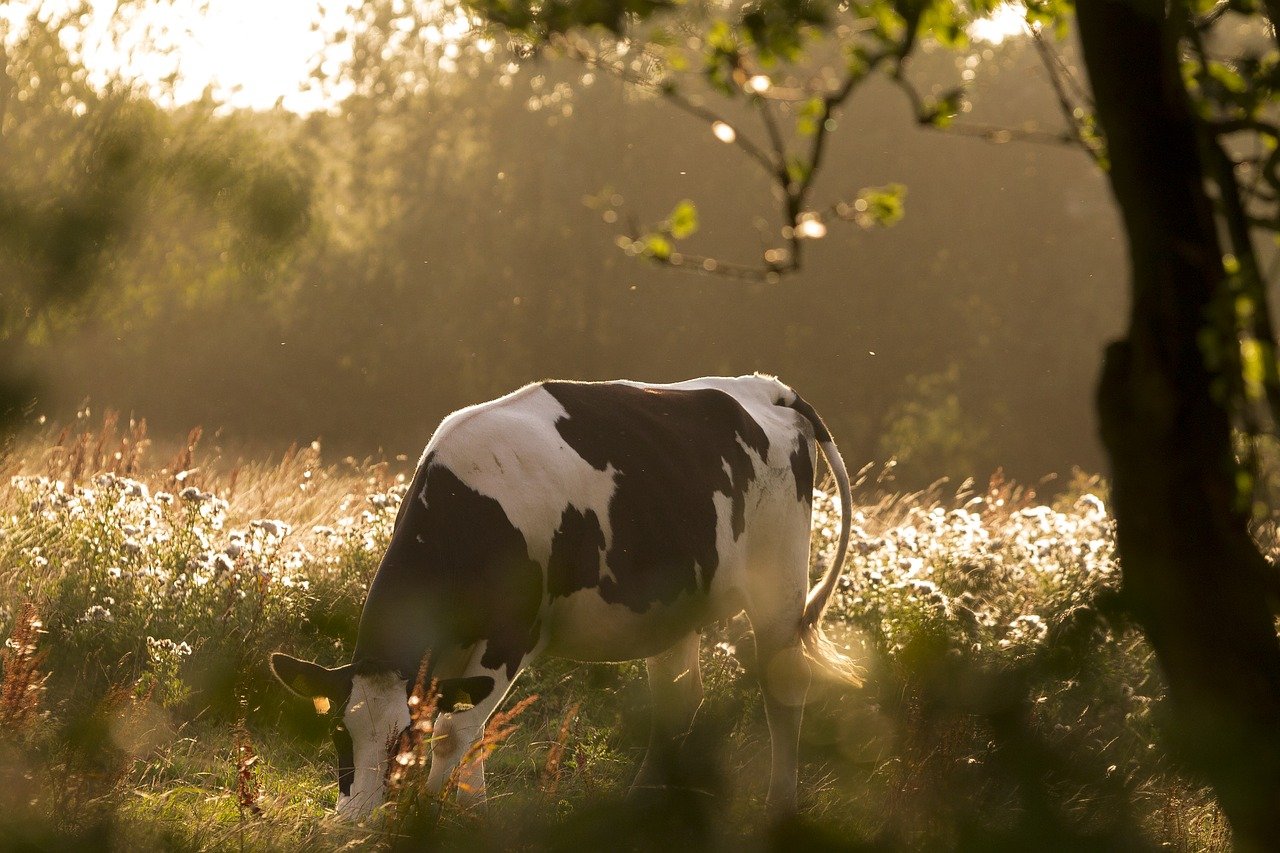
This time of year, I often see herds of cattle huddling under shade trees or gathered on wooded field edges to get some relief from the sun. Just like us, animals are smart enough to find a shady spot to get some rest.
Trees within a pasture, especially large trees with spreading branches, can provide a fantastic shady spot for your animals to relax, but it is important to know how much shaded area you have compared to the size of your herd.
If there is not enough shaded space for your entire herd, they could end up smothering each other while trying to access the shade. If you need additional shade for your animals, man-made shelters or shade cloth can accomplish the same goal.
Benefits
Tree lines can also be beneficial by acting as windbreaks. By strategically placing a treeline on the windward side of your field, you can help cut down on the harsh winter winds. Windbreaks can also help to prevent blowing and drifting snow, especially in the flatter part of the state.
Many livestock also have access to small woodlots, and this can essentially act as a living barn for animals which spend the majority of time outside. If done effectively, trees used as windbreaks or shade structures can help to reduce temperature stress in livestock. Less-stressed animals are healthier, and this can positively impact your bottom line by improving milk production or helping with weight gain.
Negative impacts
Trees in and around your pasture can also have a long list of negative impacts. As I’m sure many of you know, some trees contain toxic compounds and could negatively impact the health of your animal — even leading to death.
Here is a list of some trees to be concerned of when near livestock:
Wild black cherry, choke cherry, peach. When crushed, wilted or hit with frost damage, these leaves start to form prussic acid (cyanide) and can cause poisoning and rapid death in animals depending on the amount consumed. Fallen limbs can be extremely dangerous in fields, as the leaves will begin wilting quickly.
Buckeye. All parts of a buckeye tree are toxic: twigs, leaves, bark, nuts, etc. A Guide to Plant Poisoning of Animals in North America (2001) says as little 0.5% body weight can cause a severe poisoning incident.
Red maple. According to Penn State Extension, only horses and ponies appear to be affected, and 1.5 to 3 pounds of plant matter can cause extreme toxicity. Wilted leaves and fallen leaves in autumn can be toxic.
Oak. Young leaves and green acorns can be toxic to a variety of livestock. Large quantities must be consumed to result in poisoning.
Yew. An evergreen shrub, yew eaves, bark and seeds are poisonous when fresh or dried. We have one native yew species in Ohio, but other species are often planted as ornamentals.
Black Locust. Sprouts, leaves, bark, flowers and seed pods are all toxic. The good news is that there are some tree species that can be safe for your fields depending on the type of livestock you own. If you have questions about planting or maintaining trees to aid your livestock, reach out to your local extension educator for help.