


Saturdays from September through November pretty much guarantee that a lot of hunters and anglers are spending their time watching the Buckeyes battle their way across the gridiron. A few may get up early and spend some time trying to bust a bushytail, dump some doves, hook a few perch or perch in a tree stand, but football Saturday reigns supreme for many — but not quite everyone.
In fact, wildlife officer Kirk Kiefer, then the Hancock County wildlife officer, was working on just such a Saturday during the game involving that state up north. I was his boss at the time, and I still remember the phone call. Seems a fellow decided to use a rifle to help his son fill his deer tag, but things didn’t quite work out as planned. I knew there must have been a reason to hire a guy who grew up in Indiana to patrol during college game days. But I digress …
While we’re accustomed to the kickoffs of both small game and the football seasons to closely coincide, our interests often shift with the importance of the game (or game animal). For example, during that magical period around Halloween through mid-November, bowhunters are likely to forgo football for that once-a-year chance at a record-book rutting buck.
If a cold Nor’easter blowing arctic air, rain or even early snow squalls threatens, duck hunters might decide to spend a bit more time in their blinds hoping for that perfect flight to wing into their decoys. But fall isn’t just about football and hunting.
There are those beautiful Indian Summer days — that time of summer’s gradual fading as flowers toss their colors into the trees as a farewell gesture before the harsher months ahead. It’s also a time when fish are fattening up for the leaner months of winter before their metabolism slows down to preserve their energy. With everyone so excited about football Saturdays, this might just be the best time of year to try to catch the big one!
Fall fishing opportunities
Trout tend to be a favorite of mine, but Ohio doesn’t have a great deal of water suitable for their survival. No problem there. While most watersheds may be trout-poor, there’s another of my favorites begging for some autumn action. I’ll bet you’re thinking about one of these four: the stream-loving smallmouth; Ohio’s gold mine the yellow perch; lunker largemouth, cruising the bank-lines, or maybe that favorite of the deep fryer, the walleye. Sorry, but it’s none of the above.
I’m actually referring to those big bull bluegills that inhabit nearly every body of water from Lake Erie to the Ohio River. A favorite from farm ponds to our north coast’s shoreline, these eager biters have a reputation of being voracious feeders and exhibiting a scrappy disposition out-weighing their size. It’s a fish that can also provide a gourmet meal to the most discerning piscivore. In fact, did you know that this is where the nickname panfish originated?
It’s true that most bluegill are not what you would call trophy size. In smaller bodies of water where fishing pressure tends to be too light, they can overpopulate, which stunts their growth rate. On properly managed areas, things can change dramatically. That cute picture of a little kid and her Snoopy Zebco rod holding up her little first catch can easily morph into a plate-sized scrapper fighting to spit out a hidden hook.
When these fish hit 9 inches and more than a pound and a half, your angling skills and that ultra-light rod or fly gear will be put to the test. Add another pound to that gill and you have arrived at real (reel?) bragging rights. Bump it up to the nearly unheard of 3 pounds, and you’re treading on state record grounds, but not quite.
Best bluegills
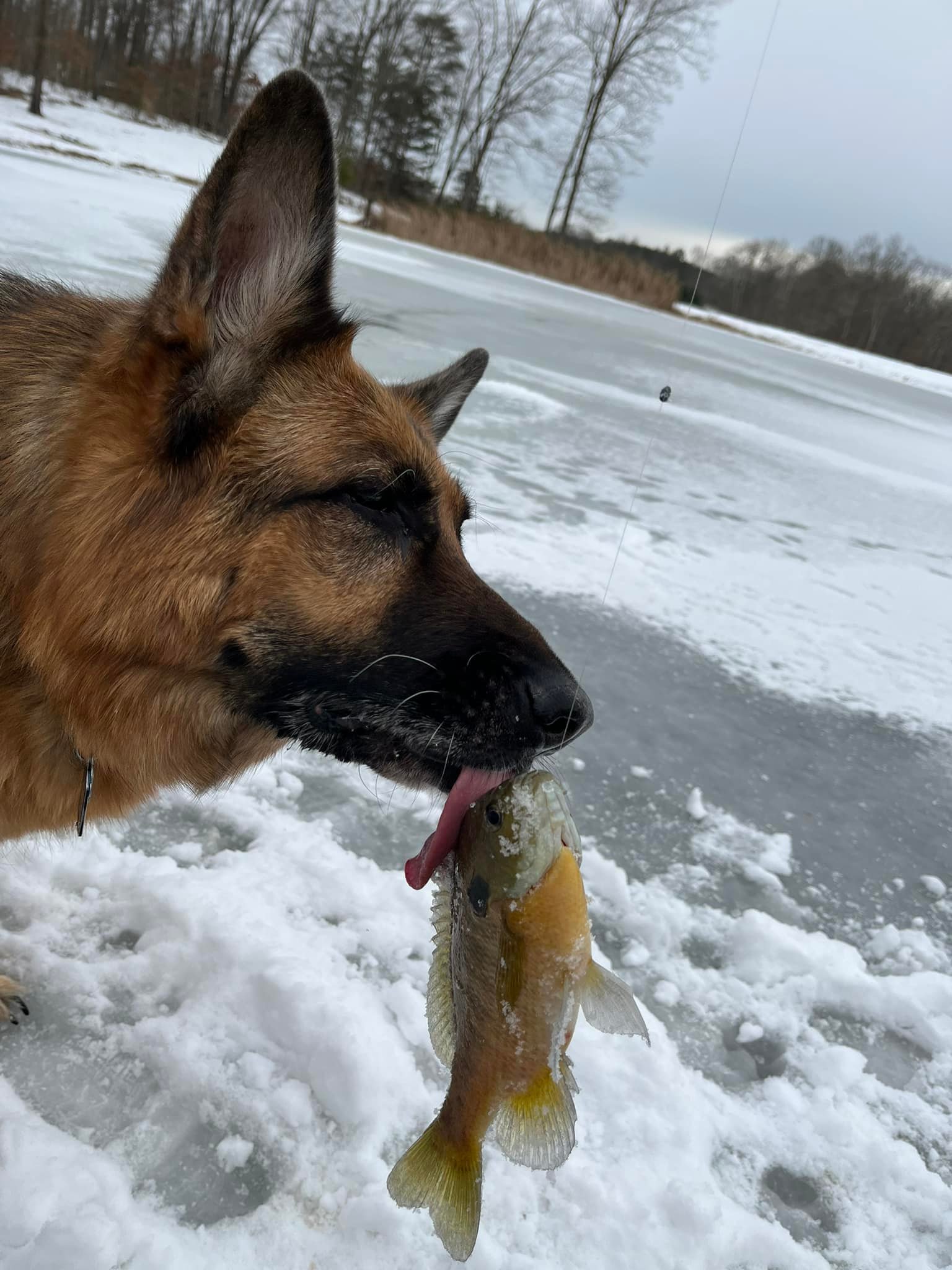
Ohio’s best belongs to Willis Nicholes, of Quaker City. That biggest of Ohio’s bluegills was landed back in April of 1990 while he was fishing at Salt Fork Reservoir. At 12 3/4 inches and 3.28 pounds, he was going to need a bigger pan — or at least a bigger wall plaque.
While that’s a quite a trophy, it isn’t the largest bluegill to capture the country’s top spot. That one goes to the state of Alabama. According to the International Game Fish Association, the world record remains a 4.75-pound bruiser of a bluegill taken from Ketona Lakes. The lucky angler was T.S. Hudson and that record has stood since April 9, 1950 — 75 years!
Where to go
Since we’ve established that warm Indian Summer days are a good time to try your hand at landing a few bluegills, and that maybe football Saturdays will offer the fewest angling competitors, where should you go? Here are a few hotspots for you to try: Mogadore Reservoir in Portage County; Portage Lakes in Summit County; Highlandtown in Columbiana County; Wolf Run in Noble County; Piedmont in Belmont, Harrison and Guernsey counties; Tycoon in Gallia County; Resthaven Wildlife Area in Erie and Sandusky counties; Pleasant Hill in Richland and Ashland counties; Jesse Ownes State Park in Morgan County, and Appalachian Hills Wildlife Area in Morgan, Muskingum, Noble and Guernsey counties.
Make sure to consider the 13 lakes and ponds at Lake La Su An Wildlife Area in Williams County. Many of these have been managed specifically for big bluegills for years, and I’ve managed to take several over 10-inch fish from the larger lake.
If you decide to hit the trail this autumn and find a new panfish hotspot, remember to check regulations for any special boat-bait-license or permits that may be in play. You can find maps for these areas by exploring the Ohio Division of Wildlife website at www.wildohio.gov or by going to gofishohio.com/ohio-lake-maps.
What works
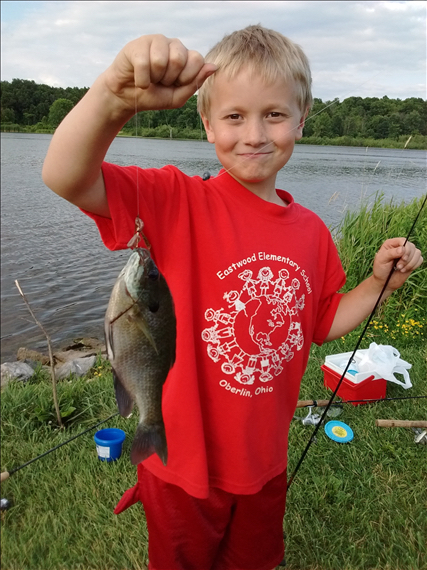
Experienced bluegill anglers have learned through trial and error what seems to work best. If you’re a novice at the art catching these little fighters, it’s a good idea to take their advice.
When choosing your line-rod-reel combination, think small. Light 2- and 4-pound test lines offer low visibility to the fish and light tackle provides a more delicate presentation — and adds extra fun for the angler.
Use properly sized baits. While aggressive feeders, bluegill’s mouths are small. Small jigs, baits and hooks between 1/32- and 1/64-ounces are not too small. Tip those jigs with spikes (common blowfly larva available at many live bait stores), redworms or bits of nightcrawlers.
Read the water. Wind can help energize a quiet fishery, especially if it’s preceded by calm, warm weather. Also, the wind blowing against one shore will push plankton and feed towards that shore, in addition to raising the oxygen levels.
Expect to lose some jigs. If you don’t leave a few hooks snagged in aquatic weeds, submerged logs, stumps or sticks, you aren’t fishing the best spots. Panfish hide around these areas for two reasons: protection and food. Remember that first important rule of fishing: You have to fish where there are fish.
Preparation
Since the term panfish refers to a wide range of edible freshwater fish that are small enough to cook in a small pan, it would be a good idea to have a plan for the pan. How about a few recipes to encourage you to hit the water this fall?
In 1901, the U.S. Capitol’s chief kitchen steward Hugo Ziemann, wrote “The White House Cookbook.” He included his own preparation instructions, and if it was good enough for President Teddy Roosevelt, well …
“Most of the smaller fish are usually fried. Clean well, cut off the head, and, if quite large, cut out the backbone, and slice the body crosswise into five or six pieces; season with salt and pepper. Dip in Indian meal or wheat flour or in beaten egg, and roll in bread or fine cracker crumbs — trout and perch should not be dipped in meal — put into a thick bottomed iron frying pan, the flesh side down, with hot lard or drippings.”
“When they are fried quite brown and ready to turn, put a dinner plate over them, drain off the fat; then invert the pan, and they will be left unbroken on the plate. Put the lard back into the pan, and when hot slip back the fish. When the other side is brown, drain, turn on a plate as before, and slip them on a warm platter, to be sent to the table. Garnish with slices of lemon.”
Cyndi Fliss, of Bevent, Wisconsin, has put together her own special recipe for panfish that her family catches. Rather than the deep fryer, she chooses chowder. The ingredients are simple: Six bacon strips, cut into 1-inch pieces; 2/3 cup chopped onion; 1/2 cup chopped celery; three medium potatoes, peeled and cubed; 2 cups water; 1/2 cup chopped carrots; 2 tablespoons minced fresh parsley; 1 tablespoon lemon juice; 1/2 teaspoon dill weed; 1/4 teaspoon garlic salt; 1/8 teaspoon pepper; 1 pound panfish fillets (perch, sunfish or crappie) cut into 1-inch chunks and 1 cup half-and-half cream.
“In a 3-quart saucepan, cook the bacon over medium heat until crisp. Remove bacon to paper towels; drain, reserving 2 tablespoons drippings. Sauté onion and celery in reserved drippings until tender. Add potatoes, water, carrots, parsley, lemon juice and seasonings. Bring to a boil. Reduce heat; simmer, uncovered, until vegetables are tender, about 30 minutes. Add fish and bacon; simmer for 5 minutes or just until fish flakes with a fork. Add cream and heat through. Yield: four to six servings.”
Once winter arrives and lakes and ponds look like they’ll be dormant till spring’s thaw, a good ice-auger will help you land some still very eager, well-chilled bluegill to the bucket.
“I’ve gone fishing thousands of times in my life, and I have never once felt unlucky or poorly paid for those hours on the water.”
— William G. Tapply