





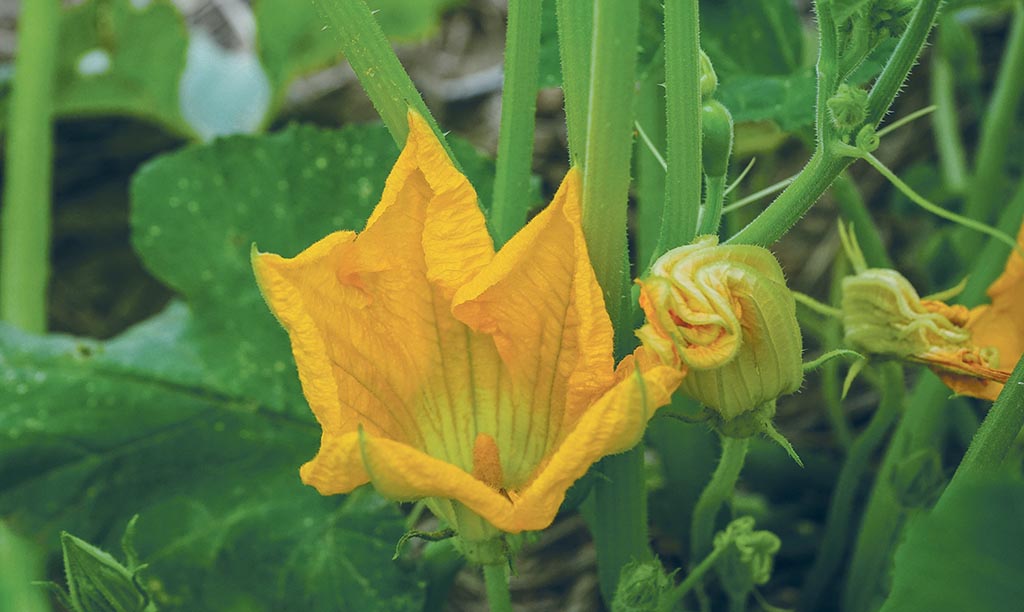
WAUSEON, Ohio — The bright yellow flower blossoms of squash open between five and 10 in the morning, before the summer heat wilts them shut. In those few hours, workers move quickly through the rows—isolating flowers, pollinating by hand and making precise selections that will give rise to new vegetable varieties. By the time the full sun hits, the male flowers are closed, the females are pollinated and the next generation of seeds already carries new genetic potential.
In a field where global consolidation has narrowed seed diversity, companies like Rupp Seeds are one of the few remaining family-owned vegetable breeding operations in the United States working to keep seed innovation in the hands of growers.
Founded in 1946 on 80 acres off County Road B in Fulton County, Ohio, Rupp Seeds began as Sylvan L. Rupp Seed Farm, focusing on grain and forages. When Midwest vegetable production surged in the 1980s, the company shifted toward vegetable breeding, a decision that would define its modern identity.
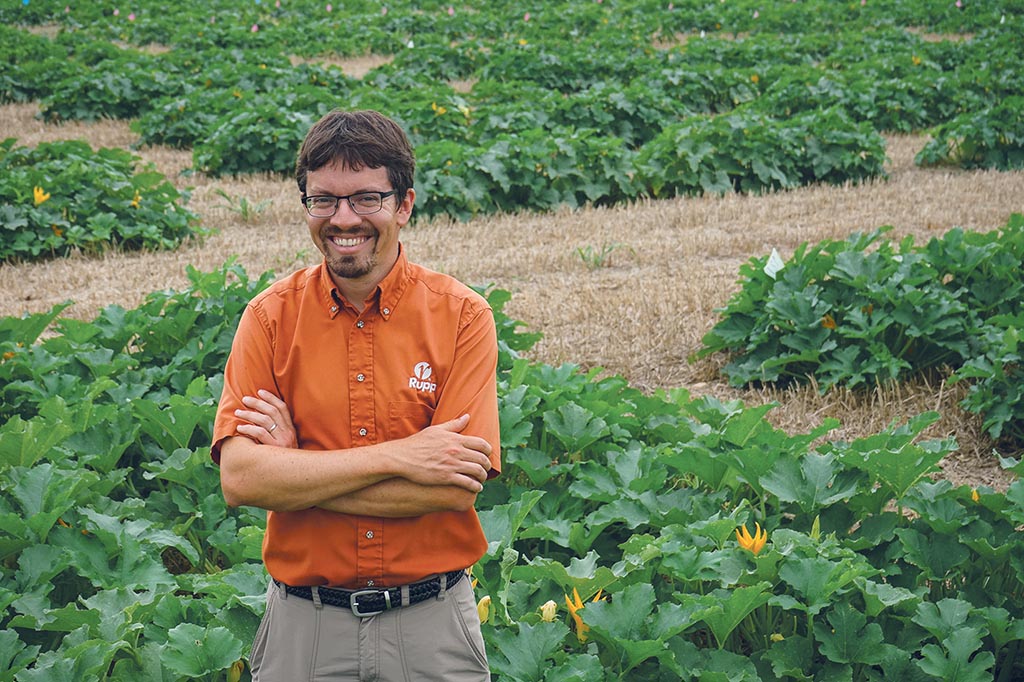
“We sell everything from A to Z—asparagus to zucchini,” said Bill Holdsworth, one of the company’s plant breeders. “We think a lot about the grower and the consumer. We want to develop products that a consumer will want to buy.”
Filling a niche
Each winter, farmers await one of the season’s most anticipated reads: the annual seed catalog. Rupp’s publication lists 43 different crops available to customers. Over the years, their breeding program has brought pumpkins like Carbonado Gold, Garnet Gold and Bayhorse Gold from idea to market. Betternut 900, Autumn Delight and Ugly Dumpling winter squash have also originated from Rupp Seeds.
Its two-person breeding team operates within an almost 30-person company that sells, distributes and selects the best crop varieties for customers in nearly all states and 12 countries.
While the global grain seed market is dominated by a handful of multinational firms, with about half of all sales managed by just four companies, vegetable breeding remains more diverse.
Companies like Rupp fill a vital niche in this space, maintaining grower-focused breeding programs. Major investments in proprietary vegetable genetics have come from Bayer, Syngenta and several Dutch firms, but the Wauseon-based company stands among a small yet influential group of breeders improving varieties.
Holdsworth, the company’s winter squash and pumpkin breeder, said their customers, which range from farm stands, u-pick markets and retail stores, are always looking for “variety and quality.”
The team working on breeding and product development is constantly looking a decade ahead. “From project conception to the time we’re ready to market, it’s usually about 10 years,” he said.
Finding what works
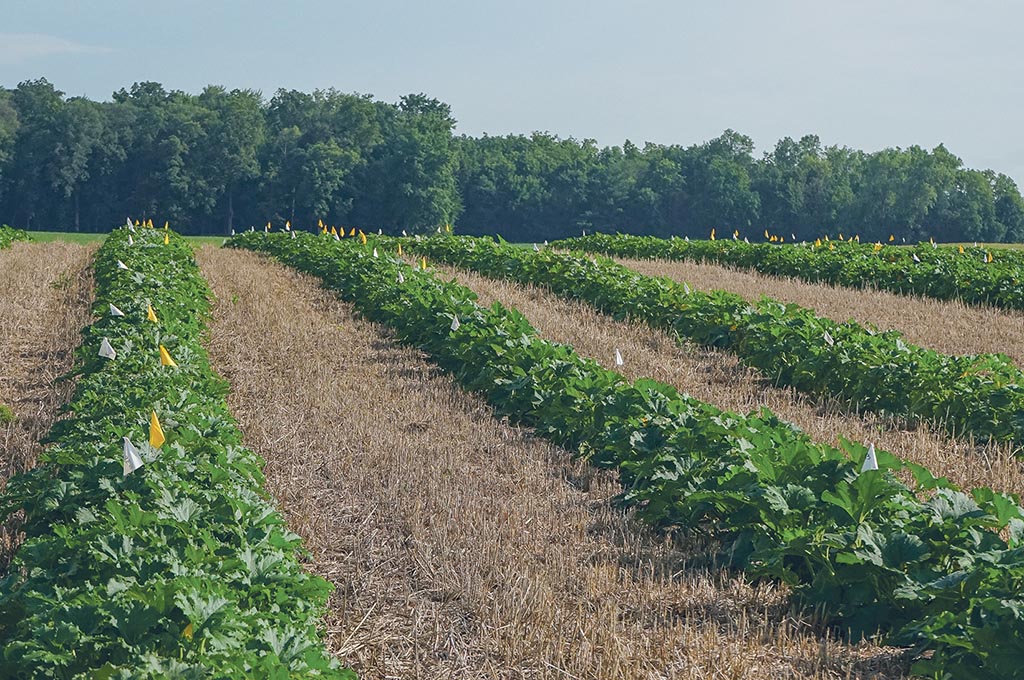
Rupp’s trial plots in Wauseon feature the full range of cucurbits. From butternut and acorn to spaghetti squash and pumpkins bred for both processing and ornamental use, the company’s focus centers on crops that make their fall debut.
“A lot of what we develop for the farm market community can also be used by home gardeners,” Holdsworth said. “What gardeners want most is flavor.”
A 2017 Cornell University graduate, Holdsworth completed his Ph.D. in breeding squash and joined Rupp Seeds in 2015 before graduation. He joined alongside research associate Jim Short, an Ohio State graduate and native of the area. Together, they spend summers in the fields and winters in the office analyzing data to identify promising new genetic lines.
“We do things a lot differently here in a research context than a grower would,” Holdsworth said.
Across Rupp’s property, about 20 acres are used for hybrid seed production.
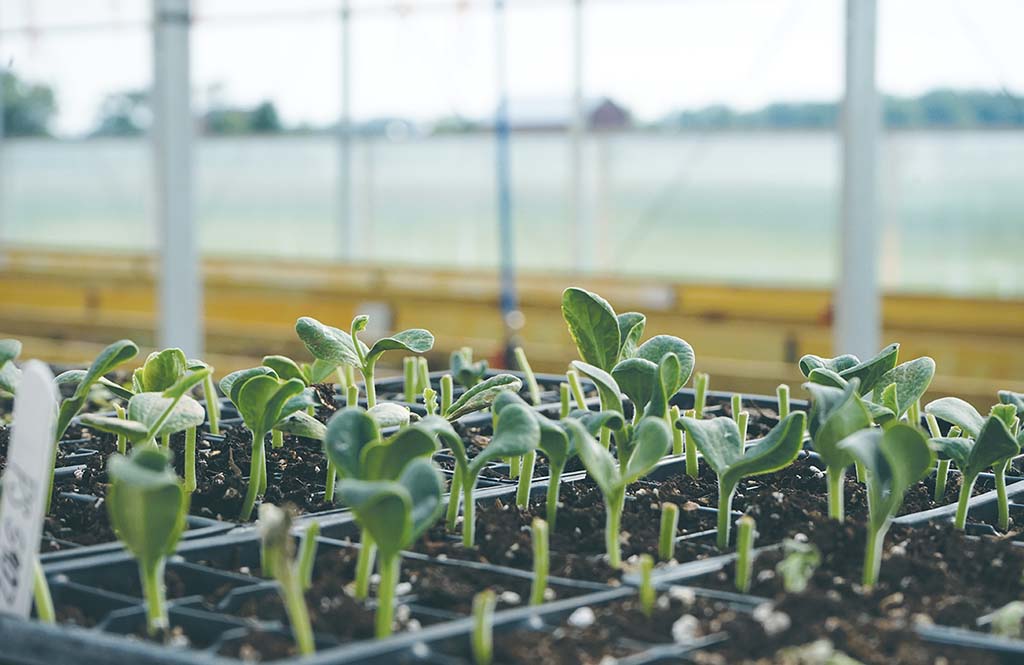
Fifteen of those acres, near the main office, are dedicated to the labor-intensive crossbreeding process of yellow flowers. Another smaller plot nearby hosts product development trials, where diverse vegetable varieties are tested side by side. The breeding program completes three grow-out cycles each year — one in Ohio fields, another in Ohio greenhouses, and a third in Florida greenhouses. To maximize production, seed is harvested before the crops fully mature.
Plant breeding at Rupp Seeds spans a full range of environments, from Florida’s warm climate to Ohio’s cold seed storage rooms. “In Florida, we rent space from growers who manage water, insects and diseases,” Holdsworth said. “We go down, plant the crop, pollinate it and come back to harvest in May.”
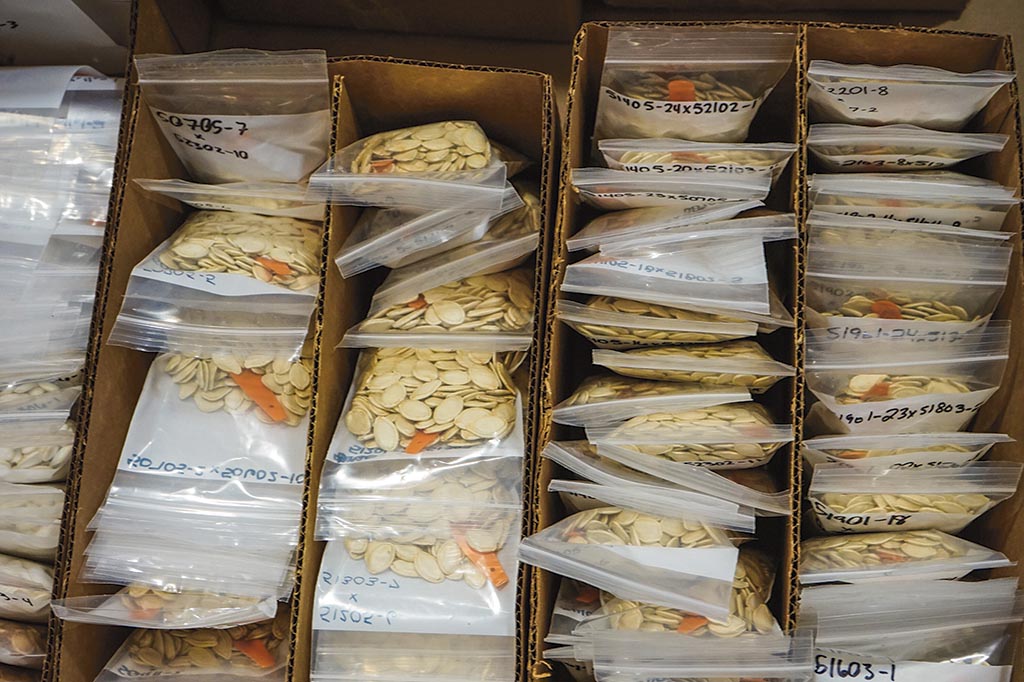
In the seed cooler back in Wauseon, tens of thousands of lines and accessions of squash seeds are stored.
“In a breeding program, you’re always taking seed from the most recent generation, making forward progress,” Holdsworth said. “But there’s some older seed we can always go back to.”
Building crop diversity
Driving by the trial plots when cucurbits are not in the field, cereal rye serves as the team’s cover crop. Planted in late September after summer trials end, it grows up to 5 feet tall before being terminated in May.
“It keeps in moisture, suppresses weeds and keeps the fruit off the ground—protecting it from soilborne diseases,” Holdsworth said.
After termination, squash varieties are planted directly into the residue. Some growers use similar systems, planting early maturing pumpkin varieties after a wheat harvest.
“Rather than sinking into mud after a rain, this lets us get into the field right away,” he said.
While new home-bred varieties might be released only every few years, Rupp Seeds is building Ohio-grown crop diversity.
“By developing hybrids, we’re able to complement the weaknesses of each parent and bring their strengths together,” Holdsworth said.




