

PENNSYLVANIA FURNACE, Pa. — The younger generation is interested in agriculture, but there’s a roadblock in the way: the cost of starting a farm.
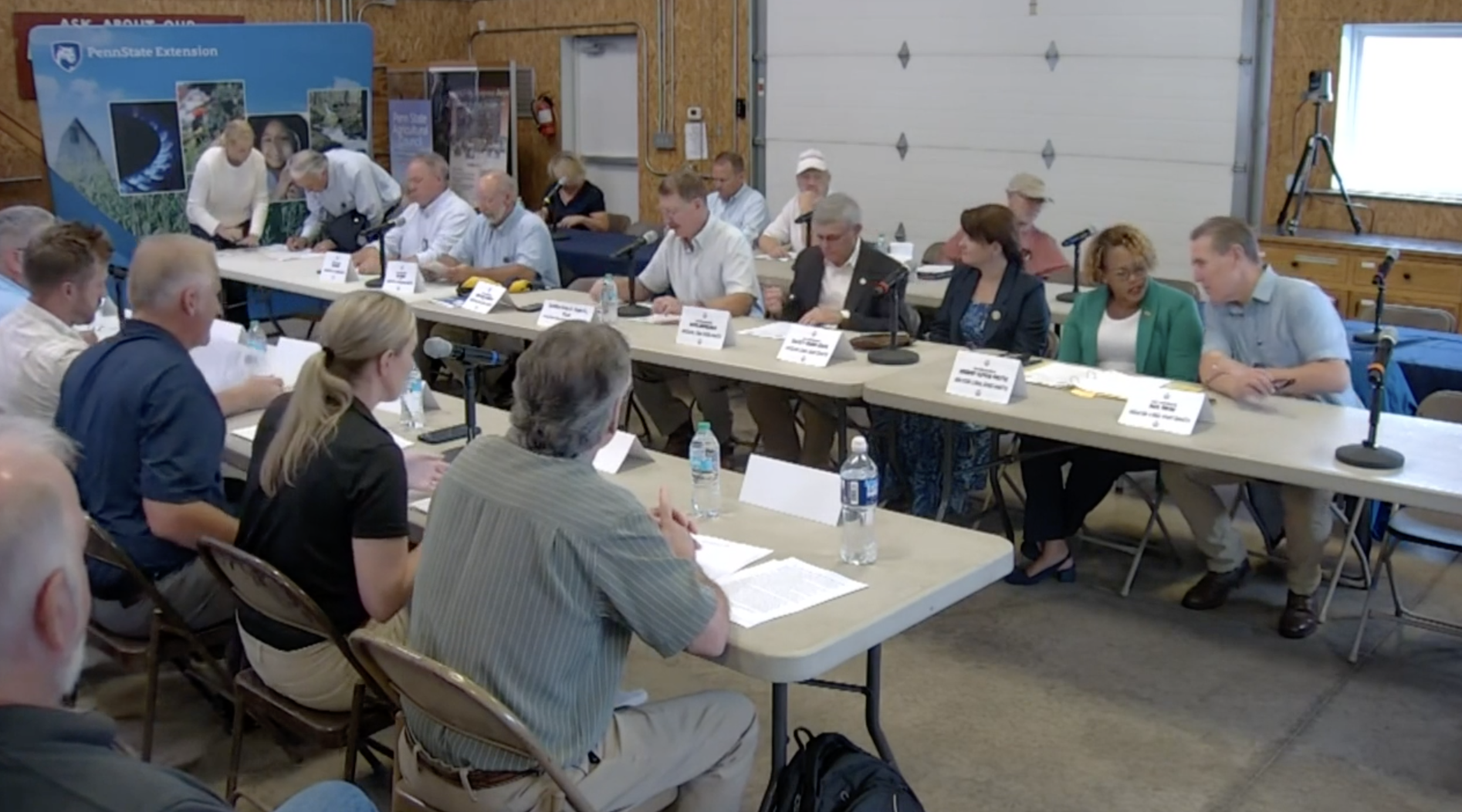
This was the main point of conversation at Penn State Ag Progress Days’ joint informational meeting with the Senate and House Agriculture and Rural Affairs Committees called “The State of the Livestock Industry in Pennsylvania: Producers’ Perspective,” on Aug. 13.
During the meeting, Pennsylvania livestock producers representing industry groups discussed the challenges of farming with government officials.
Farmers talked about the high cost of acquiring farmland, taxes and building infrastructure and the slow permitting process. Others discussed Pennsylvania’s 2025-2026 budget, including cuts to agriculture funding.
“Where we’re at today, with the delay in the timeline (of permitting infrastructure on farmland) and the expenses (being) astronomical, it’s becoming a roadblock to that next generation wanting to get involved in farming, and we don’t want to lose that,” said Chris Pierce, president of Heritage Poultry Management Services in Lebanon County, which provides management services for traditional and cage-egg production.
High costs
Multiple producers expressed concern over the rising costs of building new barns and infrastructure on farmland. Coleman Wagner is one of these producers. He’s the president of the Pennsylvania Pork Producers Council and general manager of Ag Venture Swine Management Services in Lancaster County.
According to Wagner, many animal confinement facilities were built in the ‘90s and are nearing the end of their life cycle. But since 2019, new barn building costs have risen 40%, reports Wagner and the National Hog Farmer, a news outlet for the pork industry.
“We’re losing quite a bit of infrastructure,” Wagner said. “We’re at a big inflection point in the industry where we don’t have enough space or people willing to take on the investment of building a new barn and raising our herds that we have here in Pennsylvania.”
Pierce echoed similar sentiments. He said many 30-year-olds are getting involved in the egg-laying business because they are able to acquire farmland through generational wealth.
“If that didn’t take place, we wouldn’t have food,” he said.
Without this, costs would be too high: “If my neighbor had to buy a $3 million farm to put a $3 million egg-laying operation on it, the cash flow doesn’t work,” Pierce said.
Tessa Applegate, chief financial officer and fourth-generation owner of Clark’s Feed Mill in Northumberland County, followed up with the difficulties associated with high taxes and permit costs from one township to another.
Applegate says her company’s operations span multiple counties, but regulations in different counties and even townships within these counties vary, creating significant financial hurdles for farmers.
She points to Pennsylvania’s Clean and Green program as a potential solution. This program, created in 1974, lowers property taxes for landowners based on land use. But Applegate notes several counties do not participate in the program.
“The tools to help farmers already exist here at the state level, but whether or not they can be used depends on where you farm,” she said.
Wagner, Pierce and Applegate added that the slow permitting process with the Pennsylvania Department of Environmental Protection has also hurt interest in farming.
Wagner said he has been working with a farm that has been in the permitting process since summer 2023. Later in the hearing, Rep. Paul Takac, D-Centre, who chairs the Rural Revitalization Population Commission, said he received an update from DEP on its Streamlining Permits for Economic Expansion and Development program, which was created in July 2024 to “streamline the most common permitting,” he said.
The DEP is “qualifying professionals” to work with applicants to apply for expedited permits for projects under the DEP’s Chapters 102 and 105, which regulate projects that disturb the earth’s surface and take place in or around waterways and wetlands.
Rep. Eddie Day Pashinski, D-Luzerne, chairman of the House Agriculture and Rural Affairs Committee, added he would like to schedule a follow-up meeting with producers to discuss more about permitting costs and to create a plan to tackle these problems.
Pennsylvania budget
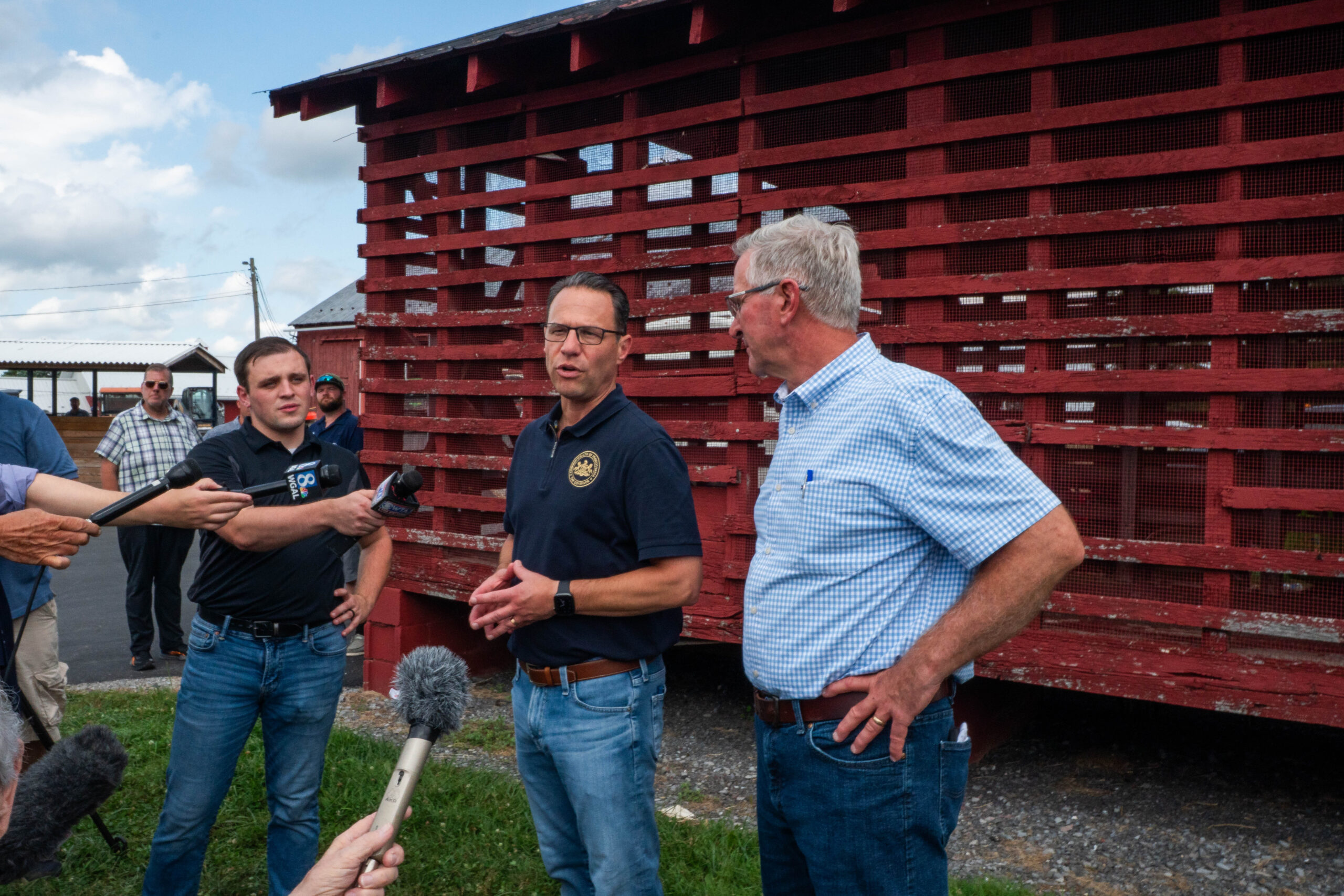
Pennsylvania Gov. Josh Shapiro said he’s working on investing more into agriculture in Pennsylvania’s 2025-26 budget.
“Make no mistake, I want to invest more in capital for our farmers,” Shapiro told Farm and Dairy during a meeting with the media on Aug. 13 at Ag Progress Days.
Pennsylvania’s budget is six weeks overdue. Currently, it includes an additional $13 million for the state’s Agriculture Innovation Grant Program, which provides funding to farmers and agricultural business owners to implement new agricultural technologies, conservation practices and renewable energy.
It also includes an additional $2 million for western Pennsylvania’s new animal diagnostic laboratory at Penn State Beaver and $4 million for the Pennsylvania Agricultural Surplus System to connect Pennsylvanians at risk of hunger with local food, among other agriculture investments.
However, Darwin Nissley, president of the Pennsylvania Cattlemen’s Association, expressed concerns over budget cuts to the Pennsylvania Ag Excellence Centers. The proposed budget slashes funding by $800,000.
Nissley said this funding helped create numerous opportunities for beef producers in the state, including the Pennsylvania Beef Council’s Pa. Beef to Pa. Schools program, which allows schools to purchase and serve Pennsylvania-grown beef in cafeterias.
“In one year, that program exploded from 32 school districts to 120, covering 25% of all public schools and reaching 70% of the counties in the commonwealth,” he said, at the meeting.
The Center for Beef Excellence was also able to provide grants to producers for farm and herd improvement and funding through the Veterinary Excellence Initiative grant program, which helps veterinarians purchase equipment and enhance their infrastructure to better serve beef producers.
“To keep this momentum going in both cattle producers and the consumer side of things, we need to have this Ag Excellence line item restored to (its previous budget level),” Nissley said.
(Liz Partsch can be reached at epartsch@farmanddairy.com or 330-337-3419.)




