



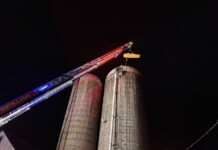

WHITEHOUSE, Ohio — Record-breaking dryness is heightening the risk of field fires across Ohio. A recent combine malfunction and a corn dryer fire in Lucas County add to the growing list of incidents this harvest season.
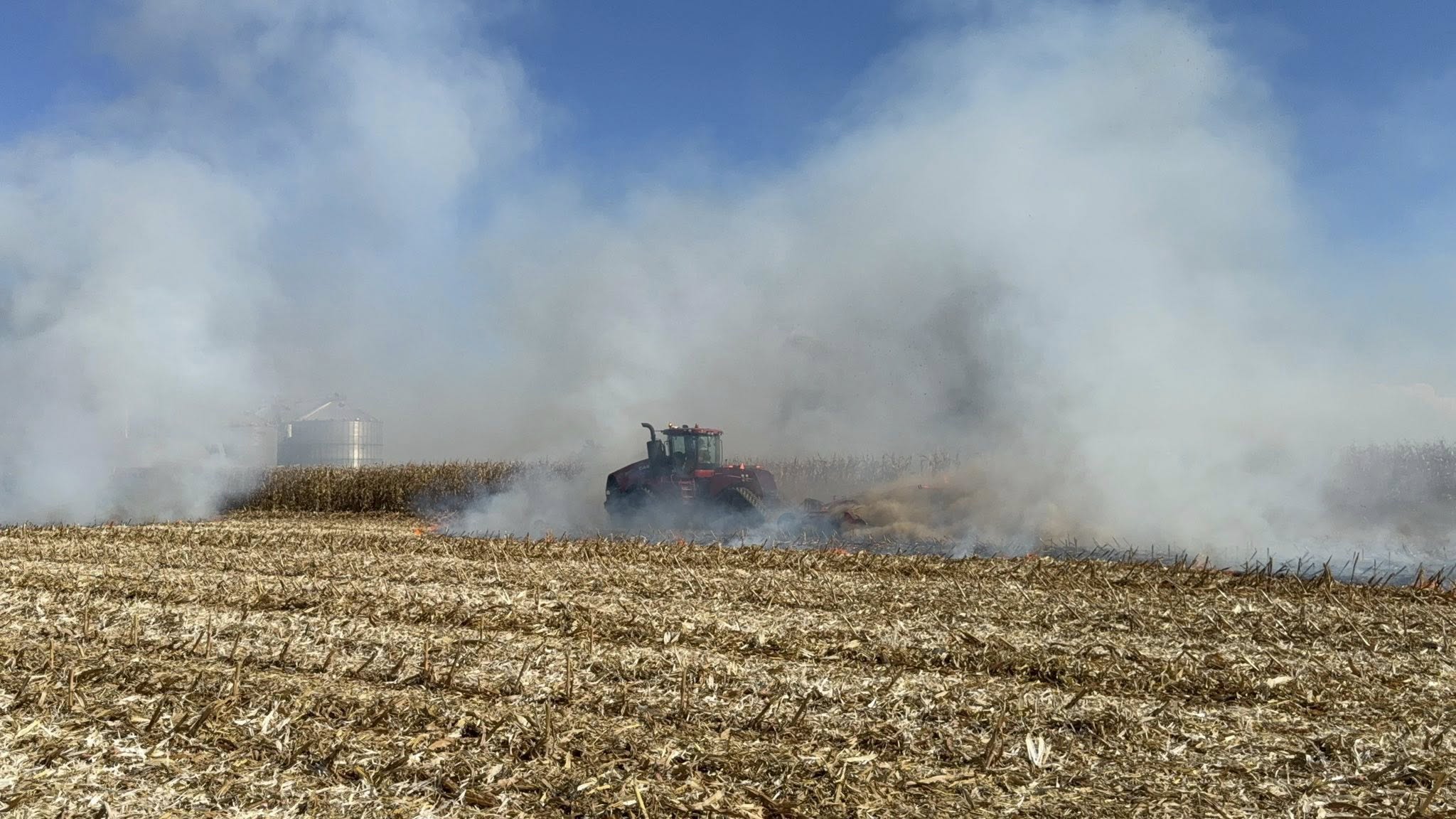
Heilmann Farms in Whitehouse, Ohio, faced its second fire of the season during the third week of October. Flames spread across about one acre of a harvested cornfield after a bearing in a combine overheated and ignited dry crop residue. Just six days earlier, a corn dryer had caught fire at the farm’s grain storage facility.
“It was like a lit matchbook, spreading faster than we could contain it,” said Jake Heilmann, one of the farm operators.
August ranked among the driest months on record since the late 1800s, according to Ohio State Extension’s Agronomic Crop Network. Although some rainfall returned in late September, early crop maturity and ongoing harvest activity have kept fire risks high.
Fire
On the day of the incident, after finishing soybean harvest, the Heilmann crew began on a corn plot. “After one pass, we looked down and could just see white smoke rolling across where the combine was,” Heilmann said.
A bearing in their combine had failed, generating molten metal that dropped into the field and ignited crop residue, not the combine itself. Their first instinct was to stomp out the flames manually, until they realized how quickly the fire was spreading. Winds pushed it toward the standing corn. Heilmann’s brother-in-law, in the tractor with the grain cart, tried to drive over the fire to smother it.
“We were truly fortunate because my father answered the phone — he was at home right where a tractor was sitting with a tillage tool hooked up. He reacted super fast and kind of saved the day, bringing it over just as the fire department arrived,” Heilmann said.
From his vantage point in the tractor cab, he could see flames and then 100 feet farther east, more fire. “It was probably the longest 15 minutes of my life,” he said.
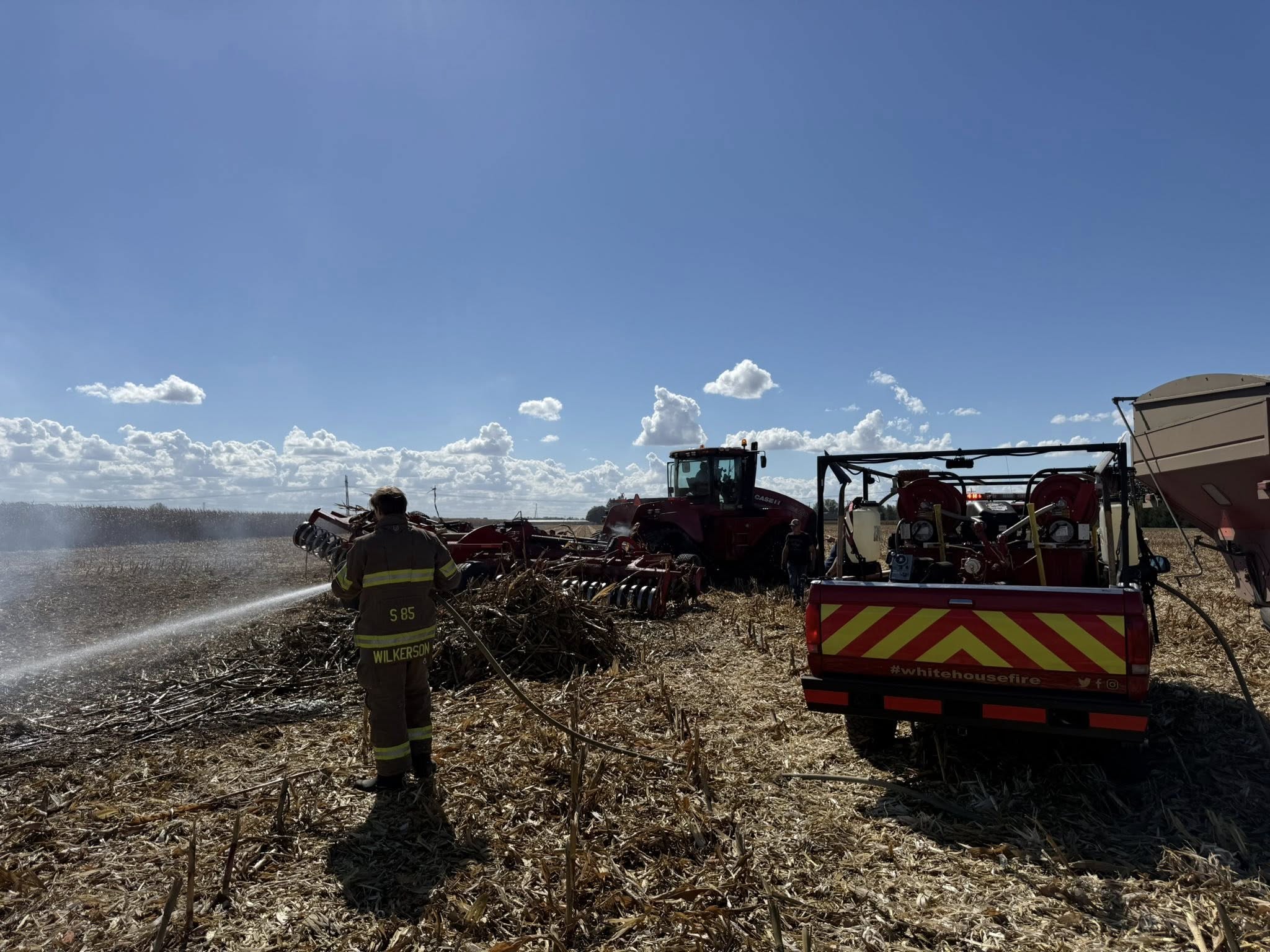
Once they realized the scale of the blaze, the harvesting crew called 911. Whitehouse Fire Chief Jason Francis led the response. “Employees of Heilmann Farms did an excellent job trying to keep the fire contained by cultivating areas of the field and stopping it from extending further into the unharvested portion,” Francis told Farm and Dairy.
Fire departments from Whitehouse, Waterville and Providence responded with two brush trucks and two fire engines providing support. Within 10 minutes of the firefighters and Heilmann’s father arriving, the flames were extinguished. “We are fortunate as a community to have you,” Heilmann wrote on Facebook to the fire departments after the incident.
In western Lucas County, local departments typically see a few field fires each year, Francis noted. An estimated 200 field and combine fires occur every year in Ohio, the State Fire Marshall’s office reports.
This year’s harvest has progressed quickly, weeks ahead of schedule for Heilmann Farms. But as they continue, the risk persists. Soon after the most recent fire, the farm built its own fire truck, converting a one-ton flatbed pickup into a mobile response unit equipped with a 300-gallon water tank and 50 feet of hose with a nozzle. The setup moves between fields, providing an immediate first line of defense.
“It was just such a helpless feeling,” Heilmann said. “I don’t want to be in that situation again. At least this way, if it happens again, there’s something we can do — we can take immediate action. It’s really more for peace of mind.”
Brush trucks make a difference in rural communities, he added. “They’re specifically designed for these kinds of incidents, and we make sure all personnel are trained to use them effectively.”
Safety measures
Ohio ranks fourth in the nation for combine fires. Other leading states include Minnesota (first), Iowa (second), Illinois (third) and Kansas (fifth).
Fire departments prepare by conducting joint training exercises annually. “Preventing field and agricultural fires requires a combination of proactive maintenance, safe operating practices and community awareness,” Francis said.
Preventing farm fires starts with consistent equipment care. Regular inspections and maintenance can catch issues before they turn dangerous, fire officials warn. Farmers should clear away dry crop residue, dust and grease that could ignite from heat or sparks, and ensure bearings, belts and exhaust systems are in good working order to reduce the risk of mechanical fires.
Maintaining mowed buffer zones between fields and nearby woods, roads or buildings can also help slow or stop flames from spreading. During harvest, operators are urged to avoid running machinery during the hottest, driest parts of the day, when fire danger peaks.
Ohio State’s Farm Safety Team adds that common heat sources include faulty wiring, overheated bearings and leaking fuel or hydraulic oil. Birds and other wildlife may also build nests in engine compartments or exhaust manifolds, creating unexpected fuel sources for unsuspecting combine operators.





Fires are one of the worse. And the dryness just enhances the chances and/or outcome of such. Interestingly enough, we have record dryness and yet the USDA says record harvest. Hard to seee how those can both exist simultaneously. Of course, as one commenter on a blog put it, “ A blind monkey on a typewriter has a better chance of writing Shakespeare than the USDA in making a forecast!”