


The coming of spring found pioneers across the Ohio country stashing away their equipment for making maple syrup, while enjoying the sweet benefits of that labor.
The work of maple sugaring was an annual rite. It was a distinct seasonal bridge between the comparative inactivity of winter and gearing up for what would be the coming seasons of hard work and struggle to keep the wilderness farmstead moving forward. It was a time to get back out into the woods without actually resuming the series of backbreaking chores which loomed only a few weeks distant.
As settlers cut down the woods to create farmland, they were careful to preserve stands of sugar maple trees for the distinct purpose of making maple syrup as a sweetener for their food. While most trees produce sap in the spring, which could be made into syrup, it was the sap of the sugar maple that had the highest concentration of sugar, and which could most readily be boiled down to make maple syrup and sugar.
Tapping the trees
Tapping maple trees to obtain sap in pioneer days was a fairly simple and straightforward process, requiring little in the way of specialized tools and equipment.
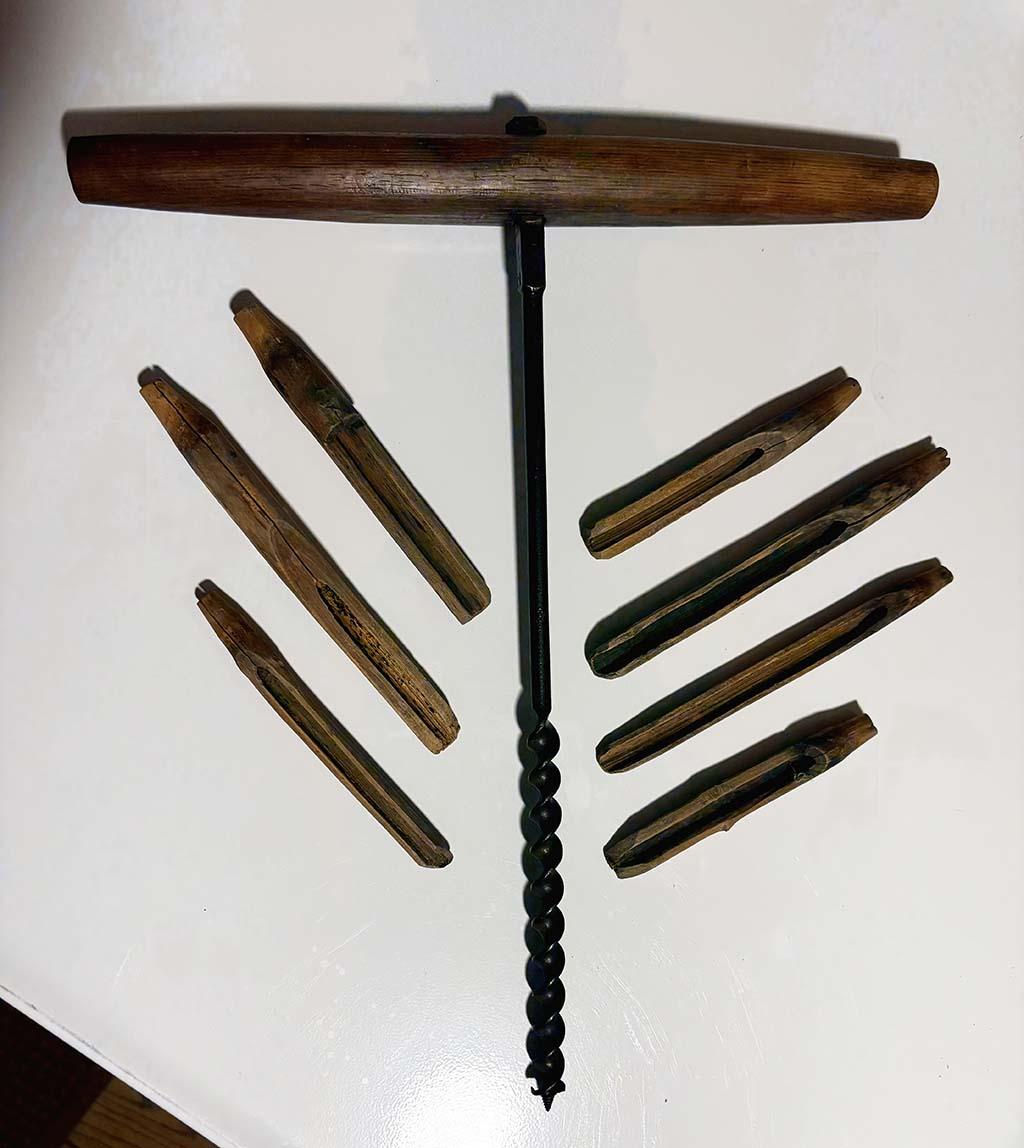
The key component in tree tapping was the sap spile, used to carry sap from the trunk of the tree into a bucket positioned just below it.
Sap spiles were easily made from the branches of sumac or elder bushes, always found in abundance along the edges of fields. These branches were cut into lengths of several inches. Then the blade of a gimlet or awl was heated red hot and used to burn the pithy core out of the branches, while simultaneously cauterizing the inside of the tap to prevent rot.
Once that was done, a pocketknife was used to taper the end of the spile that would be inserted into the tree, while the other end was roughly shaped into a spout. A spile that might be used for years to come could be readily shaped in less than five minutes.
Spiles, or taps, would be set by boring a half-inch hole in the tree using a small t-handled auger. Then — as the name implies — it would be tapped into the hole using a wooden mallet.
Collecting the sap
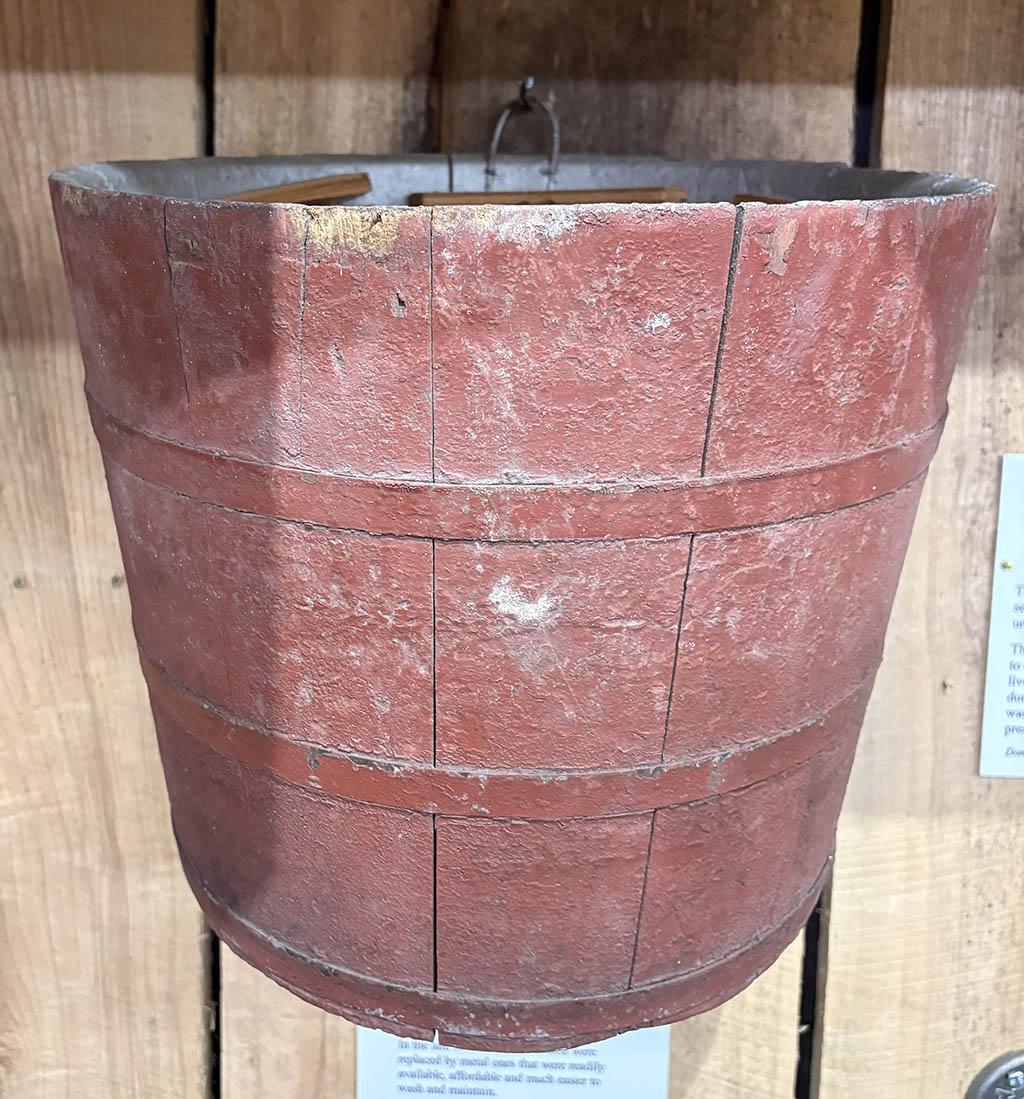
As a pattern of late winter/early spring frosty nights and warm days set up, sap would begin flowing from the tree. This would be collected in staved wooden buckets made by the local cooper and which were soaked in a creek at the beginning of the season to swell the wood and make the joints tight.
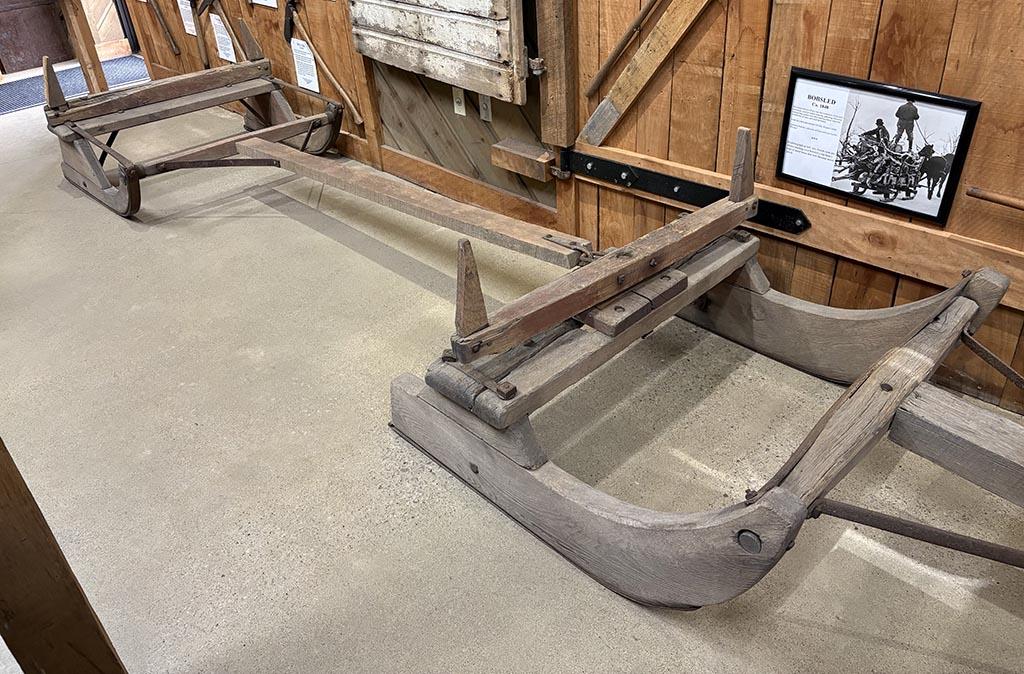
To collect the accumulating sap for boiling down, the settler utilized a bobsled equipped with a larger staved wooden tank. Bobsleds were large, horse-drawn vehicles having heavy wooden runners that made them ideal for working in the snow or mud. Bobsleds were also used during the winter and early spring for hauling firewood, blocks of ice and other heavy loads where wagons would become bogged down.
Making the syrup
Maple sap was evaporated over a fire in sheet iron trays until the desired consistency and concentration of sugar was reached.
Today, the gathering and boiling down of maple sap has become something of a technical marvel with miles of plastic tubing connected to vacuum systems transporting the sap to the sugar house. There, computers monitor temperature- controlled reverse-osmosis systems to achieve the greatest efficiency in boiling down the sap.
And while it is certainly not as picturesque a process as it was in pioneer days, it’s a system that works, and works well. And the resulting product … mmmmmmm!