




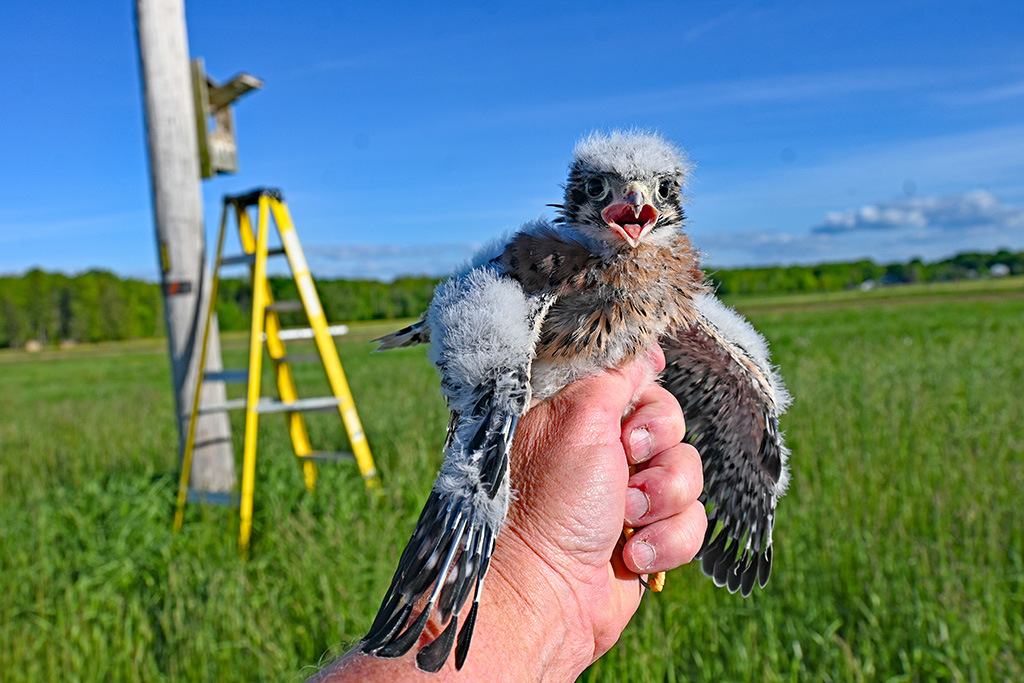
A male American kestrel, with his brilliant orange tail and slate blue wings, is a sight to behold. The female, slightly larger, is not as colorful, sporting brown wings, back and tail with black barring throughout. Unlike other birds of prey, many of which construct their own nests, kestrels are secondary nesters, seeking out existing cavities rather than constructing their own.
Old woodpecker holes, hollow trees, crevices in barns or building soffits may all qualify for suitable kestrel nest sites. Yet, one of their favorite places to nest is in a man-made nest box.
In 2018, I initiated a nest box trail by installing 25 boxes in northeast Ohio in an attempt to attract American kestrels to nest. As I wrote in my article Feb. 26, 2024 (“The American kestrel: A falcon in peril”), the kestrel is recognized by its slender, pointy wings, long tail and swift flight. It is not a hawk, but rather, a falcon.
Standing a mere 9 inches tall, with a wingspan of 22 inches, the kestrel’s signature behavior is to hover in one spot high in the air or perch on wires and treetops while its tail bobs up and down as it searches for prey below. Its diet is varied, and although it feeds on small birds, earning it the name “sparrow hawk,” it also regularly feasts on rodents, snakes, frogs and insects, using its sharp talons and hooked beak to aid in their capture and consumption.
American kestrels are North America’s most widespread falcons. They are a bird of open country, preferring grasslands over forest. Yet throughout the past 50 years, their numbers have alarmingly declined more than 50%. Scientists believe that a combination of factors has played a part in this disappearance. These include, but are not limited to, loss of habitat, competition for nest sites, climate change, car collisions, predation and toxic chemicals from pesticides and herbicides accumulating in their bodies and eggs.
Getting started
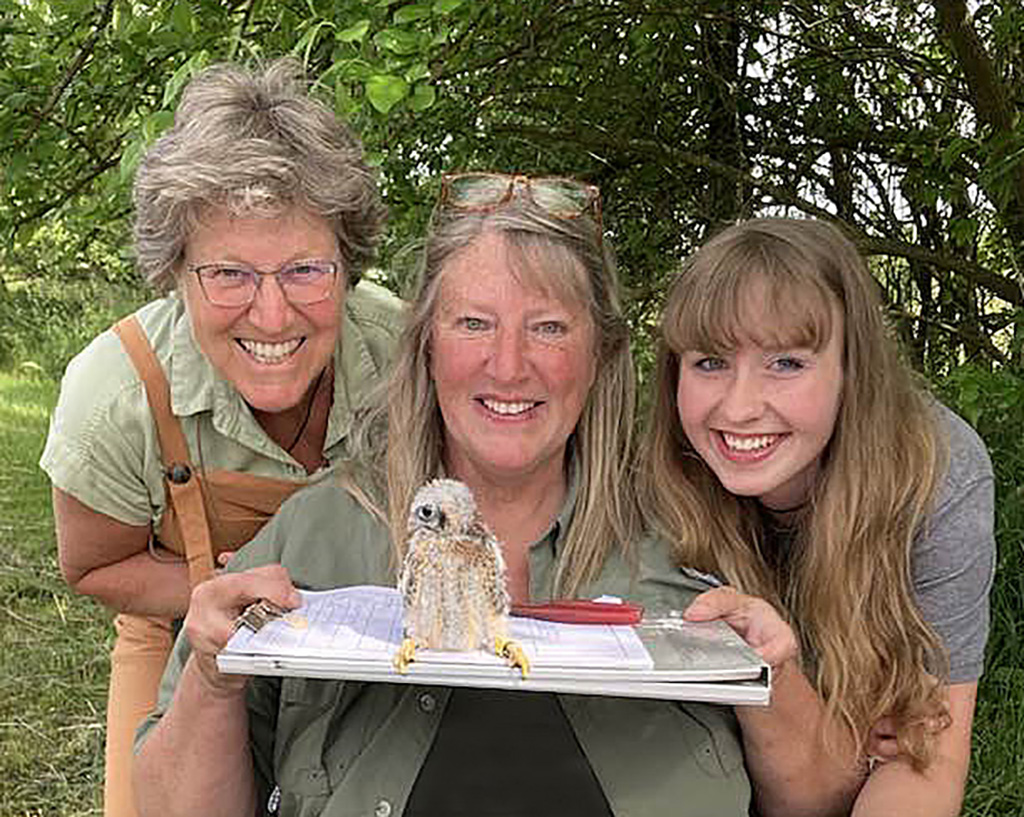
The area I chose for my nest box trail in the southeastern corner of Geauga County is still quite rural and home to the fourth-largest Amish settlement in the world. This farmland habitat with open expanses of hay fields and pastureland is one of the last strongholds for the species in the county.
I knew that in order to install the boxes in optimal locations, I would have to depend upon permission from private landowners. Door to door I went, much like a traveling salesman, with a box in one hand and plenty of kestrel information in the other, making my pitch to the people whose properties already hosted active kestrels or showed promise of attracting them. I was pleased with the positive interest and, in the end, was able to distribute all 25 boxes.
Instantly, landowners were instated as landlords as we discussed the proper mounting location as well as height and hole direction for each box. Also requested was their diligence in keeping the boxes free of unwanted tenants (mainly starlings, sparrows and squirrels) so that they would be empty when the kestrels came calling. Landowners also committed to cleaning out the boxes after the kestrels had nested.
I agreed to monitor the boxes once a week, starting in March through the end of nesting season, to record their status. As a licensed bird bander, I sweetened the deal by offering landowners an up-close look at the nestlings and the need for their assistance when it was time to band them.
Positive start


The boxes went up in 2018 and were prepped and ready for the following year. Happily, 2019 kicked off with four nesting kestrel pairs which successfully fledged young. The same was true for 2020 and 2021, during which four boxes were used, but it was unknown to me whether it was the same four pairs simply moving around to try new real estate or new pairs of birds altogether. In 2022, I was thrilled to have the number of nesting pairs on my trail climb to seven.
During the winter of 2022-2023, I penned a proposal to the USGS Bird Banding Lab, requesting to conduct a research project utilizing color bands. Unlike the small aluminum bands used for standard banding, color bands are made of plastic and are much larger, displaying a combination of letters and numbers which can be read through binoculars or captured on camera. This allows for easy identification of individual birds without having to capture them.
Each color band project is assigned a particular combination of colors, my bands sporting a yellow background with black lettering. The goals of my project are to determine if youngsters are remaining in the area throughout the winter, if they are utilizing boxes in the same area where they fledged and if they are pairing with birds from within the designated nesting area or with unmarked birds.
As with any banding project, I am always hoping for sightings/recoveries outside my project area in an effort to document dispersal, migratory behavior and longevity.
In 2023, the number of nesting pairs on my trail jumped again, this time to 10. And in 2024 I monitored 14 kestrel nests in my boxes. I have added additional boxes to my trail, as I will need to do as the kestrel population in the area increases. Now, with 30 box locations, a new record was reached in 2025 with 17 nesting pairs! I am happy to report that, to date, I have banded over 300 American kestrel chicks.
This year — 2025 — hasn’t been without its trials and tribulations, however. In mid-April, four pairs of kestrels abandoned clutches of eggs which they had begun to lay. This abandonment followed several nights of temperatures in mid 30s. Within three weeks, three of the pairs returned, and laid new clutches. Another pair waited 6 weeks before starting over — their babies having recently hatched on July 5 — the latest on my trail to date.
Paying off

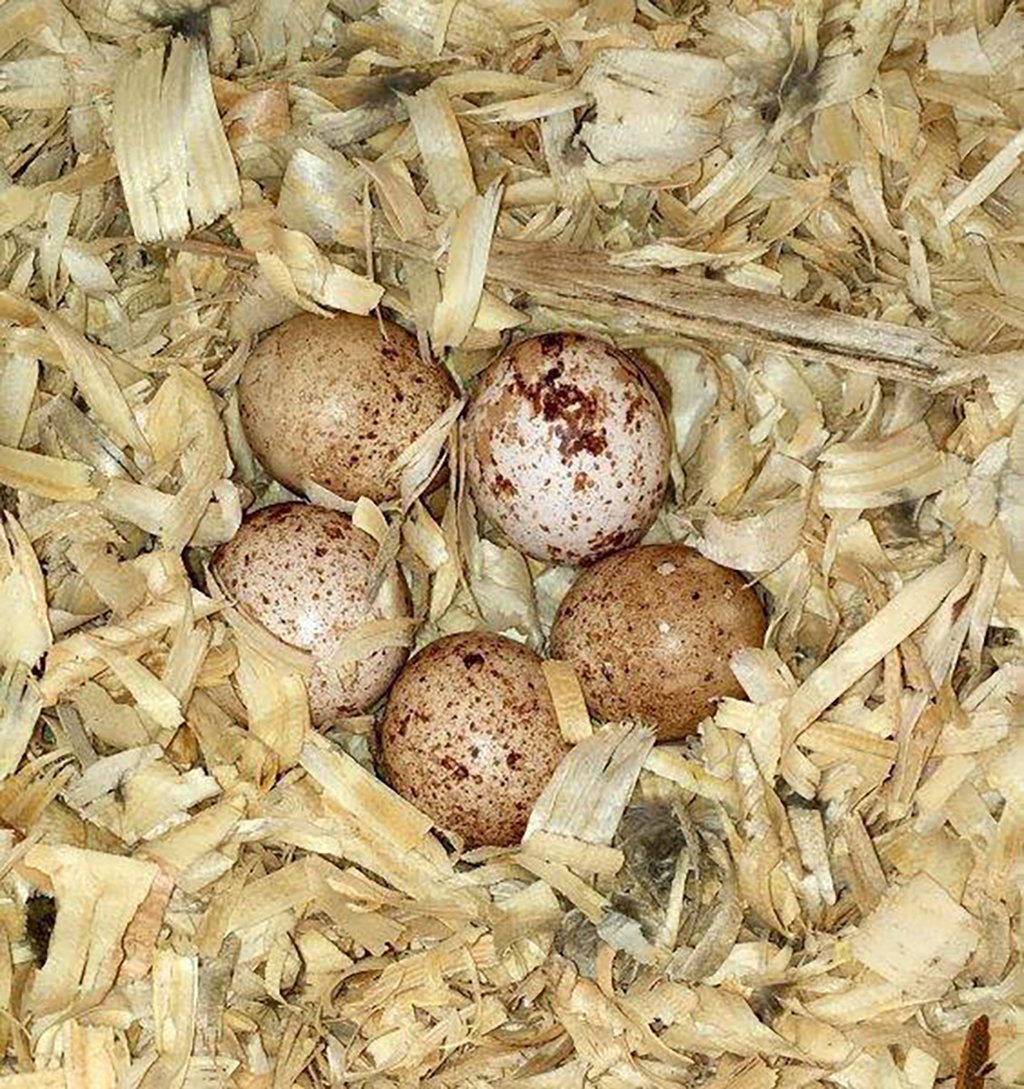
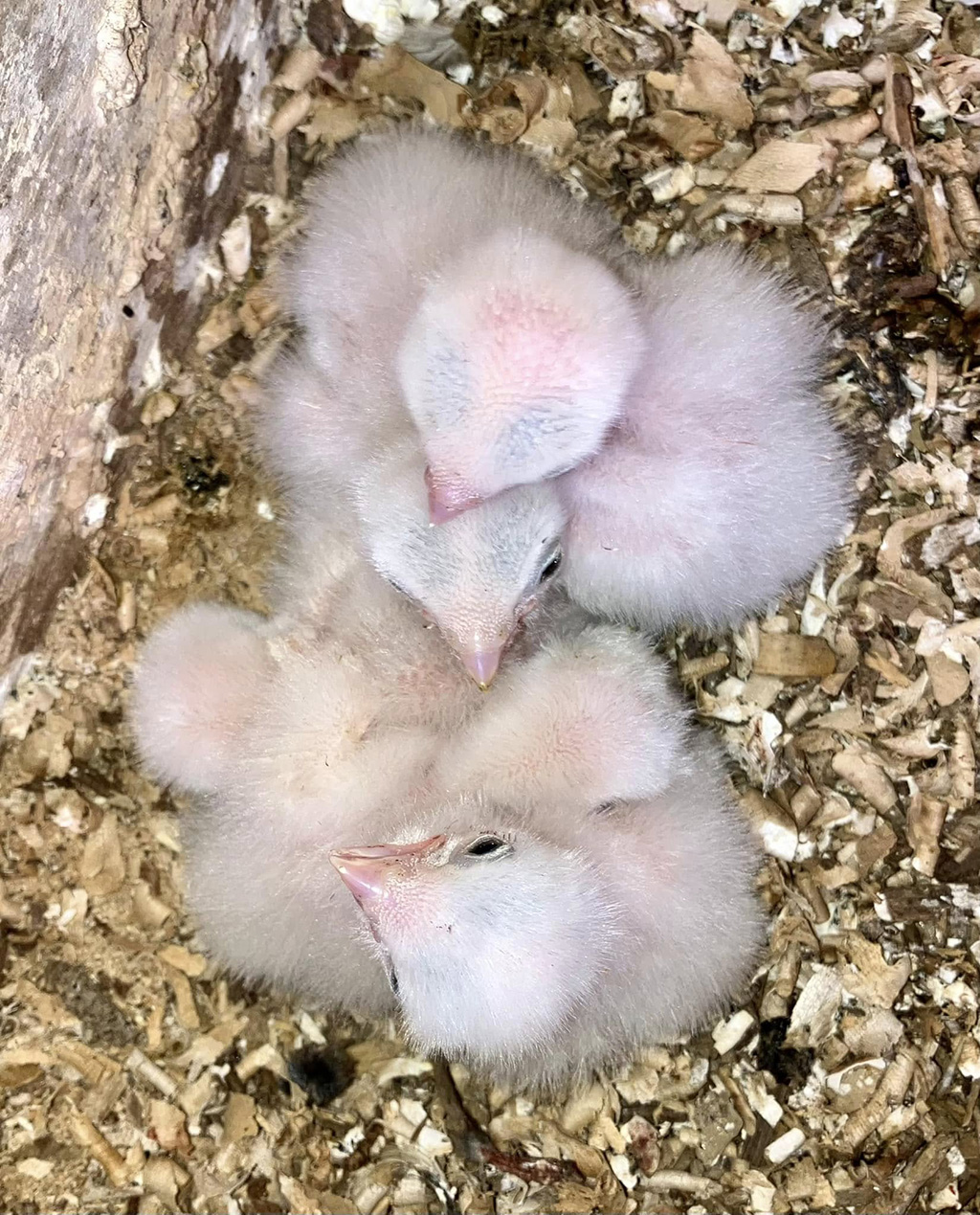
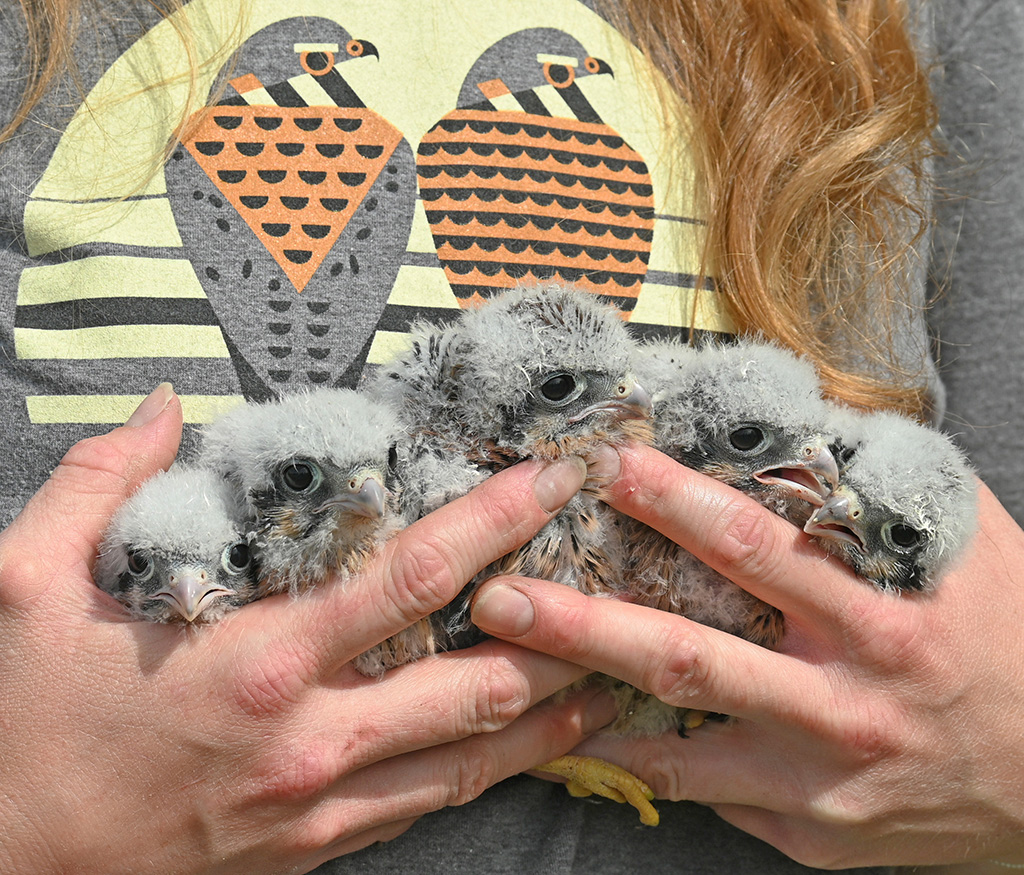
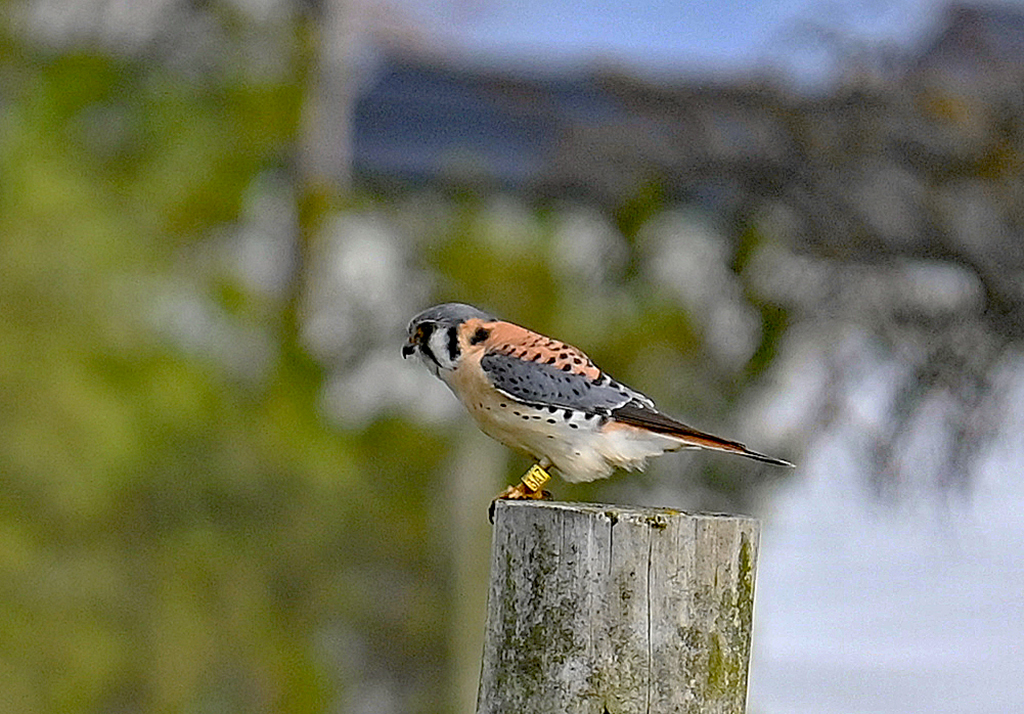
The color band project is already beginning to pay off. Many times, as I monitor a nestbox using my iPhone on a long pole, an incubating female will flip over on her back and assume a defensive posture. This is incredibly helpful in determining if that bird is banded.
In 2024, a female chick I banded in 2023, replaced the breeding female in a box located 4 miles south of where she fledged. She again used the box this year, conveniently flipping over to show me her band. She and her mate have now successfully reared two broods.
I monitored another pair of kestrels earlier this spring that had (unfortunately) decided on a barn soffit for their nest location. I could see that both birds displayed my color bands, and after much observation, I was able to identify them. Both birds were born in 2024, interestingly, in boxes just half a mile apart — neighbors. They had not only nested at just a year of age, but the location was only 2 miles south of where they were born.
It is curious to note that in many other parts of the country where nest box programs are in place, the kestrel population continues to decline. Yet, here in northeast Ohio it is obvious that the population of this species is beginning to climb as the number of nesting pairs on my trail continues to increase. I must admit that the severe bout of avian flu earlier this spring had me on edge, but the growing kestrel population in this area continues to prevail.
Hosting a kestrel nest box is a waiting game. It takes perseverance and patience. Yet for those who have succeeded in their landlord responsibilities, the reward has been great.
Landowners tell me that having a front row seat to a falcon show has been the opportunity of a lifetime. Watching these beautiful birds of prey rear their young while instructing them how to hunt and survive has given them a new depth of appreciation for kestrels, especially when it comes to rodent control!
Furthermore, having an up-close look and a chance to handle the nestlings during banding has resulted in an unforgettable experience. I am beginning to notice a sense of pride developing among kestrel landlords in the community. After all, it’s not often you have an opportunity to play a firsthand role in the recovery of a species in peril!





Where do we get kestrel boxes? We have a field behind at the back of our property that might be right for one.