
All About Grazing

  • Bad news: Yes, it’s been a cold spring; good news: possibly less frost risk

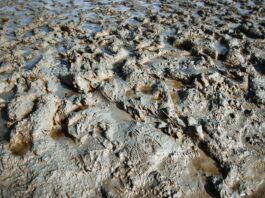
  • Is mud costing your farm money?

  • Plan to add value to your pasture

Hay harvesting tips for a better crop

Cutting excess pasture for hay is one tool to handle the rapid spring growth. However, getting hay dry in May and early June can be difficult.Drying time is impacted by forage species, environmental conditions, cut height, conditioning and swath width. Getting hay up quickly in the spring may help in reducing rain damage. Rain causes [...]

0 Comments
0 Comments

Get back to the basics of grazing

If you have livestock that graze pastures or you are looking to start grazing livestock, you may have read this column over the past several years and asked yourself, “How can I improve my pasture management?” With spring now here, I thought this would be a good time to review the five basic principles of [...]

0 Comments

Your pastures took a beating last year, do they need some work now?

And ask neighbors not to throw clippings from shrubs over the fence. They could be poisonous. As the last blasts of winter are covering our farms, it is time to make plans for spring grazing. Many of our fields took a beating last summer and this winter as the lack of rainfall reduced forage cover. [...]

0 Comments
0 Comments
0 Comments
0 Comments

Some easy tips may help reduce hay losses from round bales

Large round bales are the most popular source of hay when winter feeding beef cattle. Unfortunately, these bales are subject to a variety of losses, including feeding loss. Bale feeder design Research published in the Journal of Animal Science has shown feeding losses can be influenced by bale feeder design. The feeders investigated in this [...]

0 Comments

All About Grazing: Developing a grazing system could change your life

Well, it has been just over a year ago that I retired from my job as Ohio NRCS state grassland conservationist, but I am still staying involved with grazing and forage activities. Of the different things, I had the pleasure to be involved with, I believe the development and delivery of the Ohio Grazing School [...]

0 Comments

Time to wind down 2012 and start planning for grazing pastures in 2013

As we wind down the 2012 year, it is time to assess what worked for us and what we can improve on for next year. The drought really put many of us in a bind this year, but what can we do to minimize problems for next year if we continue to have weather extremes? [...]

0 Comments

Improving forage: Lessons to learn

It looks like the drought of 2012 is in the record books. Rainfall is back and we actually have seen pastures and hayfields recover and produce some fall growth, while annual crops like oats, cereal rye, field peas and brassicas planted in a timely manner have also grown well. So, life is good and no [...]

0 Comments

Check your fall pasture to-do list

It seems there are never enough days in the fall of the year to accomplish all the things I want/need to do. Daylight hours shorten quickly and before I know it, it’s dark before 6 p.m. Weekend hours also seem to vanish because I’m trying to finish projects around the house that I put off, [...]

0 Comments

Buy hay by weight, not by bales

Recently, a local hay producer asked what hay was worth. Of course, each forage producer will have a different cost of production. After he told me his price, I asked the weight of his bales. He was not exactly sure, but guessed 1000 pounds. He went on to say most hay is bought and sold [...]

0 Comments

Evaluating pasture measurement results after the 2012 drought

I have been measuring my weekly pasture growth for the past seven years. My initial goal was to grow as much forage as economically as possible. Dry matter target I targeted 5.5 tons of dry matter per acre, per year. I utilized the county soil survey report and the Ohio Agronomy Guide as my guide [...]

0 Comments

The drought could be worse; we still have options

I went to southern Illinois last week to do some programs and I was taken aback by the severity of the drought in that region. Corn and pasture fields were not only dead, they were very dead. Many areas of corn fields were not that golden brown like you may see when harvest takes place, [...]

0 Comments

Hot and dry? Stick to what you know about pasture management

Every Monday for the past couple of months on the OSU Extension crop team conference call I have heard Jim Noel from the National Weather Service say that across Ohio we are in a pattern of above average temperatures and below average rainfall. These are not encouraging words for a grazier to hear. This isn’t [...]

0 Comments

Weeds: Measure twice, spray once

It seems the time right after making first cutting hay is always a time for me to address some of those unwanted weed issues — not in the hay fields, but in the fence rows, around buildings and in pastures.

0 Comments

Put lime at the top of your soil pH list

When it comes to fertility, among the most important factors influencing plant growth and stand life is soil pH. Maintaining proper soil pH levels is critical to legume growth in pastures, soil microbial activity and micronutrient availability. Measuring pH Soil pH identifies the active acidity, or alkalinity, of a soil solution. The pH measurement is [...]

1 Comment

How to get more out of your pastures and improve water quality on the farm

Improving your pasture management skills will grow more forage that will have higher quality that will better feed your livestock and make you more money. A better pasture should just keep getting better year after year including: improving the environment; improving the soil, water, air, plants, and animals as well as reducing your energy requirements. [...]

0 Comments

Livestock grazing from winter to summer to spring

Winter I try to start grazing as early as possible in March. When the snow melts, I will try to feed stockpiled fescue which also provides a clean field for the cows to have calves. This year, when we moved cows to start grazing March 3, grass had already started to grow and some fescue [...]

0 Comments

Get our Top Stories in Your Inbox

View the Recent Newsletter

Similar to All About Grazing