


CLARION, Pa. — Abandoned oil and gas wells are scattered across Pennsylvania and are often a liability for landowners. But now landowners can get money for turning them in.
Penn State Extension is offering landowners with undocumented abandoned or orphaned oil and gas wells $100 per well if they participate in a well survey and report their wells to the Pennsylvania Department of Environmental Protection.
The goal is to get landowners involved in finding these wells, said Dan Brockett, team leader of the Penn State Extension energy team, because many are located on private property.
“We know that landowners know where a lot of this stuff is,” Brockett said. “So, let’s start talking to them about what they have and where it’s at and how they might help themselves.”
Leaking wells
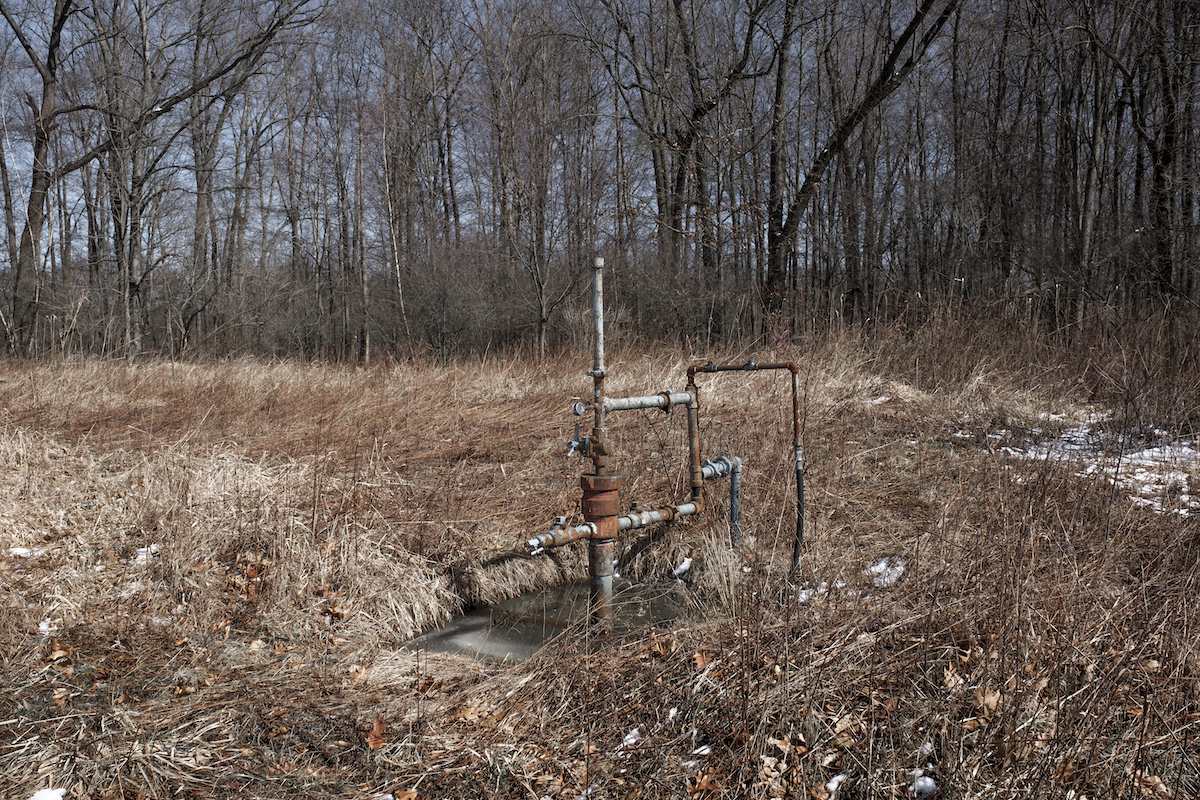
According to Brockett, some abandoned and orphan wells, left unplugged, can pose a significant risk to the environment, including leaking methane, other gases and brine water — salty water from rock formations.
Leaking gas and brine water can contaminate nearby vegetation and water sources, Brockett said. He adds that methane leaks can cause explosions. Brockett points to two incidents that took place in McKean County in 2010 and 2011 when two houses exploded because of methane migration from abandoned wells.
“It’s not common. It’s not uncommon,” Brockett said about leaking wells. “If we found 30,000 wells, I would expect 1,000 of them to have a leak issue.”
John Ligo, a beef farmer in Venango and Mercer counties, is one of these landowners who has a leaking, abandoned gas well on his farm. His father initially signed a lease for the well in 1970.
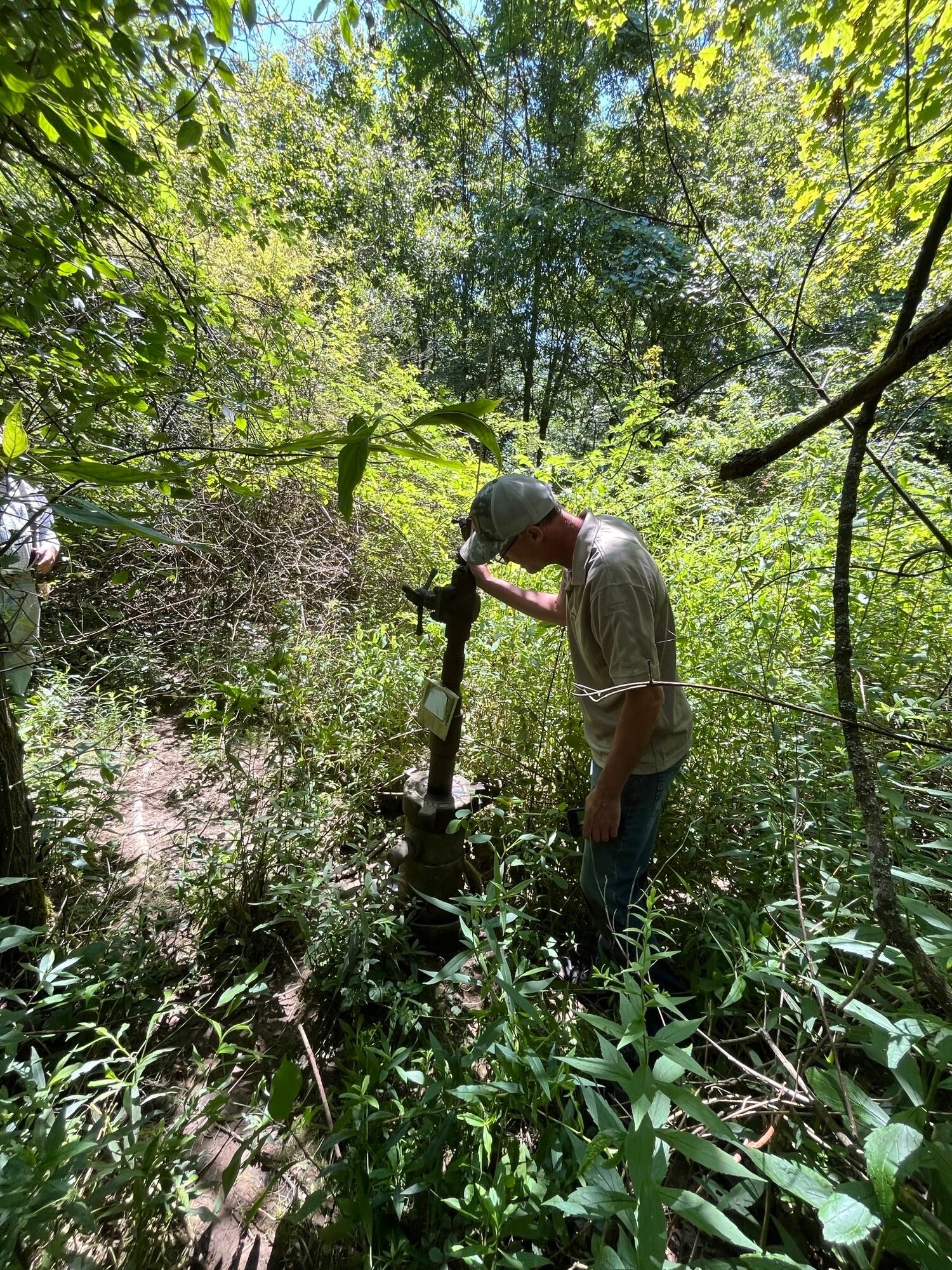
A decade later, an energy company started to drill the well, but something went wrong during the frack and the well never produced anything. The company abandoned the well. A second energy company bought the well in the early ‘90s, but quickly abandoned it, too.
Over the years, Ligo has seen the well full of water and bubbling up around the casing. Most recently, the valve has deteriorated and is leaking methane gas, something he discovered when Brockett came out to survey his land earlier this summer.
“It has never produced one single cubic foot of gas. It has just been blowing gas in the air for 45 years,” Ligo said, adding he has never benefited from the well.
A Pennsylvania legacy
Ligo’s situation is a common one across the state. That’s because Pennsylvania didn’t start regulating oil and gas wells until almost 100 years after the first oil well was drilled in Titusville, Pennsylvania, in 1859. Owned by Edwin Drake, it was the first oil well drilled in the United States.
The first gas well in the state was the Haymaker well, drilled in 1881 by the Haymaker brothers. Pennsylvania didn’t start requiring permits to drill an oil and gas well until 1956, a century after the Drake well was drilled, and the reason why the location of so many oil and gas wells is unknown.
As of 2025, the DEP has identified 27,000 abandoned and orphaned oil and gas wells, but estimates as many as 300,000 to 750,000 exist in the state.
“That means for every one well we know of, there’s 10 that we don’t,” Brockett said.
Well owners weren’t required to plug non-producing wells until the state passed the Oil and Gas Act of 1984, which also created the DEP’s Orphan or Abandoned Well Plugging Program. The program provides funding to well pluggers to plug an orphan or abandoned well if no responsible party is identified.
The Oil and Gas Act was later amended in 1992 to include the definition of an orphan as a well drilled before April 18, 1985, that has not been operated by the current owner and where an owner or lessee has received no economic benefit, excluding royalty or lease payments.
A well is considered abandoned when it has not been used after 12 months, when equipment is removed or is not equipped for production after 60 days of drilling.
Penn State Extension surveys
Penn State Extension started conducting surveys on landowners’ properties in May who have abandoned or orphaned oil and gas wells.
Brockett says that landowner participation is essential when looking for undocumented wells. “I’ve spent too many hours looking for a lost well, without somebody; we want them to help us find the well,’ he said.
Once the wells are identified, the team will take notes and pictures, and then submit GPS coordinates to the DEP, with landowner permission.
The well surveying project, funded by the Environmental Defense Fund, offers landowners $100 bounty for each undocumented well they report to the DEP. The bounty is first-come, first-served. The DEP will then prioritize plugging wells that are leaking or pose the highest risk, Brockett says.
Landowner concerns
Many participating landowners, however, are worried they could be liable for plugging their wells if they get the DEP involved, according to Brockett. Plugging wells can be expensive, anywhere from $25,000 to over $500,000.
This price depends on a number of factors, including how deep the well is, the condition of the well and how easily accessible it is; if a well is buried in the woods, an access road may need to be built — a circumstance that is rare, Brockett says.
He emphasizes that only the well owners are responsible for plugging the well. Landowners, even those with orphan wells, are not responsible for the wells on their property.
Ligo is not interested in reporting his well to the DEP. While he’s concerned about his well’s methane leakage, he is even more concerned about being financially liable for plugging it. “I didn’t do that. It’s not my responsibility. I don’t own it,” Ligo said. “I see the (DEP) as regulators, and I don’t think of going to them for help.”
Despite this, he is grateful for the help from Penn State Extension and welcomes a conversation with DEP prior to having them come out, because, ultimately, he’s tired of all the problem the well possess.
“I wish the well had never happened. I wish it wasn’t there. I wish it was plugged.” he said.
Brockett understands landowners may still be worried about someone conducting oil and gas well surveys, but stresses its importance and the role of Penn State Extension.
“We are not regulators. We have no regulatory authority,” Brockett said. “We are Penn State Extension, the same people who help you with your fields, your cattle and put your kids through 4-H. Hopefully, we’re seen as a friendly voice, because we are pro-farmer and pro-landowner. We’re trying to help people make great decisions and make great steps in life.”
To report an abandoned well(s) or for more information about the well surveying project, contact Dan Brockett, dlb14@psu.edu or Summer Boyle at sqw5805@psu.edu.
(Liz Partsch can be reached at epartsch@farmanddairy.com or 330-337-3419.)




As unfortunate as this situation is, the state of Pa has a long history of saying one thing and doing another. The Game Commission is a prime example and gives us the same lines about not being liable then turns around and finds some reason to issue a fine. Very few people I know trust the state agencies enough to point out something that they could be liable for, especially when the state says “Dont worry, Trust us. You wont be liable”. Nobody believes them. Can you blame them? Trust and respect work both ways. Hopefully someday our officials will figure that out. Until then…..