



As the last of autumn’s warmer weather began to give way to the chill of winter across the Ohio country, most outdoor work — except for the most necessary daily chores — ground to a halt. The harvest was gathered, the butchering had been completed and the myriad of outdoor tasks that had occupied every waking moment of the settlers’ lives during sunnier times had been put to rest, if only for a moment.
In the frigid months ahead, life for the pioneers would center around the hearth. The hearth, or fireplace, derives from the word heart. The hearth was in every way the heart of the house, the center of activity, the very key to a family’s ability to survive the often brutal winters that were a hallmark of the unpredictable weather in this part of the nation. The fortunes of a pioneer family trying to hang on to its subsistence by the tips of its fingernails often depended on the effectiveness of its fireplace.
Fireplace construction
Because the barnhouse in which a pioneer family often began its journey toward more advanced settlement was never envisioned as its permanent residence, the fireplace and its accompanying chimney were not highly labored over.
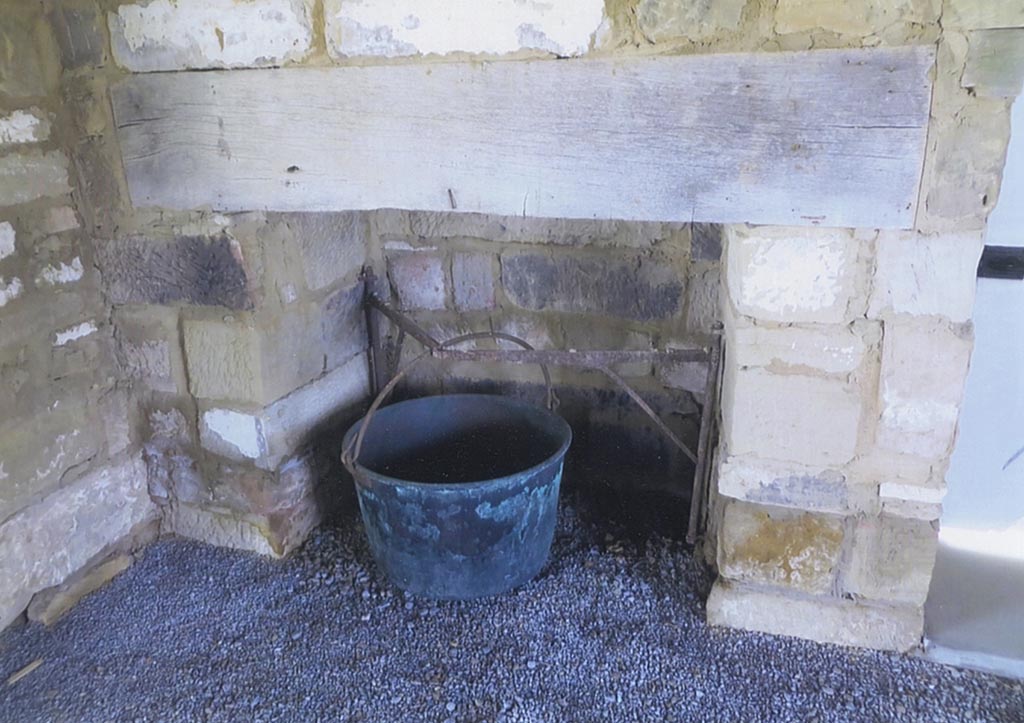
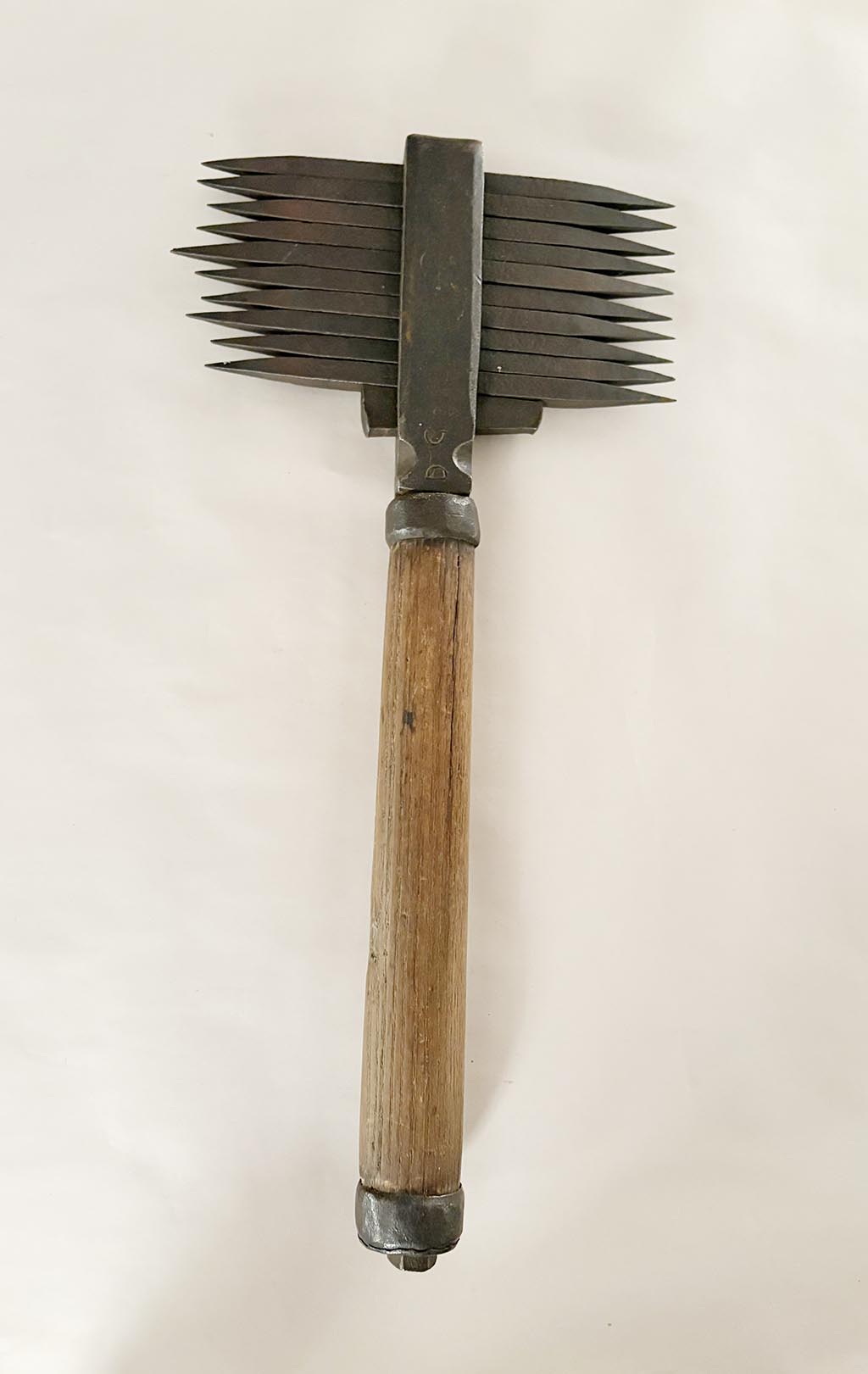
The earliest fireplaces in the Ohio country were made primarily of stone until such time as nearby brickyards could be established. Because sandstone ashlar geologic formations were plentiful across much of the region, that material was readily available. And since stone masons were plentiful among the ranks of the early settlers, obtaining usable stone blocks for fireplace construction did not present a major problem. Thus, the fireboxes — composed of the jambs (sides) and floor — of many early fireplaces were constructed of large blocks of stone which had been squared up with an iron stonemason’s tool called a crandal. The head of this tool was composed of a number of square iron rods, each sharpened to a point on both ends. These rods, secured into the head with an iron wedge, could be configured to create whatever chisel pattern the stonemason desired.
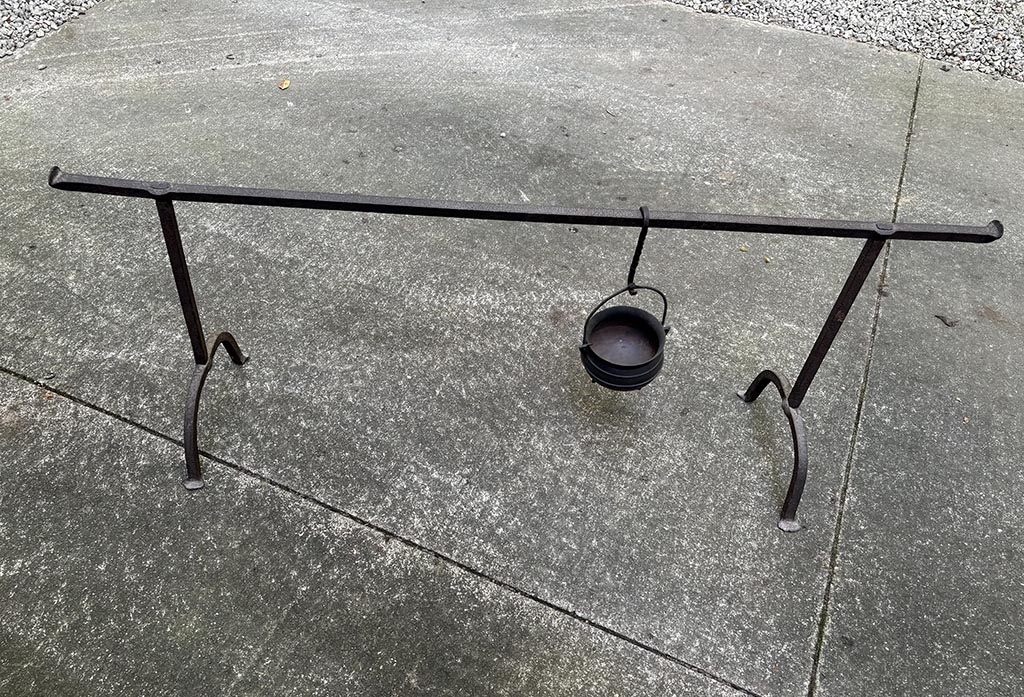
Because the fireplace jambs were made of stone, installing iron pintles to hold a large swinging iron crane in place was difficult, requiring some specialized tools. Thus, many pioneers opted to use a standing crane instead. Crafted by the local blacksmith, the primary element of the standing crane was a heavy horizontal bar, usually measuring around 4 feet in length, supported on wrought iron legs about 2 feet above the hearth. Using S-shaped iron hooks, the user could suspend cooking vessels from this bar over beds of hot coals to get the cooking job done.
The hearth itself was usually made from large flat stones shaped to fit between the jambs and also extending outward from the firebox to create a fireproof surface where sparks or embers from the fire might land. One of the most fire-vulnerable places in the log house was the space where the wooden puncheon floorboards butted against the stone hearth. Embers that fell into that crack could smolder there for many hours before eventually flaring up and potentially destroying the cabin.
Chimney
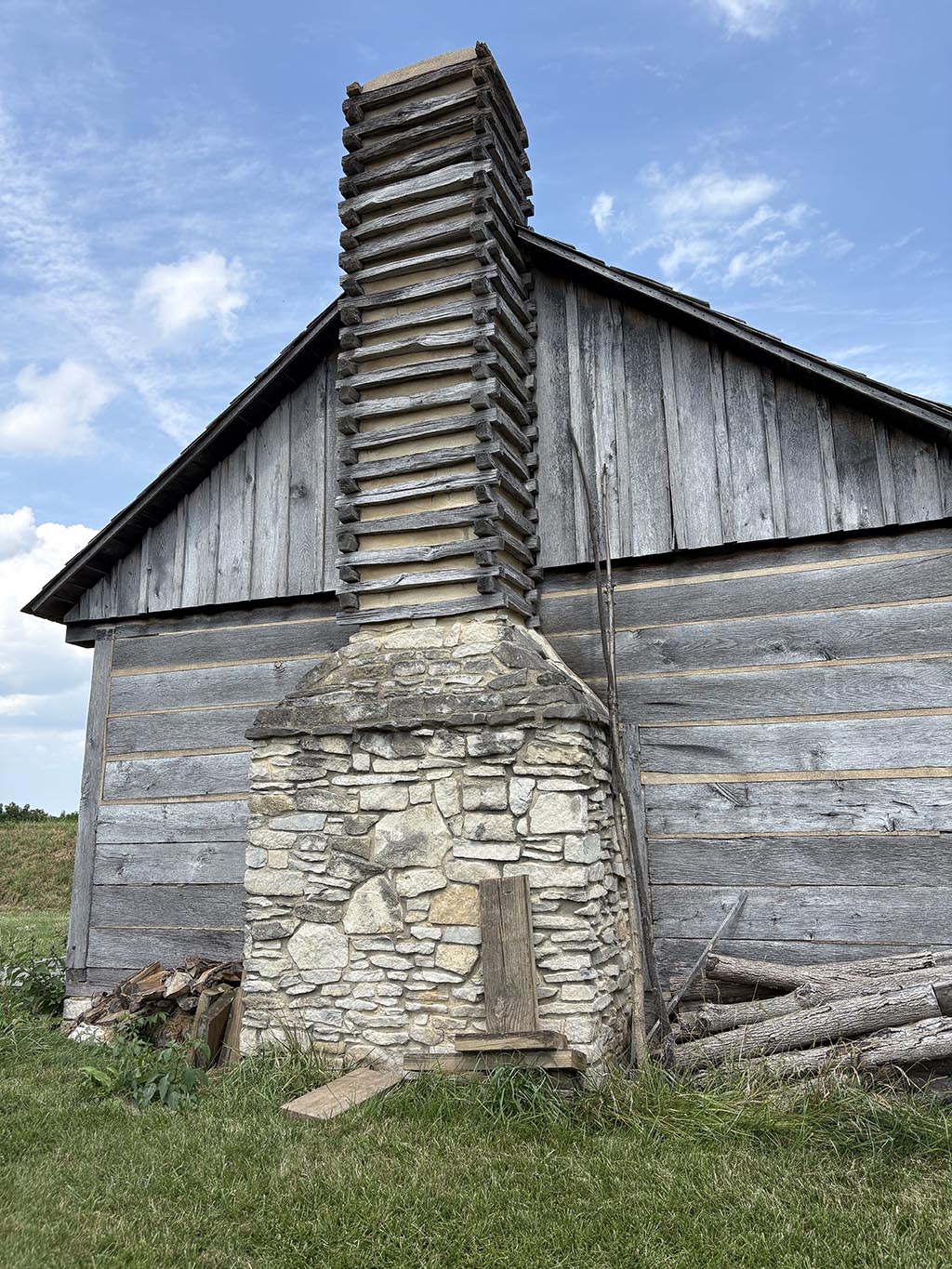
The chimney of such a structure was typically made in a technique called wattle and daub. In this building method, used by unskilled craftsmen, a base of large, loose stones served as a footer for the rest of the structure. Upon these stones were laid pieces of firewood stacked in much the same manner as a log cabin would be built, allowing for a channel in the center through which the smoke from the fireplace would rise.
As these pieces of wood were stacked in place, they were covered — both inside and outside — with a thick layer of mud. Because the mud was often mixed with a binder of horsehair, weeds or flax and thus looked hairy, the rolls of mud were often referred to as “cats” or “catkins,” prompting some to characterize the construction as “cats and daubs.”
As the chimney rose in height, it was continually stepped or angled away from the residence, ultimately leaving a sizable gap between the house and chimney. Why was this done? Well, it was anticipated that, in spite of lining the entire interior of the chimney with heavy clay, it would eventually catch fire. When that happened, the chimney needed to be pushed over so that it did not ignite the attached residence. Many chimney builders actually incorporated a rope or other mechanism into the chimney structure so that it could readily be pulled over in the event of a fire.
These types of chimneys, as well as most of those constructed over the next century, were not equipped with dampers of any type. Thus, anything that might find its way down the chimney also predictably found its way unobstructed into the house as well. Also, because the fire was not dampened, the fire in the firebox constantly roared at full blaze, endangering the chimney structure by overheating. The risk of fire was also heightened over time as the seasonal expansion and contraction of the logs in the chimney caused the mud liner to loosen and fall away, exposing the wood to heat and flame.
This type of construction was always seen as being temporary and was employed in structures that were meant to be occupied only for a short time until a better, more permanent house could be constructed.