

Last month, Todd Clark, stormwater inspector for Stark Soil and Water Conservation District, wrote about how true conservation starts at home, so I figured, why not tie in how SWCDs can help property owners and conservation enthusiasts achieve their conservation goals?
If we want future generations to be passionate about conservation, we need to find ways to bring conservation into the places where people live, work and play every day. But how do we make that happen?
It is one thing to suggest that people plant native flowers, establish a rain garden, replace part of a lawn with habitat, or plant trees, but it’s another thing to ask them to pay for it.
For many property owners, the desire to do something beneficial for the environment is there. What may be missing is the money, knowledge, time or confidence to get started. This is where soil and water conservation districts can help.
Making conservation accessible
Across Ohio, soil and water conservation districts work with landowners on a wide range of conservation practices. Traditionally, much of that work has focused on agricultural lands, but the same principles can be applied to residential and urban properties.
A homeowner may want to install a rain garden but not know where to begin. Another may want to plant native trees but be concerned about the cost. Someone living along a stream may recognize that their property is experiencing erosion but have no idea what can be done to address it. A small cost-share or grant program can be the encouragement that turns that good intention into a completed project.
What could a conservation grant fund?
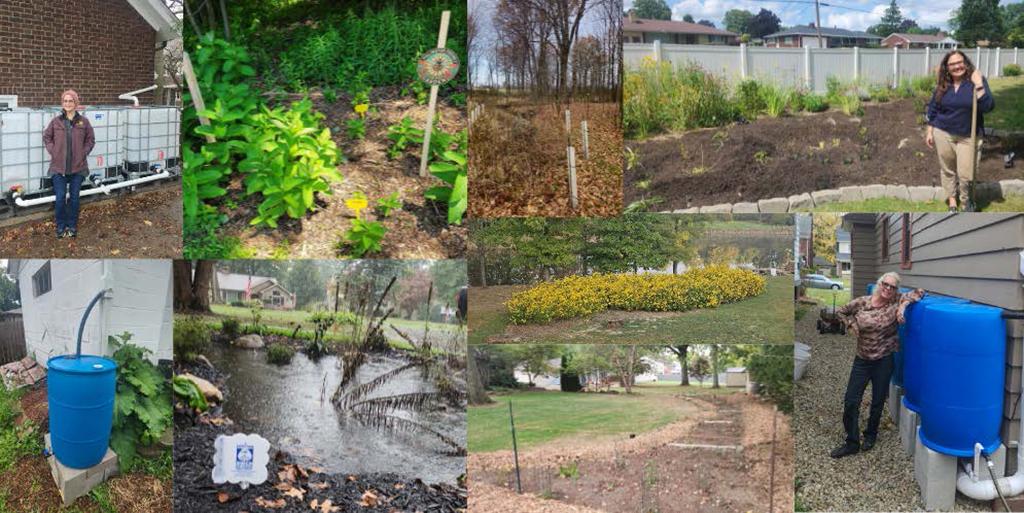
The possibilities are extensive, and they can be tailored to the needs of a particular community or watershed. A soil and water conservation district could offer a grant or cost-share assistance for projects such as native plant and pollinator gardens, rain gardens and other stormwater management practices, native tree plantings, rain barrels and other rainwater collection practices, and the list goes on.
For our program, we’ve funded everything from stream bank erosion-control improvements to small-scale wetland habitat restoration. Not every project needs to be large to have value. A homeowner who converts 500 square feet of turfgrass into a native plant garden has made an improvement. A family who plants five native trees has made an improvement. A property owner who installs a rain garden that captures runoff from a downspout has made an improvement. Individually, these projects may seem small, but collectively, they can be enormous.
Show us the money
One of the biggest challenges for districts is finding sustainable funding to support these programs. Fortunately, there are several potential avenues. Districts can dedicate a portion of their own local funds to conservation cost-share programs. Local governments can also partner with districts, particularly when projects help address stormwater-management goals associated with municipal separate storm sewer system (MS4) programs.
Grant funding can provide another important source of support. Depending on the project and program requirements, districts can pursue opportunities through the Ohio Environmental Protection Agency’s Ohio Environmental Education Fund, watershed and water-quality programs, state and federal conservation programs, local community foundations, corporate giving programs and other philanthropic organizations.
Partnerships can be particularly powerful. A district might provide technical assistance while a municipality, foundation, watershed organization or private sponsor provides funding. Businesses can also sponsor neighborhood conservation programs as part of their community investment efforts.
Agricultural conservation programs such as those administered through the U.S. Department of Agriculture’s Natural Resources Conservation Service can provide additional opportunities where projects meet their eligibility requirements, particularly when residential properties include agricultural land or other qualifying conservation uses.
There is no single funding source that will support every project. The key is finding ways to combine existing resources and develop partnerships around a common goal: making conservation easier for landowners to accomplish.
Here at Mahoning SWCD, funding for our Backyard Conservation Program was secured through a grant from the Community Foundation of the Mahoning Valley, along with a financial contribution from a local nonprofit, like the Garden Club of Youngstown. Local philanthropic organizations often appreciate grassroots conservation efforts like these, particularly because they support tangible improvements to the community and promote environmental education and public involvement.
Incentives matter
We should also be honest about human nature. Most people want to do the right thing, but good intentions compete with busy schedules, household expenses and everything else demanding our attention these days. If a conservation district offers to reimburse all or a portion of that project, the decision to move forward with the project becomes much easier. Cost-share and grant programs aren’t about paying people to care about conservation. They’re about removing one of the barriers that prevents people from acting on that care.
There is also an educational component. When someone applies for a conservation grant, the district has an opportunity to connect that property owner with technical information, site-specific recommendations and other conservation resources.
The grant becomes the doorway to a much larger relationship. Time and time again, when I visit a property owner through our Backyard Conservation Grant Program, a family member, neighbor or friend of the applicant becomes interested and reaches out to learn how they can get involved and what types of projects qualify. One conservation project often sparks interest in another, creating a ripple effect that extends well beyond the original property.
Make participation easy
If we want people to participate, we also need to make these programs accessible. A complicated application requiring extensive paperwork may discourage the very people we are trying to reach. Programs should be straightforward, clearly explained and designed around projects that ordinary property owners can realistically complete.
Districts can promote programs through community events, social media, newsletters, local news, libraries, garden clubs, homeowner associations, schools, municipalities and watershed organizations.
Demonstration projects can be especially effective. Instead of telling people what a rain garden is, show them one. Instead of explaining the benefits of native plants in a brochure, establish a native planting demonstration at a public building. Instead of telling homeowners that trees can help reduce stormwater runoff, plant them and let people see the results.
And, perhaps most importantly, celebrate the people who participate. A homeowner who completes a conservation project should feel that they have become part of something larger. Their project can be featured as an example for their neighbors, helping create a ripple effect throughout a community.
Since 2024, Mahoning SWCD has funded 33 projects throughout Mahoning County, and the program continues to expand each year. In 2026, we hope to fund an additional 20 projects with the funding currently available. So far, seven projects have been approved for funding, and community members are reaching out every day to learn more about the program and how they can get involved.
Small projects add up
Consider what could happen if a conservation district helped 20 property owners each year.
Maybe each homeowner planted five native trees; that’s 100 trees. Maybe each installed a 100-square-foot rain garden; that’s 2,000 square feet of new stormwater-management infrastructure. Maybe each converted 500 square feet of lawn to native vegetation; that’s another 10,000 square feet of native habitat. Now imagine that happening year after year, across an entire county. The numbers begin to become significant, but the benefits extend beyond the numbers.
Native plants provide food and shelter for pollinators, birds and other wildlife. Trees provide shade, store carbon and help intercept rainfall. Rain gardens slow and infiltrate stormwater before it reaches our streams. Stream buffers can reduce erosion and filter pollutants. Replacing portions of manicured lawn with native vegetation can improve habitat while reducing mowing and other maintenance requirements. Perhaps most importantly, these projects reconnect people with the environment.
Our communities are made up of thousands of individual properties. Every residential, commercial, industrial or agricultural property is part of a larger landscape and watersheds do not care where a property line is drawn. Rain falling on one person’s roof eventually becomes someone else’s stormwater. A stream running through a neighborhood connects every property upstream and downstream. Wildlife moves through landscapes regardless of whether the land is designated as a park or a neighborhood.
Conservation works the same way. One backyard cannot solve a watershed’s problems. One rain garden will not restore an entire stream. One tree will not replace a forest. But each project can make an improvement. We can give property owners the technical assistance and financial incentives they need to turn their yards into small pieces of a much larger conservation effort.
Our role
Soil and water conservation districts are uniquely positioned to help make that happen. We are local. We understand our local natural resources and their issues. We work directly with landowners, communities and conservation partners. And we can help connect people with resources that make conservation projects possible.
The goal isn’t to turn every backyard into a nature preserve, but we can try to make conservation part of everyday life for everyday people. If we can make it easier for people to plant a tree, restore a patch of habitat, capture stormwater, protect a stream or replace a portion of their lawn with native vegetation, we should.
Because conservation doesn’t have to start with thousands of acres. Sometimes it starts with 500 square feet. Sometimes it starts with a single tree. Sometimes it starts with a rain barrel beside a garage.
And sometimes, a passion for conservation is fostered simply by providing people with the education, resources and support they need to bring a project to life.
Conservation starts at home. Connect with your local soil and water conservation district to explore available grant opportunities, site visits, and project funding to turn your conservation goals into reality.