



My earliest memories are of walks in the woods with my father. Those early experiences fostered in me a lifelong love of nature. As I grew older — in part thanks to the influences of a talented high school teacher here and a gifted park ranger there — my experiences outdoors grew into a passion for nature.
Nearing 50 years later, nature is still my happy place. I’ve spent most of the last 20 years blessed to work and volunteer both with parks and in the conservation field. Along with realizing the recreational value of parks, I’ve developed an appreciation of what parks bring to conservation. Today, to say I’m an advocate for parks is an understatement.
But those early walks with my father were not in parks. They were in the wooded lots and the brushy fields of old farms that surrounded our home on the suburban fringe. We wandered a patchwork of parcels belonging to both neighbors and strangers, rambling for miles across what felt like an immutable forested wilderness. There were meadows, steep scrambles, massive trees, berry bushes, streams, ponds … it was a feral child’s dream landscape. All these places were nearby, and to reach them, we could walk from our home.
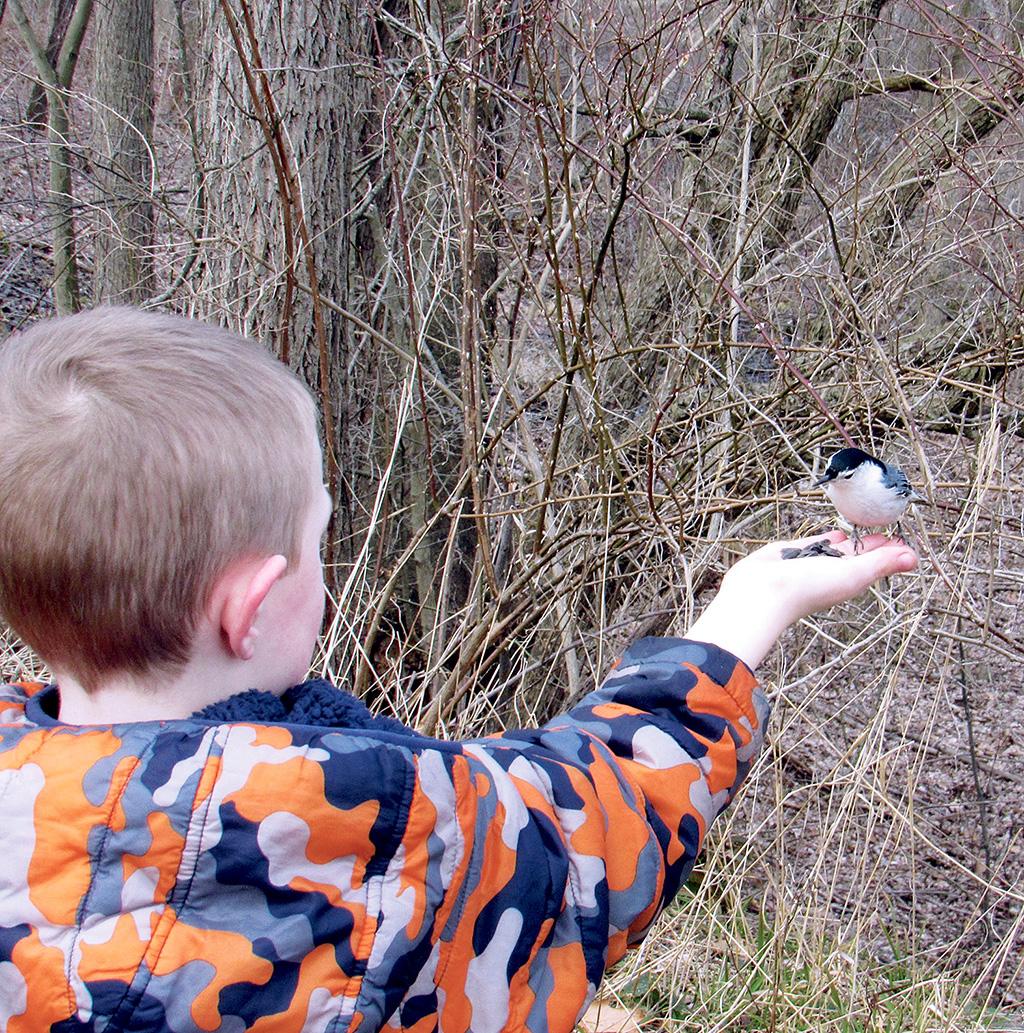
Sometimes, Dad and I simply walked our own yard. Small as it was — a half-acre plot — we had trees, shrubs, flower beds and vegetable gardens just outside the back door. Bees, birds and a host of wildlife sightings were the norm. As if by magic, my father could stand in the backyard and whistle to summon a chickadee to take seed from his outstretched hand. Nature seemed abundant and everywhere.
I contrast the experience of my youth with the experiences of my children as they’ve grown up in recent years. Desperate to instill a love of nature in them as well, I took them on many a trail through the woods. But ours were not rambles out our back door as in my youth. Rather, it seemed nature and a walk in the woods in the 21st century involved loading up into the car and driving to a park.
The woods that surrounded my childhood home are no more. The once seemingly endless expanse of woods gave way to a pattern of development where rarely a stand of trees over 100 feet wide remains. My childhood baseline for what was nearby nature in that place is no more. I cannot share that wonder with my children other than by telling of what was.
The neighborhoods my children have grown up in today rarely offer more than a small, vacant wooded lot — often posted as “No Trespassing”— or stormwater pond in which to fish. Their shifting baseline for nearby nature is much more diminished from what was my own. Hence, we traveled to parks to find nearby experiences comparable to those of my youth.
Start at home
Again, don’t get me wrong, these trips to parks are great experiences, and we love our parks. I’m grateful that these protected areas exist for our use and enjoyment. I’m thankful that parks provide a sustainable habitat with food, clean water, and shelter for wildlife. But parks can give us the false impression that nature is contained there. That nature belongs only there. And, as an extension of that, that conservation belongs only there too. But the reality is very different. Nature belongs everywhere, not just in parks. Nature is everywhere. Conservation and consideration of the natural world are needed everywhere.
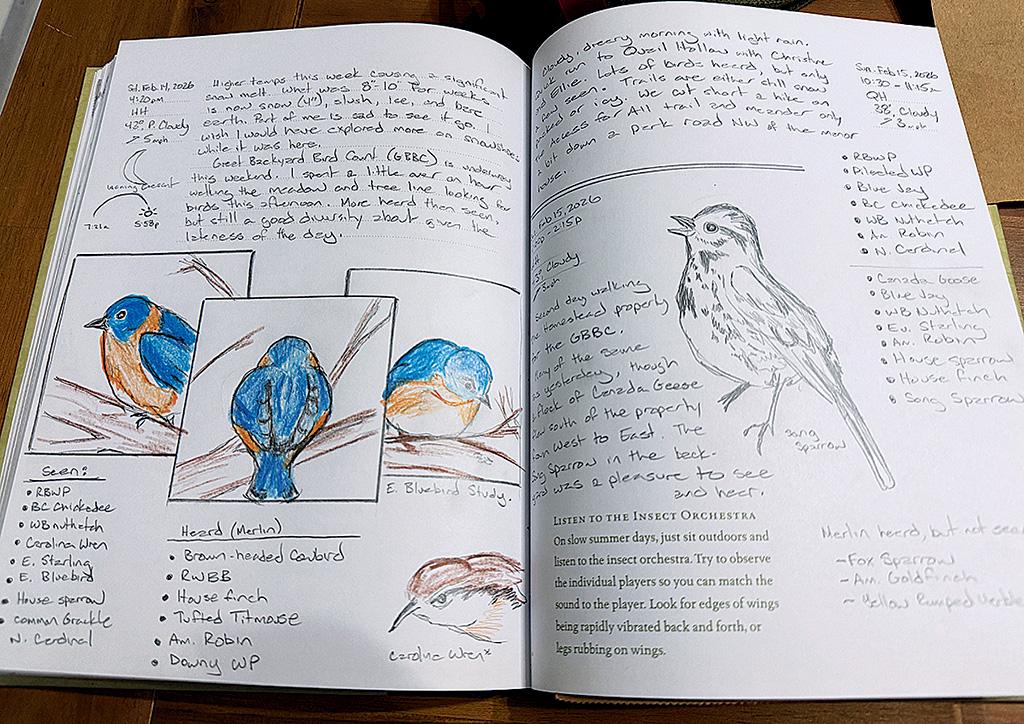
And so, the best place for conservation to start is in our homes. As valuable as they are, parks make up a small percentage of the overall landscape. Bringing conservation home not only sparks a natural interest in both ourselves and our youth, but such practice also benefits ecosystems that are becoming increasingly fragmented and/or lost altogether. While we cannot reset the natural baseline to what folks like me remember from our youth, we can work to preserve a natural baseline for future generations.
Adopting small-scale conservation on the home front and advocating for conservation beyond our doorsteps can be a force multiplier for the wonders of nature as a whole. It’s not as hard as it may seem.
My father wasn’t a naturalist, a biologist or an ecologist. He had no specialized training in identifying plants or animals. What he had, like me, was a memory of what was and a willingness to share it with his children. What he inspired was a sense of wonder, a lifelong love of nature and a want to better our world.
Take your kids to a park. It is good for them. But don’t let a love of nature begin and end there. I implore you, begin the conversation at home. Show them nature is everywhere. Build memories with them that will last a lifetime. There are a whole host of organizations that are willing to help you and them on the journey. Reach out, we’re happy to share. It is the best hope for conservation.






BAM! Todd–you nailed it.
Love of Nature starts with the Family–especially Dad.
Like me–a 3 year-old tramping the Autumn woods looking for mushrooms with Dad.
Dad explained the trees, shrubs, flowers, and of course, the mushrooms.
75 years later–I’m still tramping the woods–astounded by the diversity and beauty.
Very timely article! Thanks for writing it. For those who wish to know more and gain a wider perspective, please read the books by Dr. Doug Tallamy, an entomologist from the University of Delaware. His books espouse this very idea: anyone with space as small as an apartment balcony can contribute. “Bringing Nature Home”, “Nature’s Best Hope”, “The Nature of Oaks”, and “How Can I Help?” are invaluable aids for getting started. “We are the ARK” by Mary Reynolds and “Night Magic” by Leigh Ann Henion are also excellent reads.