




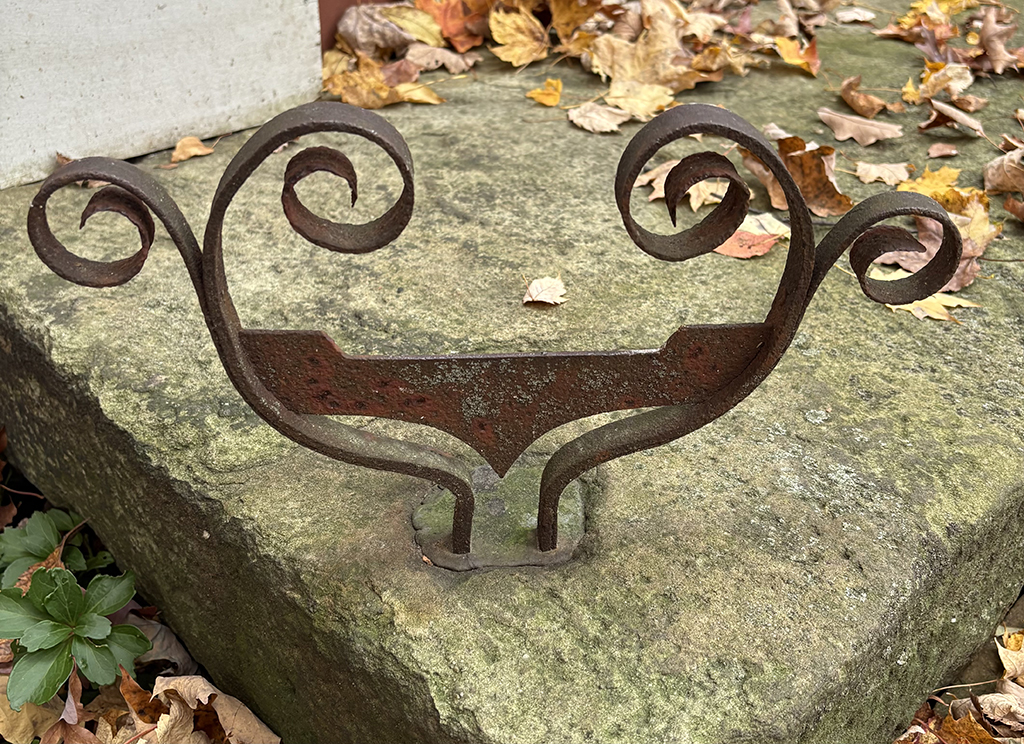
On a developing farmstead, an amenity that was needed sooner than later was a boot scraper.
With mud being omnipresent as the pioneers worked in the fields and woods surrounding the residence, an efficient way of preventing it from being tracked into the house was a necessity. The solution? A boot scraper.
Boot scrapers, invariably made of iron, were the product of the local blacksmith. Among the innumerable mundane items the blacksmith regularly crafted, they were an item on which he could really unleash his sense of creativity. And he did.
These devices, as the name implies, were designed to scrape at least the overburden of mud from work boots used in the field. When properly designed, boot scrapers were effective for removing dirt not only from the sole of the shoe, but at least partially from the sides as well.
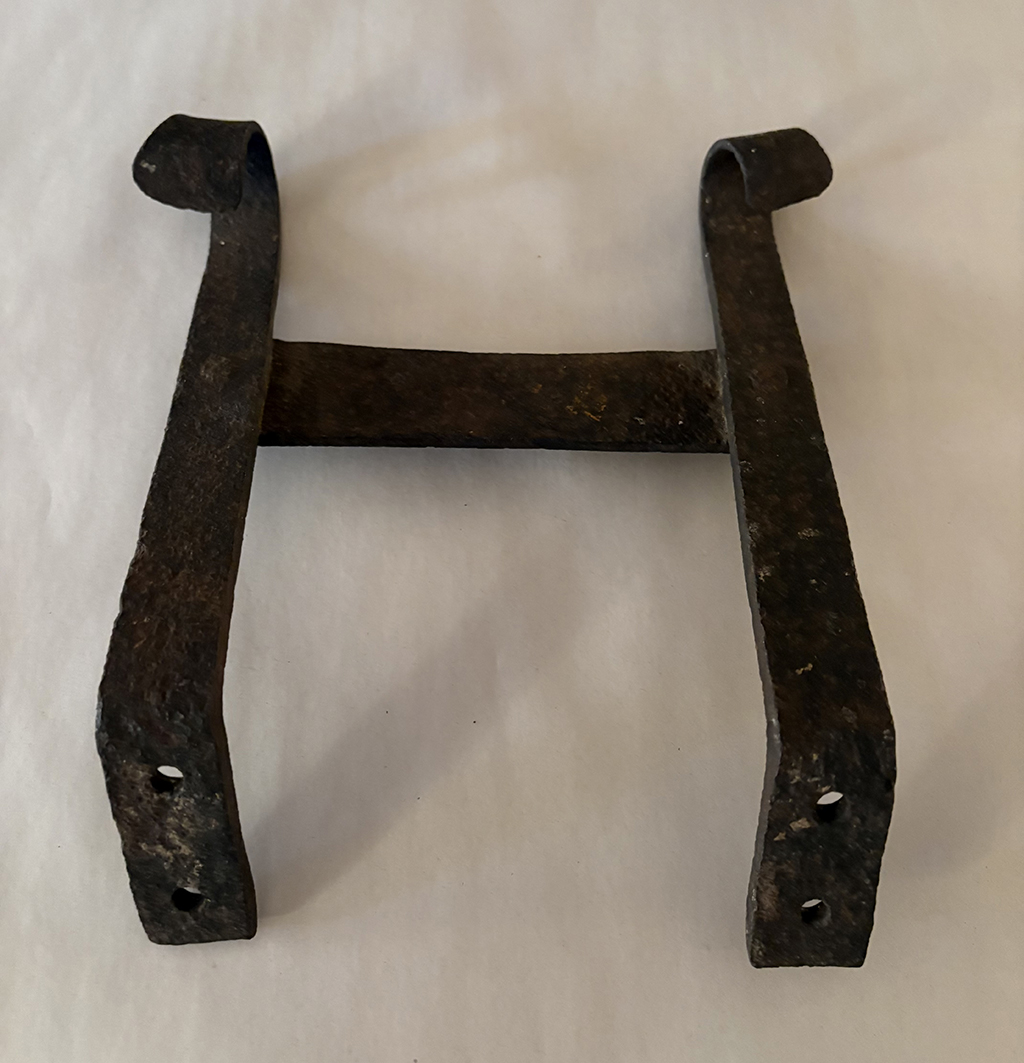
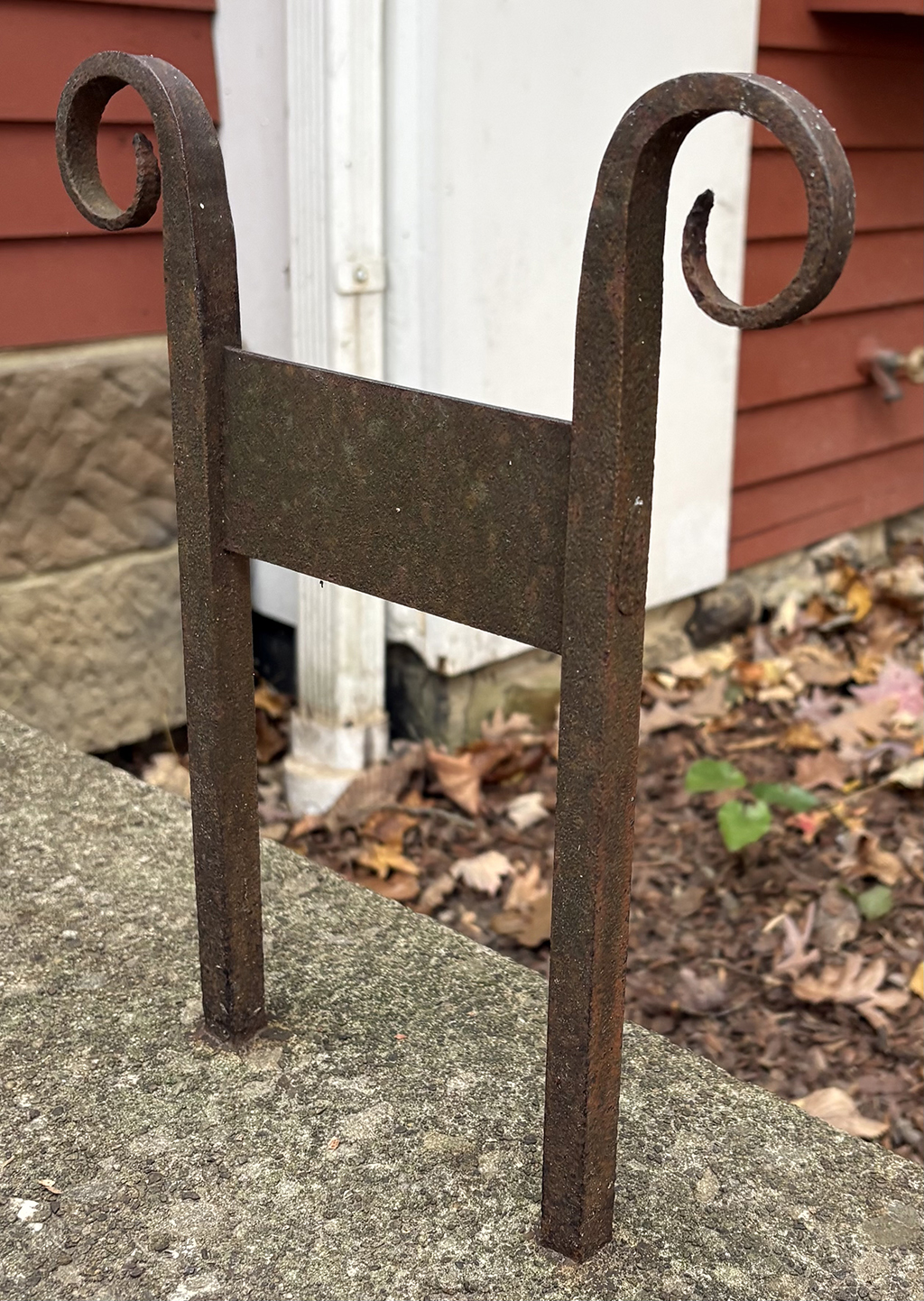
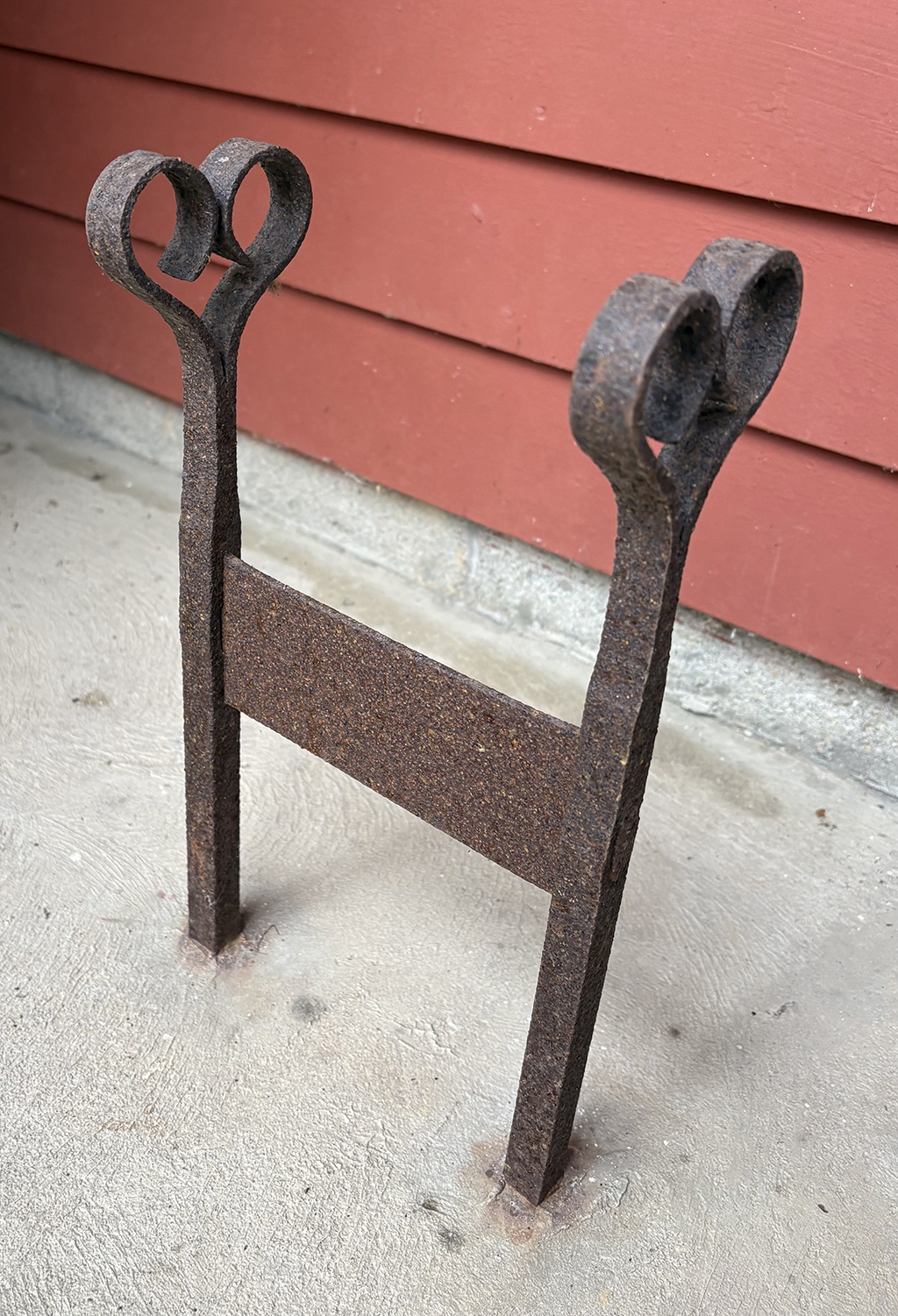
In their most basic form, boot scrapers consisted of a flat iron plate fastened between two uprights, roughly in the shape of a goal post. The flat plate of iron, which was where the sole of a shoe or boot was scraped, was usually mortised into the uprights and then forge-welded for permanency. The legs of these devices were typically set into holes that had been bored into a stone step at the home’s entry. The uprights were permanently secured into the stone by having molten lead poured around them.
In some instances, however, the boot scrapers were fastened into the exterior wall of a building near the entrance. Some of these scrapers had an integral spike which came off the end of the blade. The spike would be driven into a wooden beam or mortar joint between bricks. Other scrapers were semi-circular in shape with the ends similarly secured into wood or a mortar joint.
In terms of design, the sky was the limit for the blacksmith. Boot scrapers ranged from the simplest metal blade which extended just above the surface on which it was mounted, to tall arched structures more than a foot in height.
In the Ohio Country, which was largely settled by two distinct ethnic groups — the New Englanders and the Pennsylvania Germans — something of a generalization can be made about boot scraper design. The boot scrapers found in the homes in New England settlements seem to be conservative, prim and restrained. In the Pennsylvania German communities, however, the designs were elaborate, filled with flamboyant, extraneous details having nothing in particular to do with the process of removing gunk from one’s soles.
Embellishments on the uprights of New England boot scrapers typically consisted of small scrolls, faceted or compressed balls, ram’s horns, pyramid-shaped points and flattened scrolls.
Pennsylvania German boot scrapers, on the other hand, sported embellishments on every surface. The lower edge of the scraper blade was often designed with a sawtooth, reticulated, scrolled or curved edge. The blade itself was often pierced with such designs as hearts, diamonds, circles or other geometric shapes. The uprights usually featured scrolls going in every direction and often terminating in snakes, hearts, loops, dog ears and many more imaginative shapes.
Because of the sense of artistry inherent in these boot scrapers, coupled with their durability given the nature of the material used, early boot scrapers have survived in impressive numbers. When an old family homestead was eventually razed, the boot scraper was often saved as a piece of memorabilia from the “old place.”
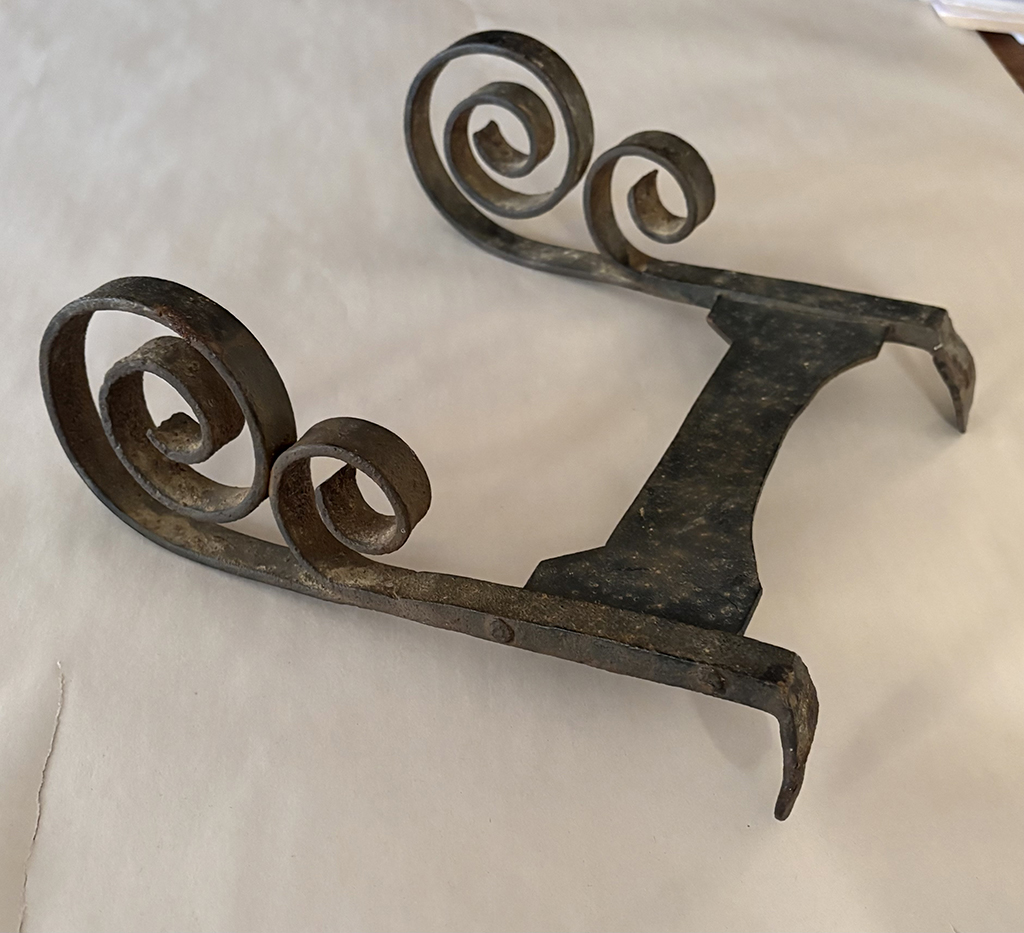
Today, early boot scrapers retain their popularity in the antiques marketplace, their price being commensurate with the level of detail and workmanship involved. As with all other genres of antiques, the better the piece, the higher the price. Potential buyers, however, must be cautious because wrought iron boot scrapers have been heavily reproduced over the years, not always as deliberate fakes, but because homeowners still like to use them for their intended purpose — keeping mud out of the house.