



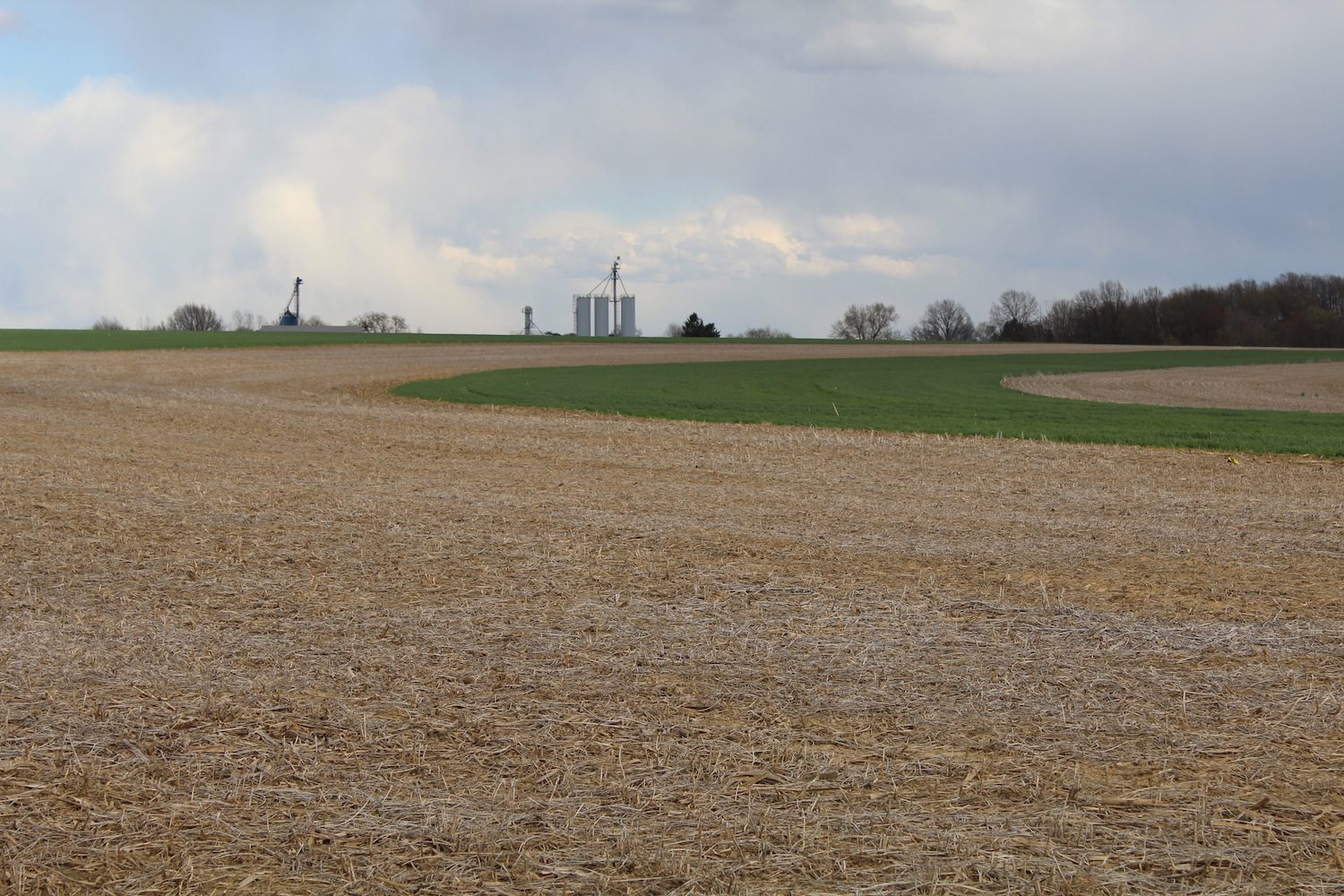
Soil erosion occurs when dislodged soil particles are transported from one place to another. Sedimentation is the resulting end of that soil journey. Many factors determine how much soil is transported from a site. Some of the natural forces that contribute to erosion are wind, rain, temperature and topography.
Wind erosion caused the soil displacement during the Dust Bowl of the 1930s and is still the main force contributing to soil loss in the Great Plains states. However, in Ohio soil is mainly displaced by rain.
Consequences of erosion and sediment
Healthy soil and clean water are Ohio’s greatest natural resources. National studies indicate that more than 60% of eroded soil ends up in our waterways, making soil loss in Ohio a two-fold threat.
According to a Union of Concerned Scientists 2020 report, nearly all countries, including the United States, are losing soil at a rate much higher than the time it takes for new soil to form. The rate of annual soil loss is unsustainable for both healthy soil and clean water. If there is any good news, it is that soil loss is a problem more easily and affordably prevented than remedied.
When dislodged soil particles end up in the water, they are transported as a suspended solid until deposited in or along a stream bed. It should be noted that sediment is a natural part of aquatic and terrestrial ecosystems and plays a critical role in nutrient cycling. It is the natural work of rivers and streams to move this material across the landscape. Within an aquatic environment, there is a range of inputs and outputs that keep the system in balance. So why is it a problem? Soil loss becomes a problem for farmers the moment it leaves a field. Soil fertility is reduced as nutrients (often purchased and applied) leave with the eroded soil.
Water quality is compromised when eroded soil and attached pollutants enter our waterways. These pollutants are harmful to aquatic ecosystems. In addition to chemical contaminants, soil particles cause major harm to aquatic ecosystems as the sediment settles around the bedrock stones and oxygen-rich riffles smothering benthic organisms, which are the base of aquatic food chains that help filter our water.
Deposited sediment is a problem when excessive erosion of the land clogs navigation channels.
Navigating shared responsibility
Soil erosion is not only caused by poor farming practices. It occurs during poorly managed excavation and construction projects and during poorly managed timber harvests. Landowners who have waterfront property frequently remove vegetation that holds stream banks in place because the vegetation diminishes their view of the water. This combined land use mismanagement results in soil loss that is literally eroding our future.
Dredging up our murky past
Dredging navigation channels and ports is one of the responsibilities of the U.S. Corps of Army Engineers. Roughly $1.5 billion each year is spent to remove approximately 240 million cubic yards of sediment from U.S. rivers and shores.
Part of Ohio’s contribution to that total is 1.5 million tons of sediment dredged from Lake Erie ports in Ohio and approximately 1 million cubic yards of sediment dredged from the Ohio River. Some dredged materials are placed in Confined Disposal Facilities, many of which are nearing capacity. For decades, much of the dredged material from Lake Erie ports was dumped back into the lake. However, open water dumping introduces phosphorus and nitrogen back into the water column and buries benthic communities on the lake floor. This practice was banned in Ohio in 2020. So, what’s to be done with this material now?
From sediment to solutions
Many efforts are being made to repurpose the dredged material instead of treating it all as waste. One innovative way of reducing the need for dredging involves placing collectors in channels to separate sediment before it is deposited into navigation channels — rivers. The separated sediment is diverted from the channel and stored short-term for beneficial-use sales on the open market.
Research is also underway for beneficial use applications of dredged materials in agriculture. Bowling Green State University is conducting greenhouse experiments, evaluating soybean response to varying rates of added sediment. Land application studies are also underway, but the future cost of transporting these materials to a site certainly challenges the economic feasibility of agricultural land use. Additional beneficial uses of dredged materials include habitat creation, wetland restoration and shoreline protection to name a few.
An ounce of prevention
The old saying, “an ounce of prevention is worth a pound of cure” is never more pertinent than when it is applied to soil erosion. There are a number of affordable best management practices that can be used to reduce or prevent erosion from a variety of land use activities including agriculture, development and timber harvests.
But there is no land use activity that benefits more from preventing soil loss than farming. An Ohio survey conducted in 2022 showed that nearly 50% of fields surveyed are using no-till or reduced tillage methods, and 4.7% of Ohio cropland was planted with cover crops. In both cases, these numbers represent an increase in conservation practices. There is still plenty of opportunity to reduce soil loss from cropland with conservation BMPs.