


This year has seemed to be another year for weeds. Last year, I wrote an article for Farm and Dairy, “How to manage weeds in a drought,” because the weeds were more noticeable due to the short supply of grass.
This year, the weather has been a little different for us in southeastern Ohio, where I am located, but we still have had drought conditions in the latter part of summer, reaching D1 Moderate Drought on the U.S. Drought Monitor. This year, weeds seemed to be more noticeable all year, and just not in the later part of the summer.
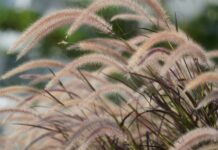
I believe that we can all agree that a weed is a plant that is out of place and growing where it is not wanted. This year, some of the more problematic weeds I am seeing include johnsongrass, spotted knapweed, hemp dogbane, cocklebur, horsenettle, smooth bedstraw, foxtails, ragweed, ironweed and yellow nutsedge.
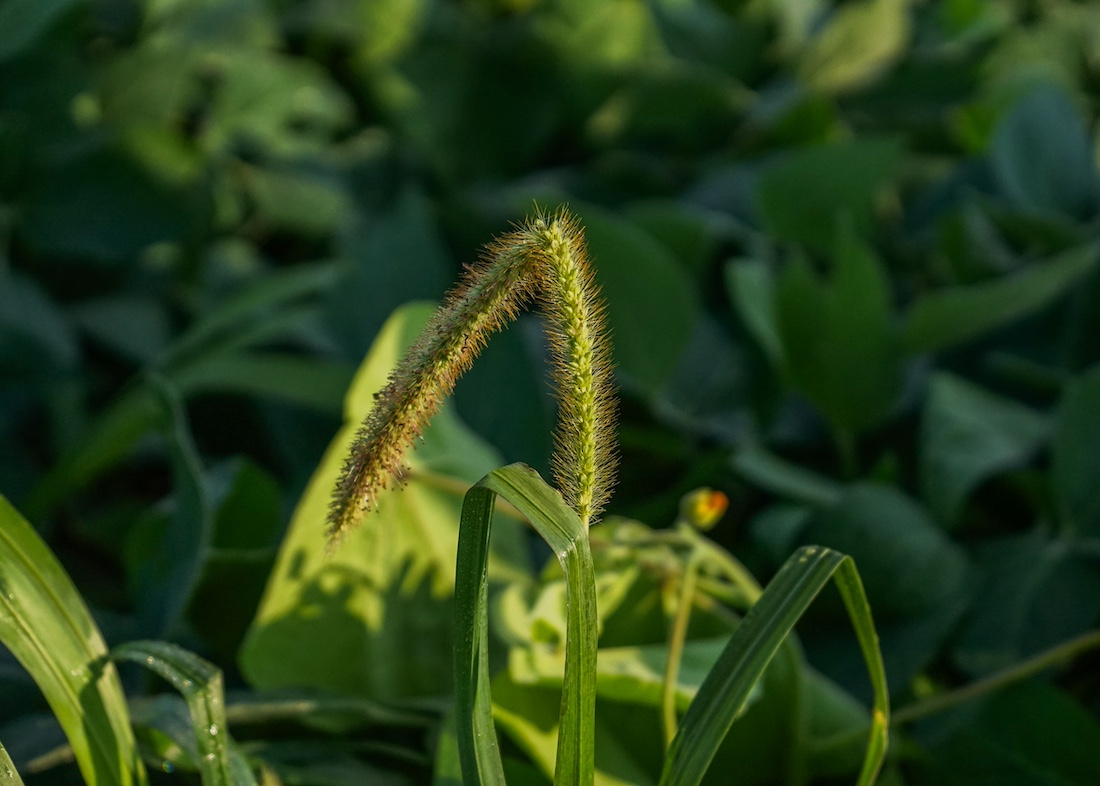
The weeds that I have been getting the most questions about this year are johnsongrass, cocklebur, foxtail and spotted knapweed. I also know that yellow nutsedge has been problematic this year, as many of my colleagues have said that they have been getting numerous questions about it and seeing it in several places. I have also seen it in several places this year, and in places where I did not see it there last year.
So, what should we do? I’ll ask another question that can help answer the first question: Why control weeds in our hay and pasture fields? Some answers to that question are that it may limit new stand establishment, forage quality can be reduced, weeds can reduce the yield, weeds can shade out the beneficial plants that we want, they may provide a habitat for pests, some weeds can be poisonous for livestock and for aesthetic reasons.
Now that the second question is answered, let’s go back to the first question and answer it. So, what should we do? Well, we have some options that we can take a look at. Those options are fertility/fertilization, grazing management, mowing/clipping, herbicides or a combination of all the above for an integrated approach to weed management.
Soil fertility
Let’s take a little in-depth look at each of these. The first place I would recommend people to look if they are running into weed problems is to look at the soil fertility of their fields. Those who have been around an extension agency probably know the question that we ask is “When was your last soil test?” If it has been more than three years since the last time a soil fertility test was done for your fields, it is time to take another one.
Soil testing is the most reliable way to find out what nutrients your soil has to offer for growing plants and what may need to be added for improved growth and to help limit some weeds. Certain weeds can also point to things like poor soil fertility, soil compaction, poor drainage or overgrazing. Fall is an excellent time for soil testing. The soil tends to be drier and easier to sample in the fall. Plus, once you have your results, this gives you time to make corrections to soil pH and to shop around for the best fertilizer for your situation to prepare you for the next growing season. Instead of only treating the weed, you can fix the underlying condition.
Grazing management
Grazing management can also be a great option for weed control. With the use of grazing management, farms that are in a continuous grazing system and move towards a rotational grazing system could see improvements for their fields.
Overgrazing tends to happen on continuously grazed fields because animals will find the grass that they like and eat them and then find something else to eat. Once that grass that they like grows back, they will come back and eat. That could lead to that grass getting grazed out of that field like an orchardgrass. It needs a rest period to keep growing, because it will pull from its root supply, as it starts to grow after it’s been grazed and needs time to restore those nutrients in the roots.
If that grass gets grazed out of the field, that leaves an opportunity for a weed to come in and take its place. A good grazing rotation can prevent overgrazing and give forage grasses a competitive edge. Also, a higher stocking density for short periods can help suppress weeds by trampling and grazing.
Integration
I will combine the herbicides with the integrated approach. With integrated weed management approaches, there are four main approaches: cultural, mechanical, biological and chemical. Cultural practices would be things like maintaining soil fertility, reseeding with desirable forages and grazing management.
Mechanical practices would be things like mowing or clipping before weeds set seed. Biological practices would be things like certain livestock species, such as goats and sheep, that will eat weeds that cattle would tend to avoid.
Lastly, chemical practices would be things like spot-spraying or spraying a field that just kills broadleaves or terminating the entire field with the goal of replanting the entire field with your desired species of choice.
If going the chemical route, always read the label, and make sure that you know if there are grazing and or hay cutting/hay selling restrictions.
If you are looking for a more detailed strategy on how to manage weeds in your pasture, or even your hayfield, contact your local extension office for help.