
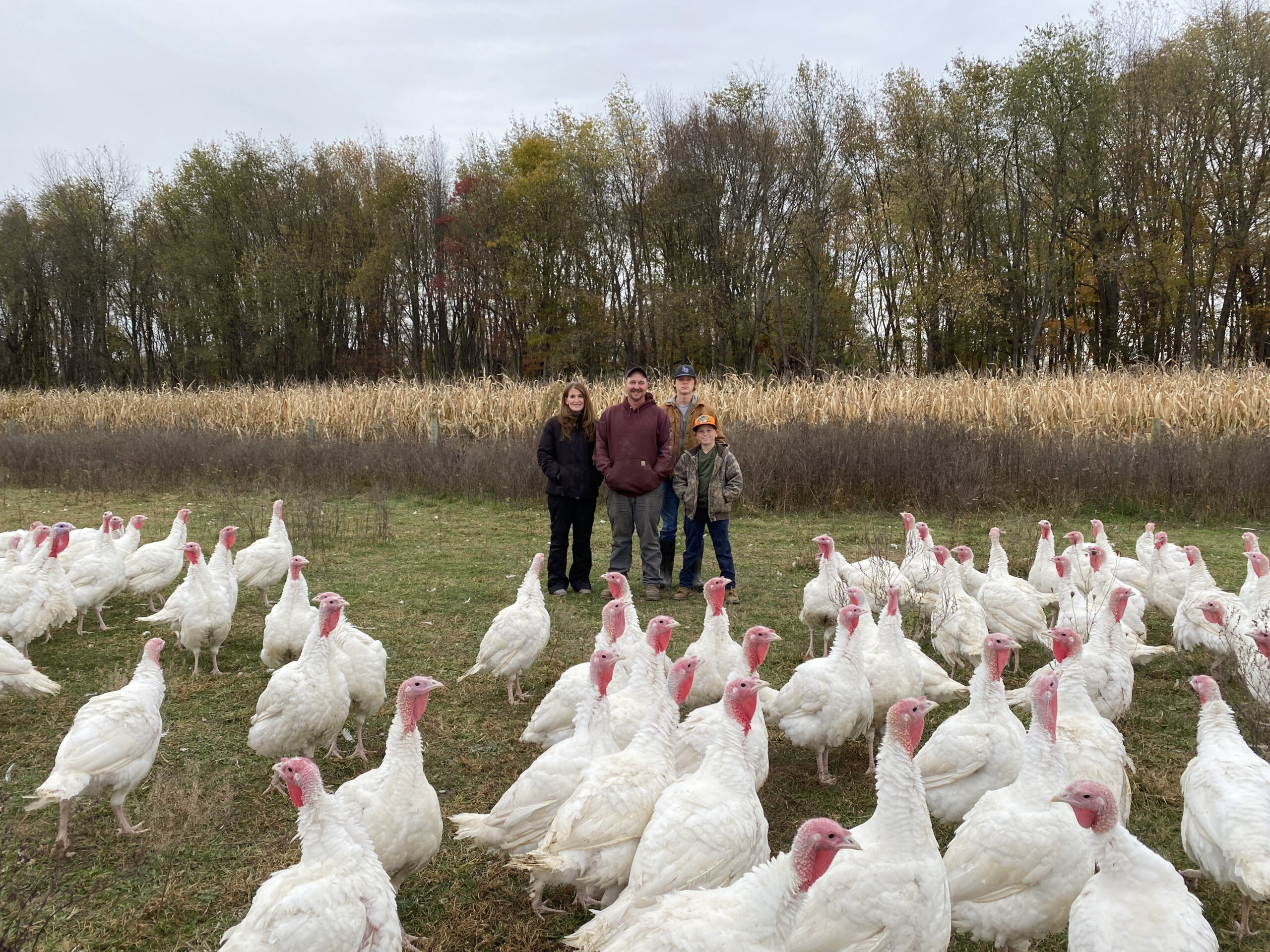
MOGARDORE, Ohio — For many businesses, the tradition of giving a turkey for Thanksgiving is dead, to begin with. There is no doubt about it. The register of its burial was signed by the decline of manufacturing and the rise of service-sector jobs. The Kisamores have not signed it, seemingly frozen in a golden era many remember, but never got to experience.
As United States businesses have embraced the rise of giving gift cards instead of turkeys, Mason Kisamore Family Farms has supported the American working-class tradition of giving turkeys to employees for Thanksgiving by selling hundreds of turkeys to local businesses at a discounted price every year for over a decade.
“I just feel like there’s a much warmer touch to giving a fresh turkey. We are a little more old-fashioned. We just think keeping the past alive is important,” said Stacy Kisamore, who manages the farm with her husband, Mason.
The ghost of Thanksgiving past
Mason started giving turkeys as gifts in 4-H during the ‘90s and early 2000s. He raised them with his brother, so they could gift them to buyers who purchased their hogs and steers at the Portage County Randolph Fair. Buyers knew if they bought his hog or steer, they would also get a Thanksgiving turkey.
For Stacy, the tradition stems from the lesson Ebenezer Scrooge learned after being visited by three ghosts on Christmas Eve in Charles Dickens’ 1843 classic, “A Christmas Carol,” and the idea of an American Thanksgiving. Scrooge redeems himself when he buys the prize turkey hanging in the window of the neighborhood butcher and sends it as a gift to the family of his clerk, Bob Cratchit, marking the turning point of Dickens’ story.
“It’s a gesture of goodwill. That’s what we’re trying to encourage,” Stacy said.
The same gesture of goodwill that inspires Stacy today spurred 19th-century employers to adopt the worker’s turkey tradition, making it an iconic symbol of spreading holiday cheer in America. It was born out of the rise of American manufacturing in the 1800s and served as a way to introduce immigrant workers to American culture.
This tradition endured until the mid-1990s when gift cards began to replace the once-treasured turkeys, and the job market shifted to favor service-sector careers over manufacturing. Domestic turkey production peaked in 1996, with 303 million turkeys raised and has steadily declined since. The U.S. Department of Agriculture estimates 195 million turkeys were raised this year — the lowest estimate in 40 years, when 185 million turkeys were raised in 1985.
In addition to diminishing demand, turkey farmers continue to combat highly pathogenic avian influenza and avian metapneumovirus. HPAI has affected 18.7 million turkeys since the onset of the virus in 2022, and 2.2 million turkeys so far this year. The National Turkey Federation estimated that AMPV was present in 60% to 80% of turkey flocks last year, and it continues to be a problem in 2025, according to the American Farm Bureau Federation.
“Turkeys are no joke. You have a lot more on the line. A pig will sell itself. A turkey you have to sell,” Mason Kisamore said.
The ghost of Thanksgiving present
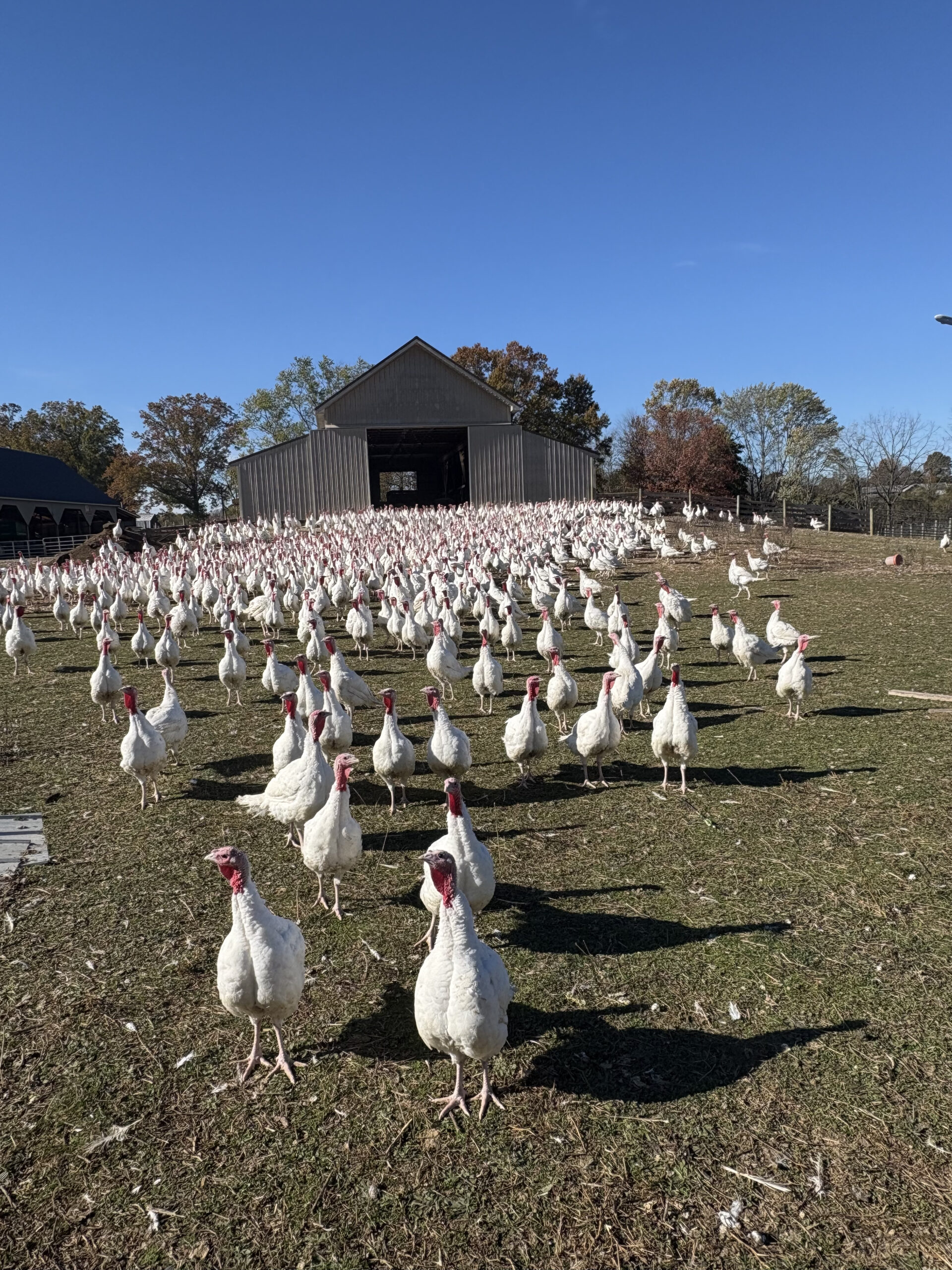
Still, a chorus of gobbles fills the air at Mason Kisamore Family Farms, in Mogadore, Ohio, as hundreds of turkeys sing a classic Thanksgiving tune. Decades ago, the sound of fattening turkeys enjoying calm days in the pasture before Thanksgiving might have been commonplace. But producers have turned away from taking on the risk of raising them, and their melody has waned.
The Kisamores are different. Their ties to tradition are different. They’ve persisted, and they know their turkeys are a step above the ones consumers can expect to find at the grocery store.
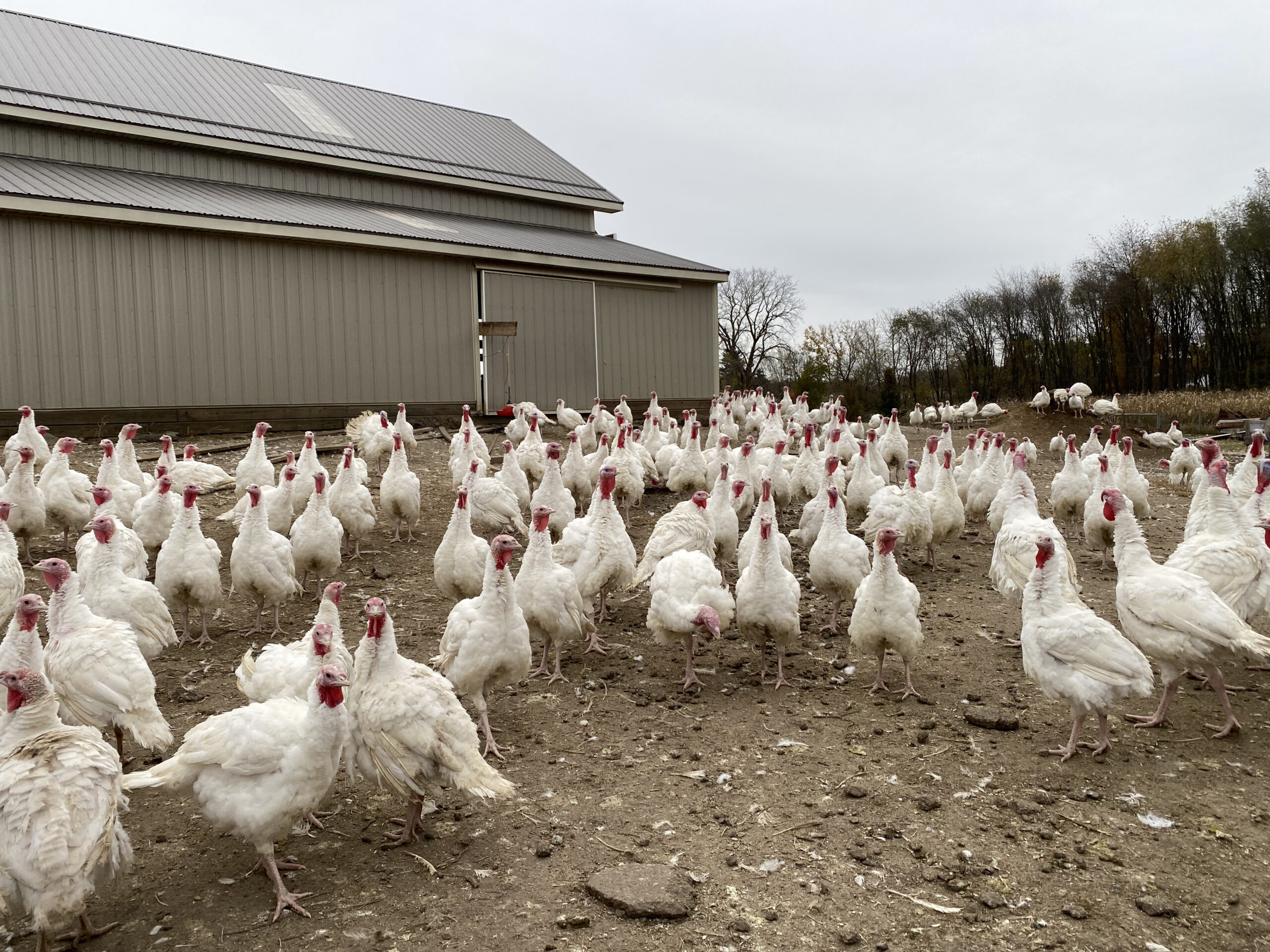
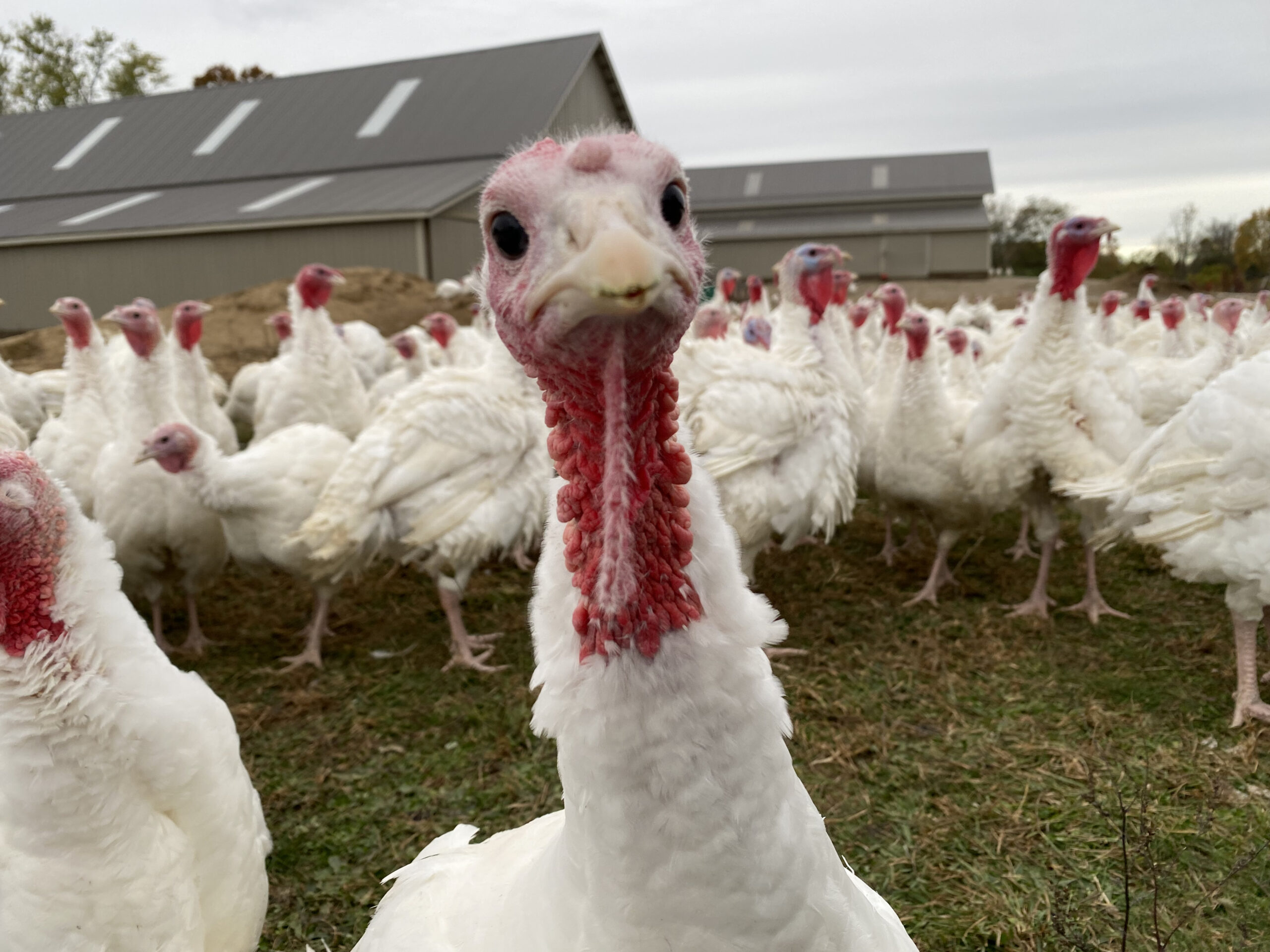
The Kisamores raise over a thousand turkeys on their 15-acre farm every year for Thanksgiving, with about a third of those going to local businesses.
From July to November, their lives are all about the turkeys. When the turkeys arrive, they’re just a day old. The poults have to stay in an enclosed room that maintains a temperature of 100 F for the first week, and they have to be watched around the clock. If they get cold or scared, the poults will pile into a corner, and some could be smothered.
“It’s a lot of work. You babysit them for 10 days after you get them,” Mason said.
At the end of that first fateful week, the Kisamores can give their turkeys more space, but they keep them protected until September, when they’re about two months old and large enough to ward off hawks and other predators. After that, the Kisamores raise their turkeys the way they were traditionally raised — out in a sprawling pasture where they forage for insects and seeds, while the Kisamores supplement their diet with feed.
“They’re free to act like turkeys. They’re not in cages, they’re not in tight barns. They can go outside, do their little social habits and come in to eat,” Stacy said.
When the turkeys reach maturity days before Thanksgiving to ensure they’re as fresh as possible, the Kisamores spend three days loading them up and taking them to Pleasant Valley Poultry LLC in Baltic, Ohio.
They bring the turkeys home in a refrigerated truck on the Monday before Thanksgiving and sell turkeys nonstop from 8 a.m. to 6 p.m. for two days. However, no one waits in line longer than 15 minutes. The Kisamores have friends who help them out every year, and the dozen or so of them work all day.
“Nobody sits down, nobody takes a breath, nobody eats. We are just jam-packed. There are cars lined up the whole time,” Stacy said.
The whole process has become a family tradition for many of their customers. Year after year, they come to the farm with their kids — some of them still in their jammies — sipping their coffee, listening to music and taking it all in while they wait.
“People appreciate having a product raised almost in their backyard. I mean, this is as good as you can get other than having it in your own backyard and doing all the work yourself. We’re doing all the heavy lifting; you’re getting that great farm product,” Stacy said.
The ghost of Thanksgiving yet to come
While the gift card remains king when it comes to holiday gifts for employees in the U.S., some local businesses have chosen to return to traditional American values and give their employees the Kisamores’ turkeys for Thanksgiving, sparking a workplace culture shift and increasing employee retention in some cases.
When Jim DeGregory joined International Enterprises’ management team five years ago, he thought it was time to reintroduce some of the more family-oriented practices that bond employees together. Along with holiday parties and company picnics, Thanksgiving turkeys made a comeback.
“Their eyes just lit up the first time we did this,” he said.
That initial spark has helped create a better workplace culture at International Enterprises, as DeGregory has noticed greater employee retention. When he started, the company was struggling to retain employees for a full year. Now, most employees have been with the company for five years.
“Everybody turned into numbers for the longest time, and we’re trying to bring back the idea of the family,” he said. “And they love it. What it’s really done is helped us retain good employees.”
Now, DeGregory couldn’t imagine offering his employees anything less for Thanksgiving. Every year, he calls months in advance to reserve turkeys for his employees. Then, he goes to the Kisamores’ farm himself to load the turkeys in his truck. When he returns to the office, he feels “like Santa Claus,” handing out the turkeys the Kisamores meticulously cared for and giving everyone the afternoon off.
“It’s just a whole different experience, and they’ve told us that,” he said. “There’s no way in hell I’m going back to the grocery store.”
The quality of the turkeys that the Kisamores are offering exceeds anything DeGregory’s encountered at the grocery store. They’re presented and packaged well. In his opinion, the turkeys couldn’t be any fresher or better, and he believes his employees appreciate all the work that went into raising them.
“We won’t go back (to the grocery store). I mean, I couldn’t imagine trying to give these people a frozen turkey now. It’s cheap hamburger compared to filet mignon,” he said.
The Kisamores aren’t just bringing businesses back to the farm this Thanksgiving; they’re also inviting anyone who wants a farm-fresh turkey for Thanksgiving to place an order and visit the farm for a unique experience, and maybe even a new family tradition.
“Being able to raise a product from start to finish, with as much risk as is involved in it, and being able to provide your customers with a really good quality product means a lot,” Stacy said. “We’re really proud to hand out what we have raised, knowing it’s a good product, knowing people are going to like it. It’s good for you. It’s American-made.”
Turkey reservations can be made by calling Stacy at 330-354-4157, Monday through Saturday from 8 a.m. to 6 p.m. The Kisamores typically sell out through preorders. Special requests for weights are taken on a first-come, first-served basis. Bulk orders of five or more turkeys will receive a discounted price. Customers can pick their turkeys up at their convenience and enjoy the farm’s curbside service on Nov. 24 and Nov. 25 from 8 a.m. to 6 p.m. at Mason Kisamore Family Farms, 2063 Shaffer Road, Mogadore, Ohio. For more information, visit https://masonkisamorefamilyfarms.com.