
The between months, anglers know them well. It’s that period when your boat sits winterized while you’re surviving winter’s frigid chill and waiting for spring’s first cast.
Some of us are lucky enough to have a dog to hunt, birds to watch and deer stands to sit in, but for some unknown reason which I can’t fathom, there are folks who mope about until temperatures rise.
Sure, I understand that there are some folks who are anglers only, but that just seems a little sad to me. They sit around and tie a few flies, read the latest Outdoor Journal or Farm and Dairy and walk aimlessly around Bass Pro while dreaming of lapping waves and warm-weather walleye or pond-flopping largemouth bass.
Sure, there are a few that will venture onto ice and carve little round holes to try and yank fish through… but they’re another breed altogether, which some psychiatrist can discuss in a more scholarly column.
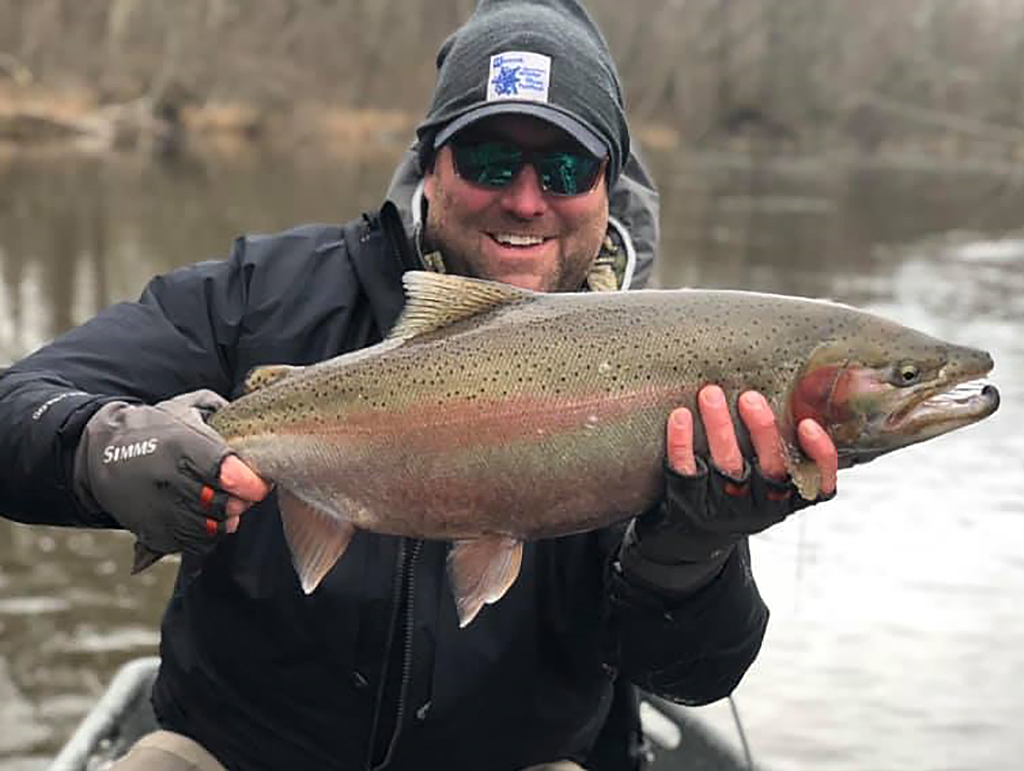
If only this bored bunch would discover that unofficial, low-key group of wintertime casters – the Secret Society of Steelhead Stalkers. OK, maybe there’s no such group that has a president or organized meetings, but there’s definitely a growing membership of this unsung organization.
Stocked
Phil Hillman, a legendary fisheries manager in northeast Ohio, championed the stocking efforts, and his research has paid off handsomely. Now, these silver bullets can be caught in a number of streams.
It all started when the Division of Wildlife began stocking selected tributaries with 6-to-8-inch yearling steelhead. These “smolts” migrate into Lake Erie and spend the summer in the cooler lake before returning to streams during the fall through the spring.
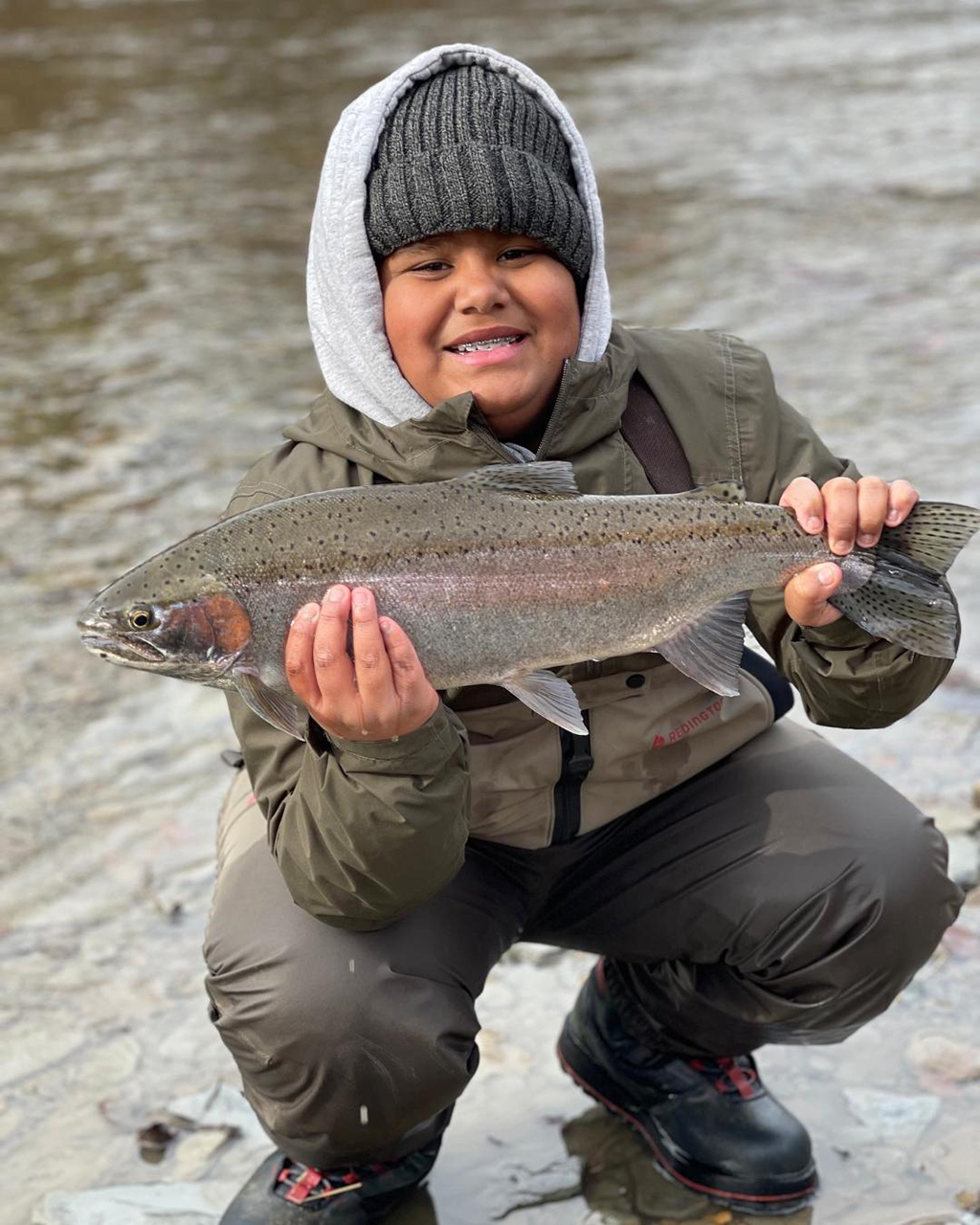
Steelhead, which are really lake-run rainbow trout, will average 25 inches long and weigh 5 to 6 pounds after spending two to three summers in the lake. There’s also good numbers of fish that are over 30 inches and weigh more than 10 pounds, having lived up to five summers in the lake.
As long as there’s open water on the streams and the waterways allow them to be safe to fish, steelhead can be found. While not for the faint of heart, wading and small-stream capable boats will well equip the angler to match their skills with the fish’s appetite.
Tackle
Typical spinning tackle includes 7-to-10-foot limber rods using 4-to-8-pound test lines. Light marabou or synthetic hair jigs tipped with maggots rigged with split shot under a light pencil-thin bobber have proven popular at luring lunkers.
Fly fishers prefer 6-to-9-weight lines using larger, weighted fly patterns. Nymphs and streamers like woolly buggers, princes, egg-sucking leeches, stonefly and shiner patterns and Clouser minnows are some of the most productive.
Single and cluster-tied egg patterns and sucker spawn work well as a single fly or in tandem with a nymph or streamer once the fish move upstream. Salmon or trout eggs fished as either individual eggs or grouped together in mesh “spawn bags” about the size of a dime or nickel are productive.
You’ll want to do a little research before you hit the water; the fish will be close to cover or skulking in moderate to deep pools. They’ll move into cuts or gravel runs as late winter and early spring spawning activity begins.
Centerpin
An increasingly popular steelhead rig uses a an exceptionally long rod fitted with an oversized reel called a centerpin or float reel. Measuring 13 feet and longer with free-spinning reels 4 to 6 inches in diameter, they’re formidable but balanced.
Using heavier monofilament lines with a float, swivel, leader and carefully placed split shot, the gear allows a natural drift of bottom-bouncing lures, exactly where the fish feed the most. The rod’s reach allows the angler to follow above the float as it travels, permitting a tighter line — all the better to feel a fish taking the aquatic insect imitations.
Both rod and reels are available at better fishing shops or online. If you’re new to centerpin float fishing, experienced anglers advise that you should read up on the sport and purchase the best equipment that your budget allows. After that, the best teacher is experience — especially if you can tag along with someone that knows the ropes or, in this case, the monofilament.
Ohio’s primary steelhead streams are the Vermilion, Rocky, Chagrin, Grand and Ashtabula rivers and Conneaut Creek. Other fish-producing Lake Erie tributaries include the Cuyahoga, Huron and Black rivers, and Arcola, Cowles, Wheeler, French, Euclid, Turkey, Beaver and Cold creeks will get runs of stray steelhead — just don’t expect numbers like the first six.
The fantastic fishing has been maintained by annual stocking by the Division of Wildlife whose annual stocking projections from Castalia State Fish Hatchery is at around 450,000 fish. Another helpful conservation tactic is practiced by the many anglers who catch-and-release steelhead, allowing them to grow into trophy-class fish that will fulfill the dreams of future fishers.
The most recent Ohio steelhead update from Chagrin River Outfitters, www.chagrinriveroutfitters.com, offers anglers this advice: “As for what’s hot, the egg bite is picking up and seems like it’s 50/50 between eggs and bait fish patterns. The swing is still good, just be patient, think low and slow and hot colors like Cerise, Pinks, and Purples with flash will wake them up.”
It’s important to remember that cold-water fishing deserves your respect. Use safe wading techniques, know your physical limits, be sure to wear a wading belt and keep it snug. It’s also best to fish with another angler.
“The true fisherman approaches the first day of fishing with all the sense of wonder and awe of a child approaching Christmas.”
— Robert Traver