

As the car rumbles up the township road, a rooster tail of dust emerges from the rear of the vehicle on this hot and humid early summer day. Cresting the hill, a figure in the distance comes into view, emphatically waving as we approach. The man stands in the hot sun, wearing a hat and a large smile, and greets us with a twinkle in his eye.
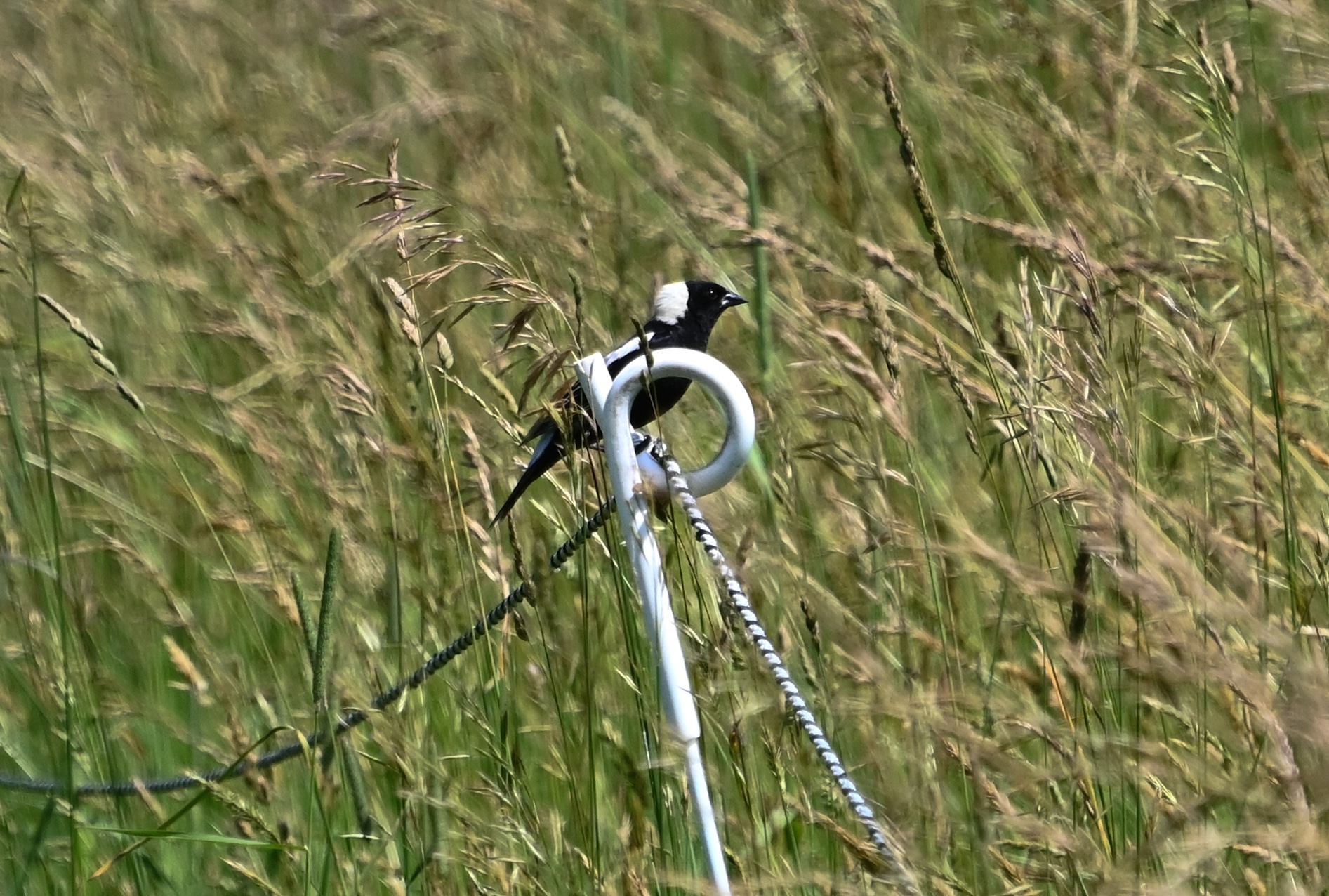
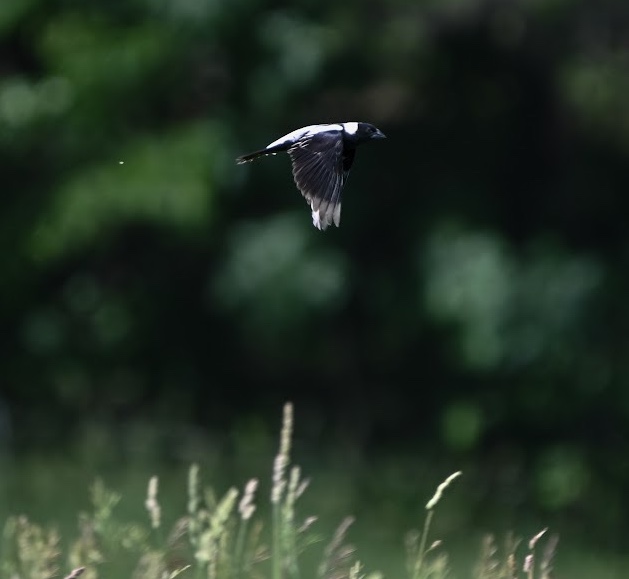
“Welcome! Welcome!” he exclaims with an emotion of pure joy and excitement. He swings the gate open and tells us that if we walk out 100 yards or so down the farm lane, the show will commence. As we walk quietly down the lane, a few red-winged blackbirds greet us with suspicion. As we make it to the slight turn in the lane, it happens. An explosion of tuxedoed feathers sails out of the grass. High into the air it soars and lets out a song that sounds like a fusion of techno and salsa music. It’s a bobolink.
Adam Costarella never set out to be Jefferson County’s caretaker of bobolinks. In fact, he farmed for years without knowing what a bobolink was or much noticing them in the fields.
All of that changed one day when a Jefferson Soil and Water Conservation District staff member came out to do soil testing on the farm, and as they walked and talked, she excitedly pointed and said, “You have bobolinks!”
“What’s a bobolink?” he asked.
“The bird sitting on the step-in fence post,” she acknowledged before adding, “They must like it here. It’s good habitat for them.”
She and Adam stood there in the middle of his hay field and observed the little black bird with accents of white and a patch of straw colored feathers on the back of its head that made it look like it was suffering from male pattern baldness.
Adam looked around the field and saw the work he and his wife, Tina, had put in to create a fertile field of diverse plant species to optimize yield and nutrition for their cattle operation, but he had never before this day seen “habitat’.”
“Why would this odd little bird be living here?” he wondered.
The bobolink
The Bobolink (Dolichonyx oryzivorus) is one of Ohio’s most remarkable grassland birds, recognized by the breeding male’s striking black-and-white plumage and bubbly, musical song that rings across open meadows each spring.
Bobolinks nest on the ground in tall grasses, where females carefully conceal their nests among native prairie plants, hayfields and lightly grazed pastures. They feed on insects during the nesting season, helping control agricultural pests, before switching to seeds later in the year. Because they require large expanses of open grasslands with little tree cover for nesting, Bobolinks are considered an important indicator of healthy grassland ecosystems.
Despite weighing only about one ounce, Bobolinks undertake one of the longest migrations of any North American songbird. Each year, they travel around 12,500 miles round-trip, breeding here in Ohio and in the northern United States and southern Canada before flying through the eastern United States to spend the winter in the grasslands of southern South America. During migration, they rely on wetlands, marshes, and agricultural fields to rest and refuel, making the conservation of habitat across two continents essential to their survival.
In Jefferson County and Ohio, Bobolinks face growing challenges as hayfields, pastures and native grasslands disappear or become fragmented by development, forest growth and changing agricultural practices.
Early-season mowing of hayfields can destroy nests before young birds have fledged, while invasive plants and the spread of shrubs and trees reduce the open landscapes they require. With less than 1% of Ohio’s original native grasslands remaining, protecting and managing large grassland habitats has become increasingly important.
Noticing his curiosity about the birds, the SWCD employee sent Adam his soil test results, and also a copy of the USDA-NRCS publication “Management Considerations for Grassland Birds in Northeastern Haylands and Pasturelands.”
A small change with big results
As the seasons changed, Adam kept thinking about the little bird, and was completely shocked when he was on a warm winter vacation and saw a bobolink. To think that this bird traveled so far! He determined that he was going to do something and decided to develop a plan.
He read up on the birds and learned that bobolinks hatch and fledge later in the summer and the first cut of hay usually destroys the nests. Therefore, if he postponed cutting until July and continued his wife’s efforts to add plant diversity to the hay and pasture fields, the birds could get a solid footing. When asked about it during an Eastern Ohio Grazing Council pasture walk last year, Adam said that “our herd is not that dependent on the hay we cut because we have a small herd that gets most of its nutritional needs through a long season of rotational grazing. The bobolinks fly 6,000 to 12,000 miles to get here. Waiting to cut hay is the least I can do!”
In 2025, the first year they adjusted their farming practices by cutting hay later, they noticed a few more bobolinks took flight over their fields. By late June, there were fledglings leaving their nests.
In June 2026, things really began to change. Adam couldn’t believe his eyes. He had read that bobolinks come back to the same area year after year, even when hay is cut early and chicks die. He marveled at how many more there were this year as compared to the day he first learned about the birds in May of 2024, admiring their melodious songs.
He went on to share that in July, before he was planning to make hay this summer, a squadron of bobolinks went upward into the sky and circled overhead, at least 30 birds in uniform pattern. Unbelievable!” he said. “You had to be here to see it!”
The conservation efforts the Costarellas have made to help the bobolink on their farm remind us of a story that Dr. Eric Haenni told the students at the state Envirothon competition this June, an oft-told version adapted from “The Star Thrower” by Loren C. Eiseley:
One day a man was walking along the beach in the early morning and noticed the tide had washed thousands of starfish up onto the shore after a storm. Ahead, he spotted a little girl gathering up the starfish, then one by one tossing them back into the ocean.
He approached the girl and asked why she was doing this. “You can’t possibly rescue all of them. What difference is throwing back a few going to make anyway?”
The girl bent down, picked up another starfish and threw it as far as she could into the ocean. Then she turned, smiled, and said, “It made a difference to that one!”
Inspired, the man leaned over, picked up a starfish and joined the girl throwing starfish into the water.






Thank you, Adam. He is a MAN among MEN.
Thanks for writing this great article. Bobolinks are spectacular birds, beautiful to see and hear.
“Delaying hay harvests by just 1.5 weeks can improve bobolink survival by 20%.”
Bobolinks are not the only grassland bird that is disappearing due to pesticides and other toxins, early mowing, habitat destruction and fragmentation.
“A 2019 study showed that grassland bird species such as the Bobolink, Dickcissel, and Henslow’s Sparrow experienced a 53 percent reduction in population — a loss of more than 720 million birds — since 1970.”